

Compact Excavator Buying Guide: 7 Key Factors for Choosing the Best Mini Excavator
Choosing the wrong size compact excavator quietly costs you money, whether through a machine that struggles under the workload or one too big to reach where the work actually happens. Compact excavators in the 1-ton, 2-ton, and 3-ton range each occupy a distinct sweet spot, and the smartest choice depends far more on your job site and daily tasks than on raw size. This guide breaks down the strengths of each class, compares the applications they suit best, and explains why performance factors matter more than picking the largest machine on the lot. By the end, you will know exactly which compact excavator delivers the reach, power, and value your project demands.
1 Ton Compact Excavators
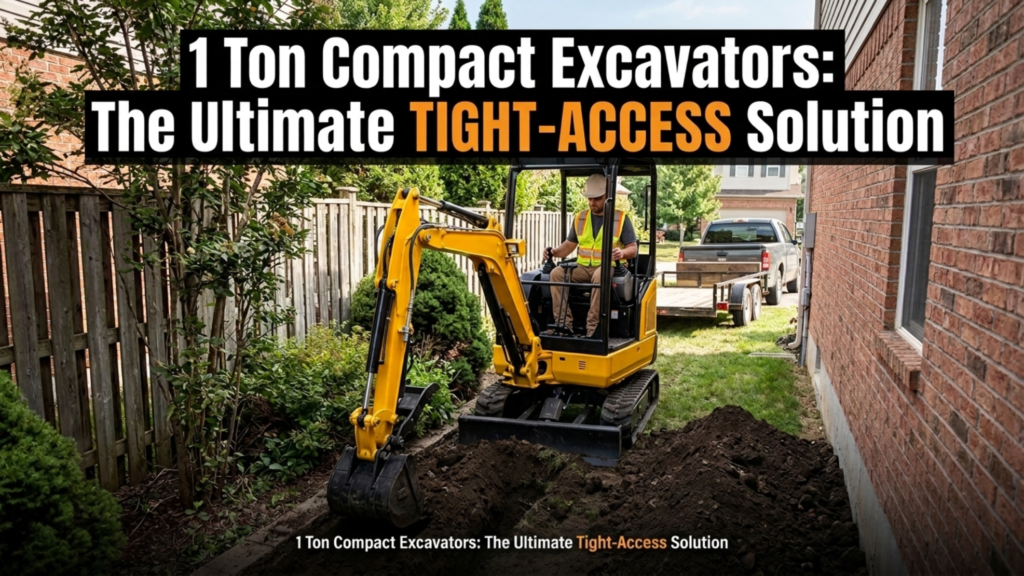
The 1-ton compact excavator is built for tight spaces and light-duty work, and its greatest asset is a footprint small enough to go almost anywhere. These machines slip through standard gateways, work between buildings, and operate in backyards, indoor demolition sites, and cramped urban lots where larger equipment simply cannot fit. When your job happens in a confined area with limited access, this class of excavator earns its place immediately, letting you dig, trench, and clear material in spots that would otherwise demand hand labor.
Transport is another area where the 1-ton machine shines. Because it is so light, you can haul it on a standard trailer behind a pickup or van without special permits or heavy hauling equipment. That ease of movement makes it ideal for contractors who travel between multiple small jobs in a single day, saving both time and logistics costs. The advantages of this size class stand out clearly:
- Compact footprint that fits through gates, doorways, and narrow passages
- Easy transport on a light trailer with no specialized hauling
- Low ground pressure that protects finished lawns, paving, and delicate surfaces
- Simple operation that suits operators of varying experience levels
Naturally, this size comes with limits. A 1-ton excavator handles shallow trenching, small footings, landscaping cuts, and light material handling well, but it lacks the digging force and lifting capacity for heavier work. Push it beyond light-duty tasks and progress slows. When your projects center on confined, delicate, or small-scale work, though, this machine delivers precision and access that bigger excavators cannot match, making it a dependable choice for the right jobs.
2 Ton Compact Excavators
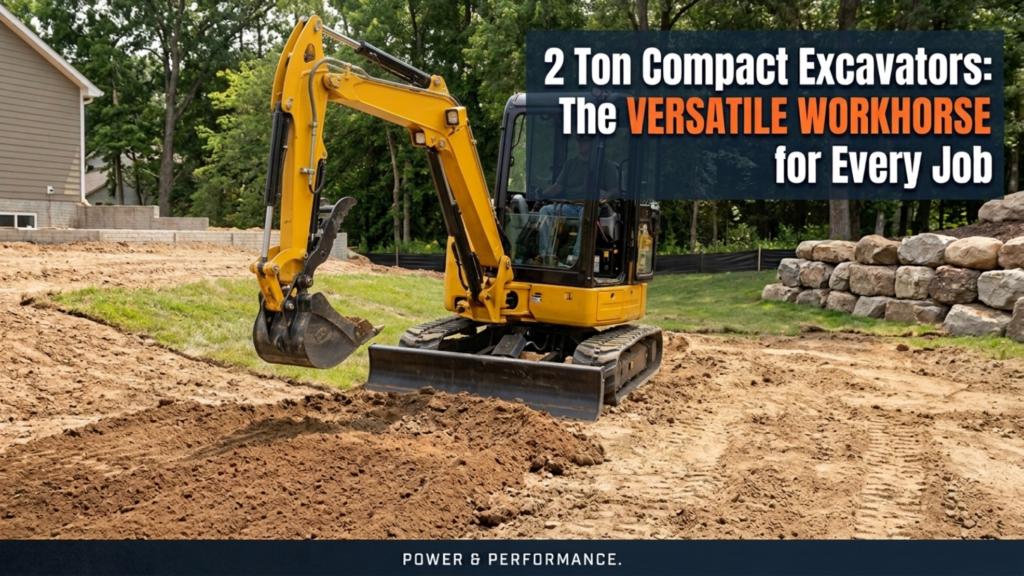
The 2-ton compact excavator is the versatile middle ground, and for many contractors it represents the most practical all-around choice. It carries noticeably more power and reach than a 1-ton machine while staying compact enough for residential and semi-confined work. This balance is exactly why the 2-ton class has become so popular across landscaping, utility work, and residential construction. It digs deeper, lifts more, and works faster than the smallest excavators, yet it still moves through most job sites with ease.
For landscaping, the 2-ton machine handles grading, tree and stump removal, pond digging, and larger material handling without straining. In utility work, it digs the deeper, longer trenches that water, sewer, and electrical lines require, moving through the job at a pace that keeps crews productive. On residential construction sites, it tackles footings, foundation prep, and backfilling with the reach and strength those tasks demand. That range of capability is what makes it such a dependable workhorse.
This versatility also means one machine can cover a wider variety of jobs, reducing the need to rent or own multiple excavators. A landscaper who takes on occasional utility or construction work, for example, gets a single tool that adapts across all three. The 2-ton excavator still transports on a standard trailer with minimal fuss, keeping logistics simple even as capability climbs. When your workload spans several project types, or when you want one reliable machine that handles the bulk of your daily tasks without feeling underpowered, the 2-ton compact excavator delivers the well-rounded performance that keeps a wide range of jobs moving smoothly and efficiently.
3 Ton Compact Excavators
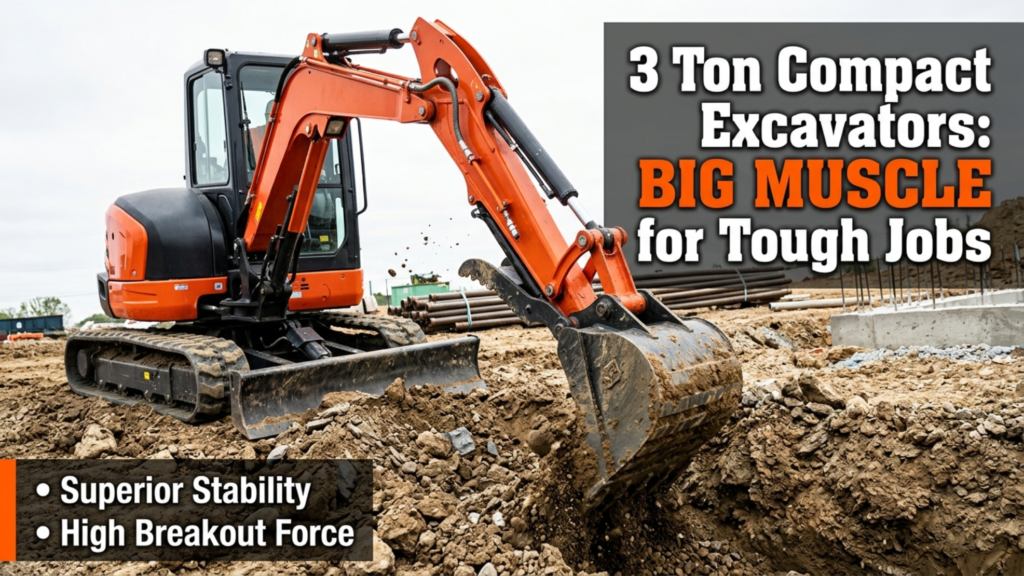
The 3-ton compact excavator sits at the upper end of the compact class, and it brings the muscle needed for more demanding excavation and construction work. With greater digging force, this machine cuts into hard-packed soil, clay, and compacted ground that would stall a smaller unit. Its increased lifting capacity lets you handle heavier materials, set larger pipes, and move substantial loads with confidence, opening the door to jobs that a 1-ton or 2-ton machine would struggle to complete efficiently.
Stability is another defining strength of this size. The added weight and larger footprint give the 3-ton excavator a solid, planted feel when digging deep or lifting at reach, which translates directly into safer, more productive work. Operators can push harder and work faster without the machine feeling tippy or strained, and that steadiness matters most on the tougher jobs where a compact excavator is being asked to perform near its limits.
Because of these qualities, the 3-ton class suits deeper trenching, larger foundation work, demanding site preparation, and heavier utility installation. It remains compact by construction standards, but it does require more careful transport planning, since it approaches the weight where trailer and towing capacity become a real consideration. It also carries higher operating and ownership costs than its smaller counterparts. Still, for contractors whose work regularly involves tough ground, heavy lifting, or deeper digging, that investment pays off in speed and capability. When your projects consistently demand more force and stability than a lighter machine can provide, the 3-ton compact excavator gives you the power to complete demanding tasks efficiently while keeping the maneuverability that makes compact machines so useful.
Which Compact Excavator Fits Your Job?
Matching the machine to the job starts with an honest look at where and how you work. Different projects call for different sizes, and the right fit comes from comparing your typical tasks against what each class handles best. A machine that excels on one type of job can waste time and money on another, so aligning size with your actual workload is the foundation of a smart decision.
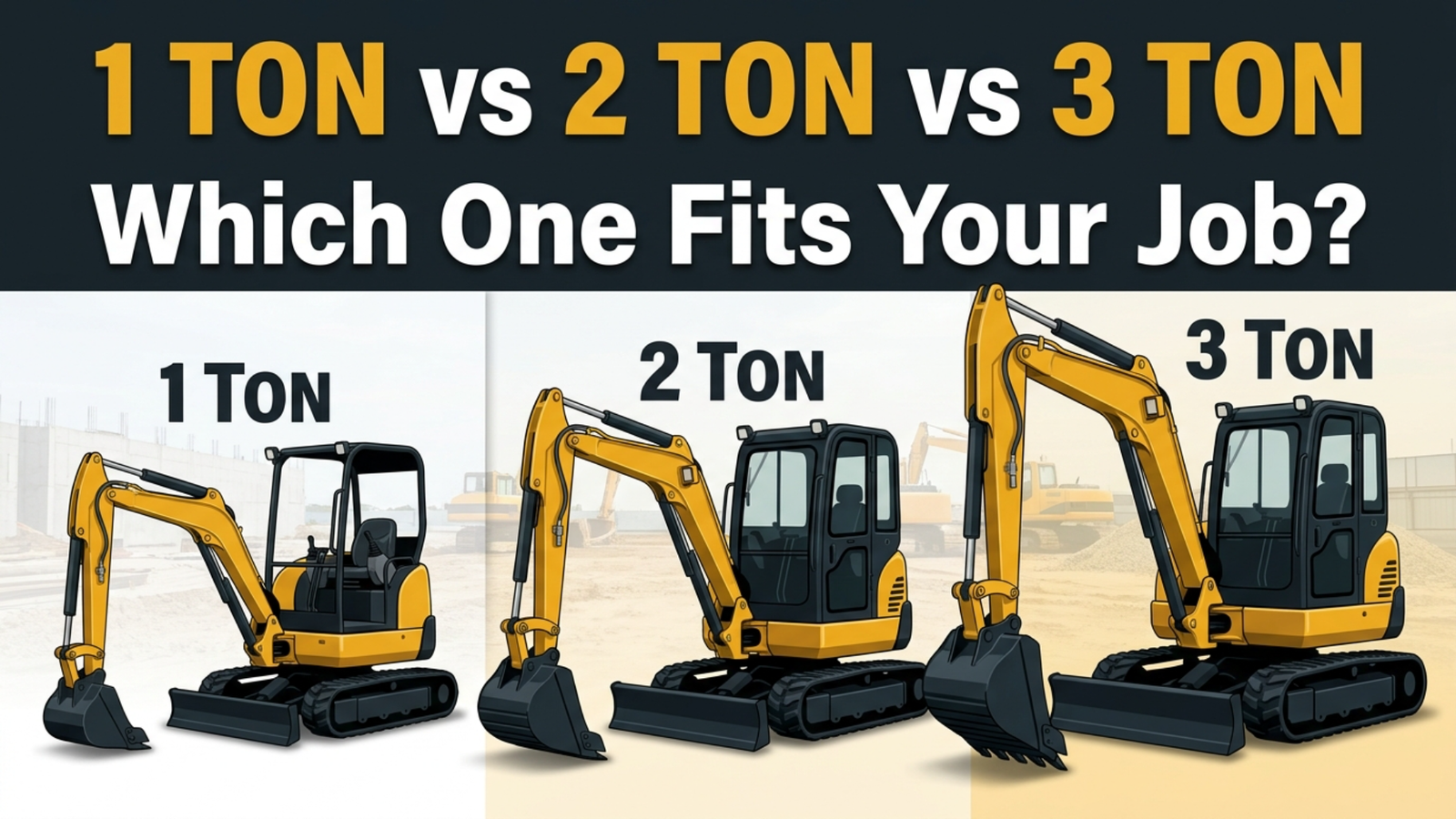
Think through the common applications each class serves. A 1-ton excavator fits tight-access landscaping, small trenching, indoor demolition, and delicate work on finished surfaces. A 2-ton machine covers general landscaping, residential construction, and standard utility trenching, making it the go-to for varied, everyday work. A 3-ton machine takes on deeper trenching, larger foundations, heavy material handling, and tougher ground conditions. Weighing your projects against these profiles points you toward the right class quickly:
- Confined spaces and light-duty work favor the 1-ton machine
- Mixed residential, landscaping, and utility work favor the versatile 2-ton
- Deep digging, heavy lifting, and hard ground favor the 3-ton
- Multiple job types in one day favor the easy transport of smaller classes
Job site conditions matter just as much as the tasks themselves. Consider access width, ground firmness, how far you must travel between sites, and whether delicate surfaces need protecting. A large machine that cannot reach the work area, or a small one that bogs down in hard clay, both cost you productivity. By comparing your real applications and site conditions side by side, you can confidently identify whether a 1, 2, or 3-ton compact excavator is the machine that will serve you best.
Compact Excavator Buying Guide: Why Machine Size Matters
Compact Excavator Buying Guide: Key Features to Compare Before Buying
Compact Excavator Buying Guide: Which Mini Excavator Is Right for You?
It is tempting to assume the largest machine you can afford will serve you best, but that logic often leads to wasted money and lost efficiency. The right compact excavator is the one whose performance matches your work, not simply the one with the highest tonnage. An oversized machine can prove harder to transport, more expensive to run, and too bulky to reach the areas where your work actually takes place, undercutting the very productivity you hoped to gain.
Instead of defaulting to size, evaluate the specific performance factors that determine real-world results. Digging depth tells you whether the machine can reach the trench or foundation depth your jobs require. Lifting capacity confirms it can handle the materials you move most often. Maneuverability determines whether it can work within your typical site access, while transport requirements affect how easily and affordably you move it between jobs. Operating costs, including fuel, maintenance, and ownership, shape the machine’s long-term value on your books.
Weighing these factors together gives you a far clearer picture than tonnage alone. A 2-ton machine that fits your sites, handles your loads, and transports easily will almost always outperform a 3-ton unit that struggles for access and drains your budget. The goal is the best overall performance for your specific needs, which means being honest about the work you do most and choosing accordingly. When you select based on how a machine actually performs against your daily demands, rather than on size for its own sake, you invest in equipment that delivers dependable value, keeps your projects moving, and pays you back on every job.
This Compact Excavator Buying Guide compares the most important machine sizes and explains where each excavator performs best.
As this Compact Excavator Buying Guide explains, a 1-ton machine is most valuable when access and maneuverability matter more than maximum digging power.
For contractors handling varied projects, this Compact Excavator Buying Guide identifies the 2-ton class as a strong all-around option.
By following this Compact Excavator Buying Guide, you can select a mini excavator that matches your workload, jobsite conditions, and long-term business needs.
Conclusion
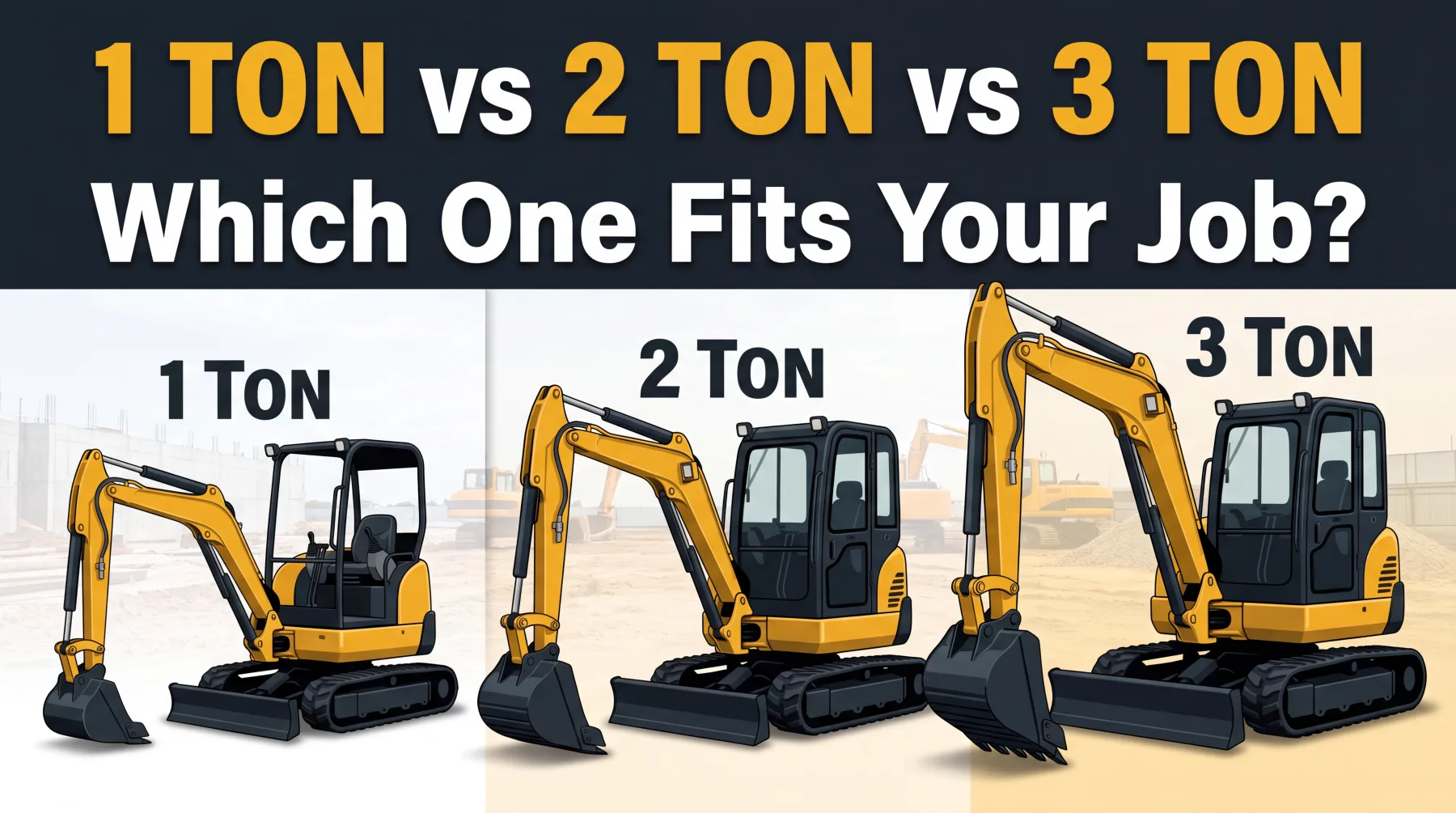
Choosing between a 1-ton, 2-ton, and 3-ton compact excavator comes down to matching capability to your real work rather than reaching for the biggest option available. The 1-ton machine delivers unmatched access and easy transport for confined, light-duty jobs. The 2-ton machine offers the balanced power, reach, and versatility that make it a dependable all-around performer across landscaping, utility, and residential work. The 3-ton machine brings the digging force, lifting capacity, and stability that demanding excavation and construction tasks require. The right choice depends on your typical applications, your job site conditions, and performance factors like digging depth, maneuverability, transport, and operating costs. Take an honest look at the work you do most often, weigh it against what each class delivers, and you will invest in a compact excavator that performs reliably and productively for years to come. Compare your project needs against these three classes today, and choose the machine built to match your workload.