

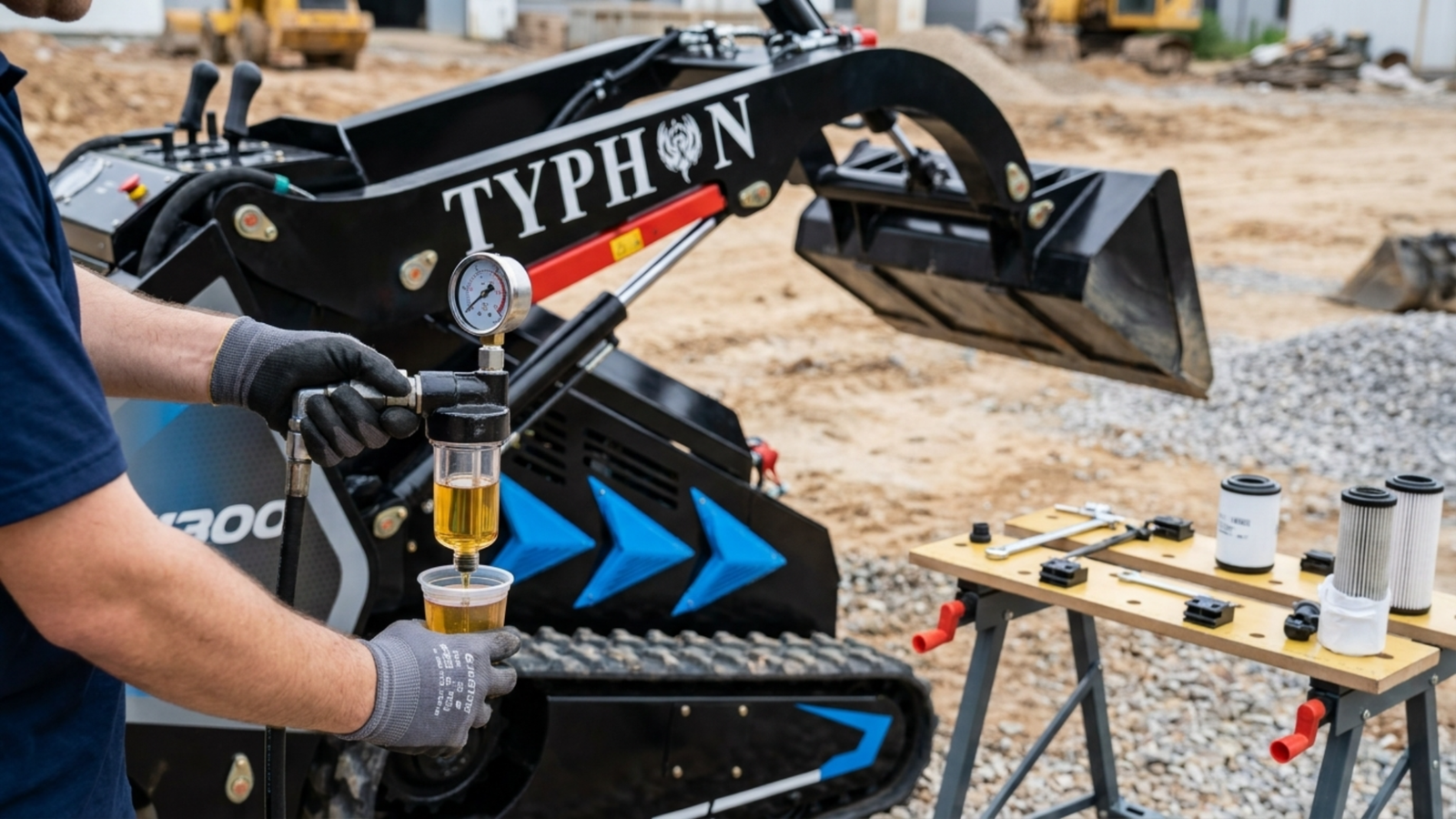
Hydraulic systems are the backbone of skid steer loaders and many other compact construction machines. They control lifting, digging, steering, and attachment operation, all through the movement of pressurized fluid. While operators often focus on engines, tires, or attachments, hydraulic fluid is usually overlooked until something goes wrong. In reality, it is one of the most important factors that determines how long a machine will last and how reliably it will perform under load.
Hydraulic fluid is not just a power transfer medium. It lubricates internal components, removes heat from the system, and protects precision-machined surfaces from wear. When the fluid condition is good, the system operates smoothly and efficiently. When it is poor, performance drops quickly, and internal damage can begin long before visible symptoms appear.
Many hydraulic failures do not happen suddenly. They develop over time due to contamination, incorrect fluid selection, overheating, or poor maintenance habits. These issues slowly reduce efficiency and increase wear on pumps, valves, and cylinders until a major failure occurs. Understanding how hydraulic fluid behaves and what affects its condition allows operators and maintenance teams to prevent expensive breakdowns and extend equipment life significantly.
The Contamination Trap
Contamination is one of the most damaging and common causes of hydraulic system failure. Even when fluid looks clean, it may contain microscopic particles that continuously damage internal components. These particles often come from external dust, worn seals, internal component wear, or improper maintenance practices during fluid changes or top ups.
Hydraulic systems operate with extremely tight tolerances. Many internal clearances are measured in microns, meaning even very small particles can cause significant damage. Once contaminants enter the system, they circulate repeatedly with the fluid, acting like abrasive material that gradually erodes metal surfaces. Over time, this leads to scoring on cylinder walls, damaged pump surfaces, and sticking or leaking valves.
The impact of contamination does not appear immediately. Instead, it builds slowly, reducing system efficiency and increasing internal leakage. Operators may notice slower response times, weaker hydraulic power, or inconsistent movement before a major failure occurs. By the time visible symptoms appear, significant internal wear has usually already taken place.
Preventing contamination is far more effective than repairing its damage. Key practices include using proper filtration systems, replacing filters at recommended intervals, and ensuring all fluid transfer equipment is clean before use. Reservoir caps, breathers, and seals must also remain in good condition to prevent dust and moisture from entering the system. Clean maintenance habits during servicing are just as important as the quality of the fluid itself.
Temperature Extremes and Fluid Viscosity
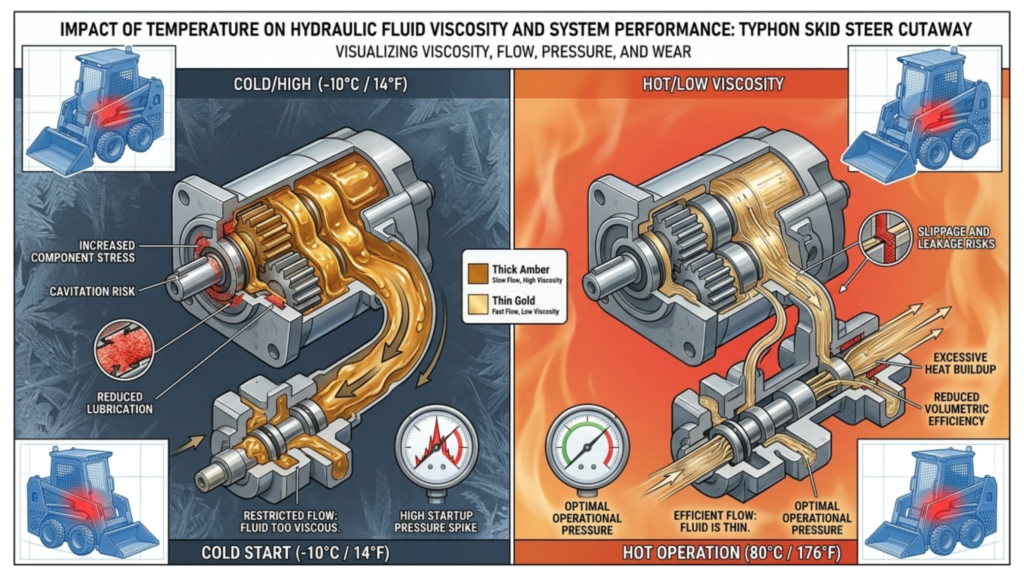
Temperature plays a critical role in hydraulic fluid performance because it directly affects viscosity. Viscosity describes how thick or thin the fluid is and how easily it flows through the system. When temperature changes, fluid behavior changes as well, and this has a direct impact on machine efficiency, protection, and reliability.
In high temperature conditions, hydraulic fluid becomes thinner. When viscosity drops too low, the fluid can no longer maintain a strong protective film between moving metal surfaces. This increases internal leakage within pumps and valves, reducing system pressure and efficiency. As a result, the machine may feel weaker, respond more slowly, and generate more heat as the system works harder to maintain performance.
Thin fluid also increases wear because metal surfaces are not adequately separated. Over time, this accelerates internal damage and shortens the lifespan of critical components such as hydraulic pumps and control valves. High operating temperatures can also degrade fluid quality itself, reducing its lubricating and protective properties.
Cold temperatures create the opposite problem. When hydraulic fluid becomes too thick during cold starts, it struggles to circulate properly through the system. This delay can cause oil starvation in pumps, leading to cavitation. Cavitation occurs when vapor bubbles form and collapse violently inside the system, creating shock forces that damage internal surfaces, seals, and components.
Repeated cold starts with improper fluid viscosity can significantly reduce system life. In severe cases, damage may occur within a very short period if the system is operated before the fluid has warmed up properly.
Selecting the correct hydraulic fluid viscosity grade for the operating environment is essential. Machines working in hot climates require fluids that resist thinning, while those in colder regions need fluids that maintain flow at low temperatures. Proper viscosity selection ensures stable performance, consistent protection, and longer equipment life across all operating conditions.
The Water Intrusion Warning
Water contamination is one of the most damaging and often overlooked threats to hydraulic systems. Unlike solid particles that may be filtered out over time, water can enter the system silently and begin causing damage long before any visible symptoms appear. It typically finds its way into the hydraulic reservoir through worn seals, damaged breather caps, condensation inside the tank, or improper storage and handling of hydraulic fluid containers. Even small amounts of moisture can create long term reliability issues if they are not addressed early.
Once water enters hydraulic fluid, it immediately begins to affect its chemical stability. Hydraulic oil contains additives designed to reduce wear, prevent oxidation, and protect internal components. Water disrupts these additives and reduces their effectiveness, meaning the fluid gradually loses its ability to protect the system. As this process continues, the oil becomes less stable and more prone to breakdown under pressure and heat.
Water contamination also creates physical damage inside the system. One of the most common effects is internal rust formation on steel components such as cylinders, valves, and pump housings. Rust particles then circulate through the system and contribute to further wear. In addition, water can mix with contaminants and degraded oil to form sludge. This sludge accumulates in filters and narrow passageways, restricting fluid flow and reducing system efficiency. When flow becomes restricted, pressure becomes inconsistent, and components may overheat due to insufficient lubrication and cooling.
Over time, these combined effects lead to reduced performance, unpredictable hydraulic response, and eventual system failure. Preventing water intrusion requires proper sealing of reservoirs, routine inspection of breathers, careful handling during fluid top ups, and correct storage of hydraulic oil containers in dry environments. Controlling moisture entry is essential for maintaining stable hydraulic performance and extending equipment life.
Decoding Your Fluid’s Health Signs
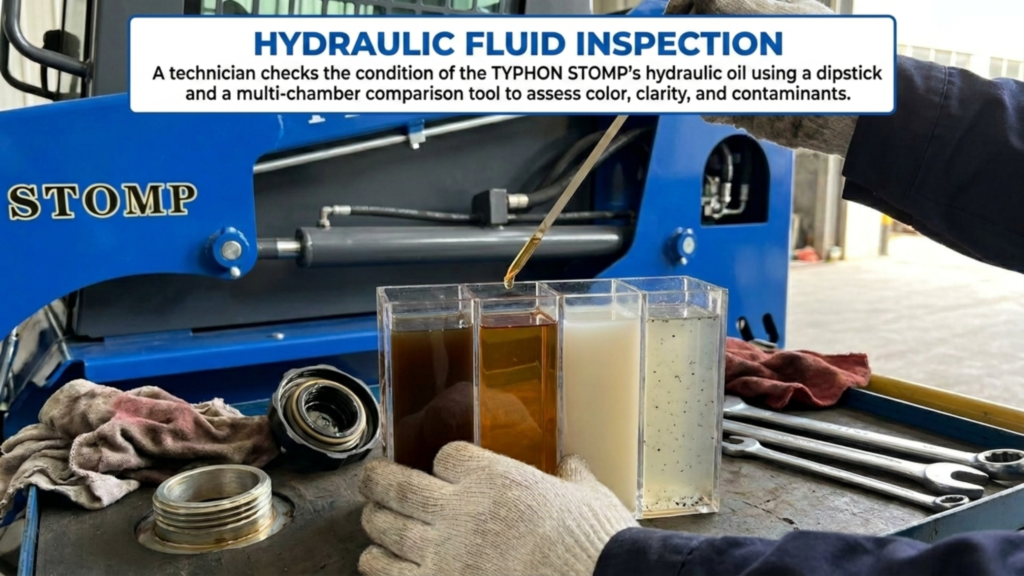
Operators do not need advanced laboratory tools to identify early signs of hydraulic fluid problems. Routine visual and sensory inspections can reveal important clues about fluid condition and system health. Learning to recognize these warning signs allows maintenance teams to respond early, preventing minor issues from developing into major hydraulic failures.
Color is one of the first and most noticeable indicators. Healthy hydraulic fluid is typically clear with a consistent light amber or manufacturer specified tint. When the fluid becomes dark, it often indicates overheating or oxidation. A milky or cloudy appearance is a strong warning sign of water contamination. Any sudden or unusual change in color should be treated as an early signal that something is wrong within the system.
Smell provides another important diagnostic clue. Hydraulic fluid that has a burnt or sharp odor usually indicates that it has been exposed to excessive heat. High operating temperatures can break down the oil’s chemical structure, reducing its ability to lubricate and protect internal components. Once this breakdown occurs, the fluid can no longer perform effectively, increasing wear across the entire system.
Consistency and appearance complete the inspection process. Operators should watch for several key warning signs during routine checks:
- Foaming on the surface, which suggests air has entered the system or contamination is present
- Milky or cloudy fluid, indicating water intrusion
- Visible particles or grit, showing active contamination and internal wear
- Unusual thickness or thinning, which may indicate viscosity breakdown or incorrect fluid type
These signs often appear gradually, making them easy to miss without consistent inspection habits. When any of these conditions are detected, immediate investigation is necessary to identify the root cause. Early detection allows corrective action before damage spreads to pumps, valves, and cylinders, reducing repair costs and preventing unexpected downtime.
Moving From Reactive to Predictive Maintenance
Traditional hydraulic maintenance often relies on a reactive approach, where fluid is changed only when it appears dirty or when system performance begins to decline. This method is risky because visible signs of degradation usually appear after internal damage has already started. By the time hydraulic fluid looks contaminated, critical components may already be experiencing accelerated wear.
A predictive maintenance approach offers a more reliable and cost effective solution. Instead of waiting for visible failure indicators, fluid condition is monitored regularly through sampling and laboratory analysis. These tests provide detailed information that cannot be seen during routine inspections, including particle contamination levels, water content, additive depletion, and traces of metal wear from internal components.
This data allows maintenance teams to identify early warning trends. For example, an increase in metal particles may indicate pump wear, while rising water content may suggest seal failure or condensation issues. By detecting these changes early, maintenance can be scheduled before a minor issue escalates into a major breakdown.
The financial advantages of this approach are significant. A single hydraulic system failure can result in expensive component replacement, production downtime, and additional labor costs. In contrast, regular fluid analysis is relatively low cost and can prevent multiple failure scenarios. Over time, predictive maintenance improves equipment reliability, extends component life, and reduces unexpected downtime.
Transitioning to predictive maintenance also improves planning and inventory control. Maintenance teams can schedule repairs during planned service intervals, ensuring parts and labor are available when needed. This reduces emergency repairs and helps maintain consistent machine availability across operations.
By shifting from reactive decisions to data driven maintenance strategies, operators can significantly improve hydraulic system reliability and reduce long term operating costs.
Conclusion
Hydraulic fluid health plays a critical role in the reliability, efficiency, and lifespan of skid steer and hydraulic equipment. Water intrusion, contamination, temperature stress, and unnoticed fluid degradation can all lead to serious system damage if not properly managed. However, most of these issues develop gradually and can be prevented with consistent monitoring and proper maintenance practices.
Understanding early warning signs such as color changes, unusual smells, foaming, or particle contamination allows operators to take action before failures occur. Combining these observations with proper fluid handling practices and regular inspections significantly reduces risk. Moving toward predictive maintenance through fluid analysis further strengthens system protection by identifying hidden problems before they affect performance.
Machines that operate with clean, stable hydraulic fluid perform more efficiently, require fewer repairs, and experience less downtime. Over time, this leads to lower operating costs and improved equipment availability. By treating hydraulic fluid as a critical component rather than a routine consumable, operators and maintenance teams can ensure long term machine reliability and more consistent performance across every job site.
Hydraulic Fluid Health: The Overlooked Key to Skid Steer Long-Term Machine Reliability
SEO Meta Description: Discover why tracking your machine’s hydraulic fluid health is the ultimate key to skid steer reliability. Learn how to prevent fluid failure and contamination.
Hydraulic systems are the backbone of skid steer loaders and many other compact construction machines. They control lifting, digging, steering, and attachment operation, all through the movement of pressurized fluid. While operators often focus on engines, tires, or attachments, hydraulic fluid health is usually overlooked until something goes wrong. In reality, maintaining proper fluid condition is one of the most important factors determining how long a machine will last and how reliably it will perform under load.
Hydraulic fluid is not just a power transfer medium. It performs several critical functions simultaneously:
- Lubricates internal components to prevent friction.
- Removes heat from the system to prevent overheating.
- Protects precision-machined surfaces from premature wear.
When you actively manage your machine’s hydraulic fluid health, the system operates smoothly and efficiently. When fluid quality is poor, performance drops quickly, and internal damage can begin long before visible symptoms appear.
Many hydraulic failures do not happen suddenly. They develop over time due to contamination, incorrect fluid selection, overheating, or poor maintenance habits. These issues slowly reduce efficiency and increase wear on pumps, valves, and cylinders until a major failure occurs. Understanding how hydraulic fluid behaves and what affects its condition allows operators and maintenance teams to safeguard hydraulic fluid health, preventing expensive breakdowns and extending equipment life significantly.
1. How Contamination Traps and Destroys Hydraulic Fluid Health
Contamination is one of the most damaging and common causes of hydraulic system failure. Even when fluid looks clean, it may contain microscopic particles that continuously degrade your overall hydraulic fluid health. These particles often come from:
- External environmental dust and dirt
- Worn seals shedding material
- Internal component wear debris
- Improper maintenance practices during fluid changes or top-ups
Hydraulic systems operate with extremely tight tolerances. Many internal clearances are measured in microns, meaning even very small particles can cause significant damage. Once contaminants enter the system, they compromise long-term hydraulic fluid health as they circulate repeatedly with the fluid, acting like abrasive material that gradually erodes metal surfaces. Over time, this leads to scoring on cylinder walls, damaged pump surfaces, and sticking or leaking valves.
The impact of contamination does not appear immediately. Instead, it builds slowly, reducing system efficiency and increasing internal leakage. Operators may notice slower response times, weaker hydraulic power, or inconsistent movement before a major failure occurs. By the time visible symptoms appear, significant internal wear has usually already taken place, indicating that your hydraulic fluid health has been neglected.
Proactive Prevention: Preventing contamination is far more effective than repairing its damage. Key practices to maintain excellent hydraulic fluid health include using proper filtration systems, replacing filters at recommended intervals, and ensuring all fluid transfer equipment is clean before use. Reservoir caps, breathers, and seals must also remain in good condition to protect your fluid from external dirt.
2. Temperature Extremes, Viscosity, and Hydraulic Fluid Health
Temperature plays a critical role in hydraulic fluid performance because it directly affects viscosity—the measure of how thick or thin the fluid is and how easily it flows through the system. When temperature changes, fluid behavior changes as well, which poses a direct threat to consistent hydraulic fluid health, machine efficiency, and component protection.
High-Temperature Challenges (Thin Fluid)
In high-temperature conditions, hydraulic fluid becomes thinner. When viscosity drops too low, it severely impacts hydraulic fluid health because the fluid can no longer maintain a strong protective film between moving metal surfaces.
- Internal Leakage: Increases within pumps and valves, reducing system pressure and efficiency.
- Performance Drops: The machine responds more slowly and generates more heat as the system works harder to maintain performance.
- Accelerated Wear: Thin fluid directly compromises hydraulic fluid health because metal surfaces are not adequately separated, shortening the lifespan of critical components such as hydraulic pumps and control valves.
Cold-Weather Challenges (Thick Fluid)
Cold temperatures create the opposite problem. When hydraulic fluid becomes too thick during cold starts, it struggles to circulate properly through the system, creating a temporary hazard for your machine’s hydraulic fluid health.
This delay can cause oil starvation in pumps, leading to cavitation. Cavitation occurs when vapor bubbles form and collapse violently inside the system, creating shock forces that damage internal surfaces, seals, and components. Repeated cold starts with poor hydraulic fluid health management can significantly reduce system life, causing severe damage within a short period if the machine is pushed before the fluid warms up properly.
Selecting the correct hydraulic fluid viscosity grade for your specific operating environment is essential. Machines working in hot climates require fluids that resist thinning, while those in colder regions need fluids that maintain flow at low temperatures to ensure optimal hydraulic fluid health.
3. The Water Intrusion Warning to Your Hydraulic Fluid Health
Water contamination is one of the most damaging and often overlooked threats to overall hydraulic fluid health. Unlike solid particles that may be filtered out over time, water can enter the system silently and begin causing damage long before any visible symptoms appear.
How Water Enters the System
Water typically finds its way into the hydraulic reservoir through:
- Worn or cracked seals
- Damaged reservoir breather caps
- Condensation building up inside the tank due to temperature swings
- Improper storage and handling of hydraulic fluid containers
Once water enters hydraulic fluid, it immediately begins to disrupt the chemical stability of the oil, striking a major blow to your hydraulic fluid health. Hydraulic oil contains specialized additives designed to reduce wear, prevent oxidation, and protect internal components. Water breaks down these additives, causing the fluid to lose its protective capabilities and degrade faster under pressure and heat.
The Physical Impact of Moisture on Fluid Integrity
- Internal Rust: Moisture destroys hydraulic fluid health by forming rust on steel components like cylinders, valves, and pump housings. These rust particles then break off and circulate as abrasive solids.
- Sludge Formation: Water mixes with contaminants and degraded oil to form a thick sludge. This sludge plugs filters and narrow passageways, restricting fluid flow.
- Erratic Performance: When flow becomes restricted, system pressure becomes inconsistent, and components may overheat due to insufficient lubrication and cooling, further damaging long-term hydraulic fluid health.
Controlling moisture entry through routine inspection of breathers, proper sealing of reservoirs, and dry storage of fluid containers is essential for maintaining stable hydraulic performance.
4. Decoding and Inspecting Your Visual Hydraulic Fluid Health Signs
Operators do not need advanced laboratory tools to identify early signs of hydraulic fluid problems. Routine visual and sensory inspections can reveal important clues about fluid condition and system health. Learning to read these changes is a simple way to track your daily hydraulic fluid health.
| Fluid Indicator | What It Looks/Smells Like | What It Means for Hydraulic Fluid Health |
| Healthy Fluid | Clear, light amber, or manufacturer-specific tint | Excellent hydraulic fluid health; system is clean and running normally. |
| Dark / Black Fluid | Dark brown to black color | Indicates severe overheating, oxidation, or thermal fluid breakdown. |
| Milky / Cloudy Fluid | Opaque, milky appearance | Clear indicator of severe water intrusion destroying hydraulic fluid health. |
| Burnt Odor | Sharp, acrid, or burnt smell | The oil’s chemical structure has broken down due to extreme heat. |
| Foaming Fluid | Froth or air bubbles on the surface | Air is entering the system, or anti-foaming additives have depleted. |
| Gritty Texture | Visible particles or grit in the fluid | Active contamination and severe internal component wear. |
These signs often appear gradually, making them easy to miss without consistent inspection habits. When any of these conditions are detected, immediate investigation is necessary to preserve your hydraulic fluid health before the damage spreads to expensive pumps and valves.
5. Moving From Reactive to Predictive Hydraulic Fluid Health Management
Traditional hydraulic maintenance often relies on a reactive approach, where fluid is changed only when it appears dirty or when system performance begins to decline. This method is highly risky because visible signs of degradation usually appear after internal damage has already started, making it an ineffective way to manage hydraulic fluid health.
A predictive maintenance approach offers a more reliable and cost-effective solution. Instead of waiting for visible failure indicators, your machine’s hydraulic fluid health is monitored regularly through fluid sampling and laboratory analysis. These tests reveal hidden metrics that cannot be seen with the naked eye:
- Exact particle contamination levels (ISO Cleanliness Codes)
- Water content percentages
- Additive depletion rates
- Traces of specific wear metals (e.g., iron, copper) from internal components
[Reactive Approach]   --> Wait for failure/dark oil --> High Repair Costs & Downtime
[Predictive Approach]  --> Regular Fluid Sampling    --> Stable Hydraulic Fluid Health & Extended Machine Life
The financial advantages of prioritizing hydraulic fluid health through predictive monitoring are significant. A single hydraulic system failure can result in expensive component replacement, production downtime, and high labor costs. In contrast, regular fluid analysis is relatively low cost and can prevent multiple failure scenarios while improving machine availability and resale value.
Conclusion
Maximizing your hydraulic fluid health plays a critical role in the reliability, efficiency, and lifespan of skid steer and hydraulic equipment. Water intrusion, contamination, temperature stress, and unnoticed fluid degradation can all lead to serious system damage if not properly managed. However, most of these issues develop gradually and can be prevented with consistent monitoring and proper maintenance practices.
By treating hydraulic fluid health as a critical mechanical metric rather than a routine consumable, operators and maintenance teams can ensure long-term machine reliability, lower operating costs, and maximize performance across every job site.