

What Is a Skid Steer Loader? Uses, Benefits, and Applications
Few machines earn their place on a job site the way a skid steer loader does. Compact enough to slip through a standard gate, powerful enough to move heavy material, and adaptable enough to switch from digging to lifting to clearing in a matter of minutes — the skid steer is one of the hardest-working machines in construction, landscaping, agriculture, and material handling.
If you’ve ever watched a single small machine handle a dozen different tasks across one day, you’ve seen why contractors, farmers, and property managers rely on these loaders. This guide breaks down what a skid steer loader is, how it works, what it does best, and how to choose and maintain one so it earns its keep for years.
What Is a Skid Steer Loader?
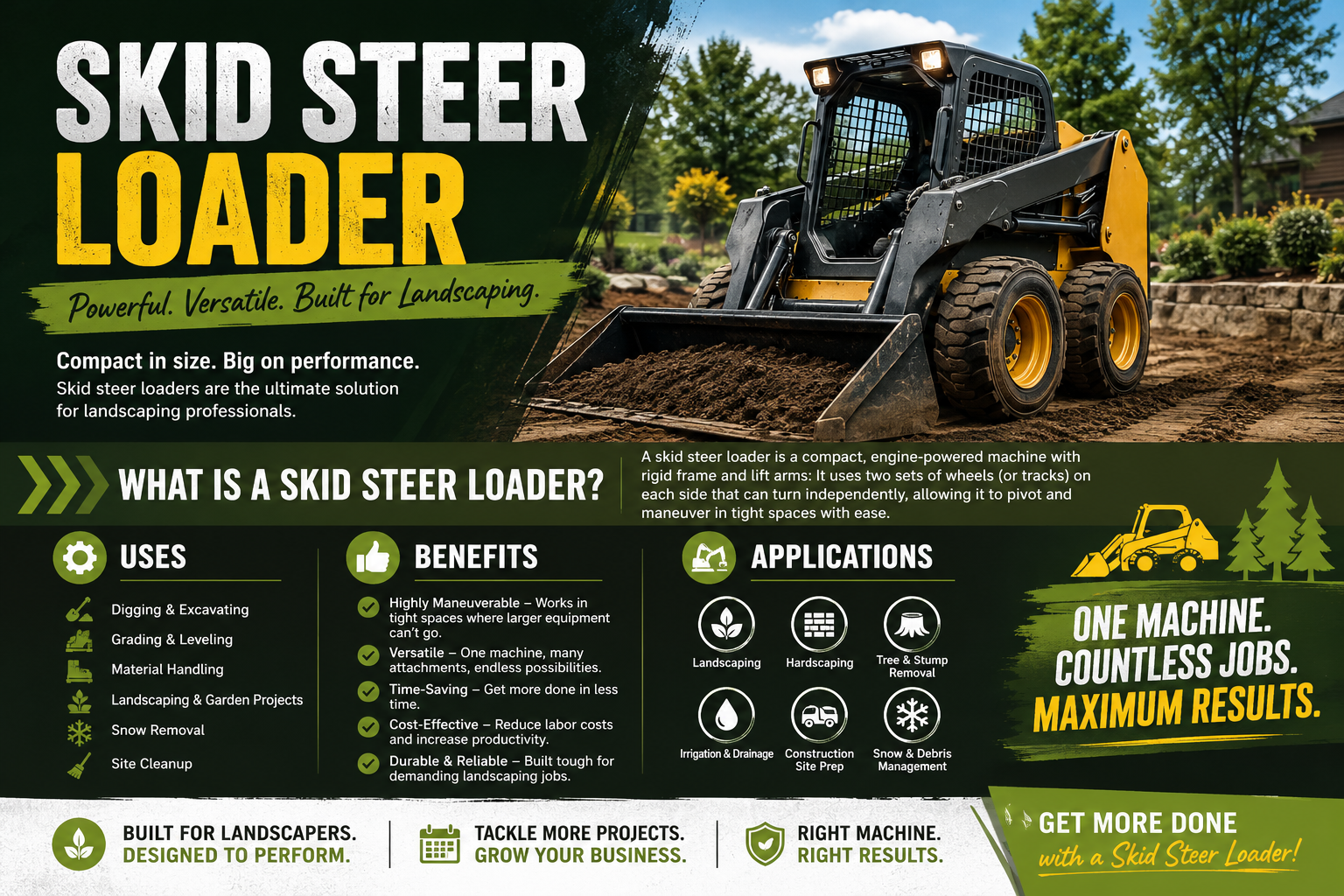
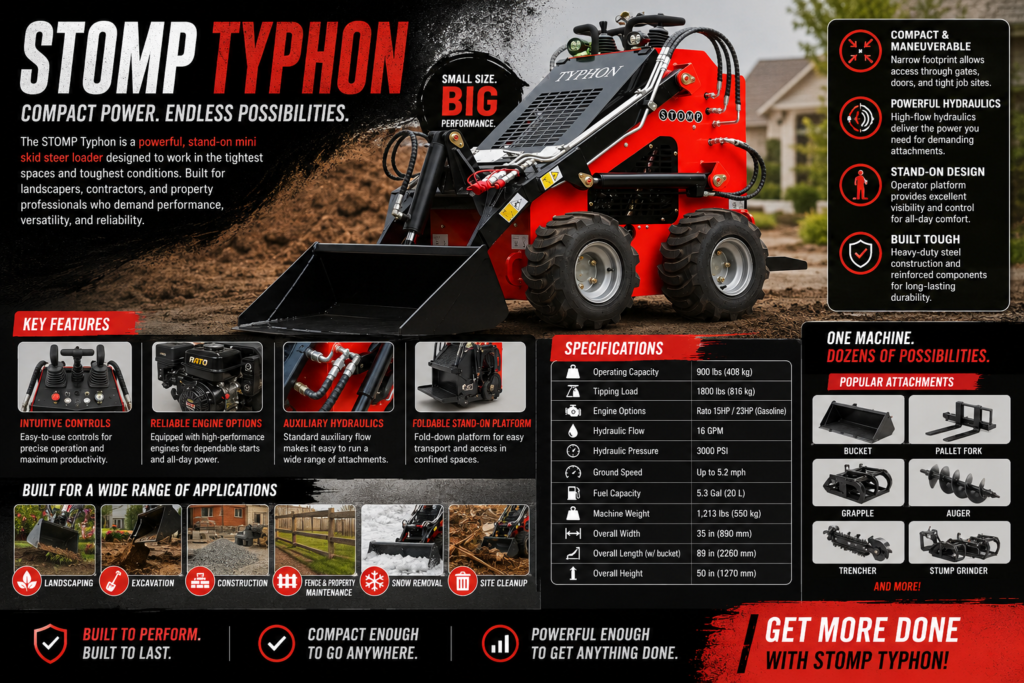
A skid steer loader is a compact, engine-powered machine with two lift arms that connect to a wide range of attachments. It’s built for versatility, packing serious capability into a small, maneuverable frame.
What sets a skid steer apart is how it turns. Instead of a steering axle, the machine controls the speed and direction of the wheels (or tracks) on each side independently. To turn, it drives one side faster than the other — or even runs the two sides in opposite directions. That “skidding” motion gives the machine its name and its signature ability to pivot within its own footprint.
Skid steers come in a range of sizes and lifting capacities, so there’s a machine suited to everything from tight residential work to demanding commercial projects. Whatever the scale, the core appeal stays the same: one machine, many jobs.
How Does a Skid Steer Loader Work?
Three systems work together to make a skid steer as capable as it is. Understanding each one helps explain why these machines perform so well in confined spaces.
The Skid-Steering Mechanism
The machine drives each side of its undercarriage independently. Speed up the left side and slow the right, and the loader turns right. Run the two sides in opposite directions, and it spins in place — a zero-radius turn. This is what lets a skid steer work cleanly in spaces where a conventional machine would need room to maneuver.
The Lift Arms
A pair of hydraulic lift arms mounted on either side of the operator raises and lowers the attachment. Depending on the design, the arms follow either a vertical or radial lift path. Vertical-lift machines reach higher and extend farther at full height, which suits loading and stacking. Radial-lift machines deliver strong digging and pushing force at mid-height, ideal for ground-level work like grading and excavating.
The Attachment System
At the front of the lift arms sits a universal quick-attach plate. This standardized mounting system lets operators swap one tool for another in minutes, often without leaving the cab. Combined with the machine’s auxiliary hydraulics, the attachment system is what turns a single loader into a multi-tool platform.
Common Uses of a Skid Steer Loader
The skid steer’s adaptability shows up across nearly every industry that moves earth, material, or product. Here are the applications where it shines.
Construction
On construction sites, skid steers move soil, gravel, sand, and building materials with ease. They handle grading, site preparation, backfilling, and light demolition. Their compact size lets them work close to structures and in tight corners where larger equipment can’t reach.
Landscaping
Landscapers use skid steers for digging, leveling, removing debris, spreading material, and transporting supplies across a property. The small footprint means easy access to residential backyards and finished commercial sites without tearing up the surrounding area.
Agriculture
On the farm, skid steers handle feed, clean out barns and stalls, move hay bales, and tackle general maintenance. Their versatility makes them a year-round asset that replaces several single-purpose machines.
Snow Removal
Fit a skid steer with a blade, blower, or bucket, and it becomes an efficient snow-clearing machine. Crews use them to clear parking lots, roads, and sidewalks quickly during winter months.
Material Handling
With pallet forks attached, a skid steer lifts and transports palletized loads around warehouses, construction sites, and industrial yards. It’s a practical, maneuverable alternative for handling material in spaces too tight for a full-size forklift.
Key Benefits of Skid Steer Loaders
The reasons contractors keep coming back to skid steers come down to a handful of clear, practical advantages.
Exceptional maneuverability. The skid-steering system lets the machine turn within its own footprint. That makes it the right tool for tight workspaces, congested sites, and jobs where every inch counts.
Versatility. A single skid steer can run a broad lineup of attachments, including:
- Buckets for digging and material handling
- Pallet forks for lifting and transport
- Augers for post holes and plantings
- Trenchers for utility lines
- Grapples for debris and land clearing
- Brush cutters for vegetation management
- Snow blowers and blades for winter work
Compact design. The small footprint opens up access to spaces larger machines simply can’t reach — backyards, indoor work areas, and crowded job sites.
Increased productivity. Because one machine performs many tasks with a quick attachment change, you reduce the need for multiple pieces of equipment and keep work moving.
Cost-effective operation. Fewer machines to buy, transport, and maintain translates directly into lower ownership and operating costs over time. That efficiency is a big part of why the skid steer remains a fleet staple.
How to Choose the Right Skid Steer Loader
The right machine depends on the work you actually do. Weigh these factors before you buy.
- Rated operating capacity (ROC): This is the safe load the machine can lift and carry. Match it to the heaviest material and attachments you’ll handle, with a sensible margin.
- Engine horsepower: More power supports demanding attachments and sustained production. Confirm the engine meets the needs of your toughest jobs.
- Lift height and lift path: If you load trucks or stack material, prioritize vertical lift and adequate reach at full height. For ground-level digging and pushing, radial lift performs well.
- Attachment compatibility: Confirm the quick-attach system fits your tools, and verify the auxiliary hydraulic flow and pressure meet each attachment’s requirements.
- Job site conditions: Consider terrain, ground sensitivity, and access. Wheeled machines suit hard surfaces and lower cost, while tracked machines handle soft, wet, or uneven ground with less surface damage.
- Maintenance and service support: A capable dealer with strong parts availability and responsive service keeps downtime low. Verify local support before you commit.
Working through these points narrows the field quickly and points you toward a machine matched to your real workload.
Maintenance Tips to Extend Machine Lifespan
A well-maintained skid steer runs reliably, holds its value, and avoids the costly breakdowns that stall a job. Build these habits into your routine.
- Check fluids regularly. Inspect engine oil and hydraulic fluid levels often, and top off or change them on schedule.
- Inspect tires or tracks. Watch for wear, damage, and proper tension. Worn undercarriage components hurt performance and safety.
- Clean air filters frequently. Dust and debris clog filters fast on a job site. Clean or replace them to protect the engine.
- Grease moving parts. Follow the manufacturer’s schedule for greasing pivot points and the loader linkage to reduce wear.
- Run daily inspections. A quick walk-around before each shift catches small issues — leaks, loose fittings, damaged hoses — before they become expensive repairs.
Consistent, simple maintenance is the difference between a machine that lasts thousands of productive hours and one that fails early.
A Versatile Machine That Earns Its Place
Skid steer loaders have become essential across construction, landscaping, agriculture, and industrial work for a simple reason: they do more with less. Their compact size, tight maneuverability, and broad attachment compatibility let one machine handle jobs that would otherwise demand several.
Choose a skid steer that fits your workload, back it with strong dealer support, and maintain it consistently, and you’ll have a dependable, cost-effective machine that boosts productivity on every job. For operators who value flexibility and reliability, few investments deliver the same return — job after job, season after season.
What Is a Skid Steer Loader? Uses, Benefits, and Applications
(Note for CMS: The alt text is exactly your Focus Keyword: “skid steer loader”)
Few machines earn their place on a job site the way a skid steer loader does. Compact enough to slip through a standard gate, powerful enough to move heavy material, and adaptable enough to switch from digging to lifting to clearing in a matter of minutes — the skid steer loader is one of the hardest-working machines in construction, landscaping, agriculture, and material handling.
If you have ever watched a single small machine handle a dozen different tasks across one day, you have seen why contractors, farmers, and property managers rely on these machines. This guide breaks down exactly what a skid steer loader is, how it works, what it does best, and how to choose and maintain one so it earns its keep for years.
What Is a Skid Steer Loader?
A skid steer loader is a compact, engine-powered machine with two lift arms that connect to a wide range of attachments. It is built for versatility, packing serious capability into a small, maneuverable frame.
What sets a skid steer loader apart is how it turns. Instead of a steering axle, the machine controls the speed and direction of the wheels (or tracks) on each side independently. To turn, it drives one side faster than the other — or even runs the two sides in opposite directions. That “skidding” motion gives the machine its name and its signature ability to pivot within its own footprint.
These machines come in a range of sizes and lifting capacities, so there is a skid steer loader suited to everything from tight residential work to demanding commercial projects. (Unsure what size you need? Check out our heavy equipment sizing guide to compare models).
How Does a Skid Steer Loader Work?
Three primary systems work together to make a skid steer loader as capable as it is. Understanding each one helps explain why these machines perform so well in confined spaces.
1. The Skid-Steering Mechanism
The machine drives each side of its undercarriage independently. Speed up the left side and slow the right, and the loader turns right. Run the two sides in opposite directions, and it spins in place — a zero-radius turn. This mechanism is what lets a skid steer loader work cleanly in spaces where a conventional machine would need wide room to maneuver.
2. The Lift Arms
A pair of hydraulic lift arms mounted on either side of the operator raises and lowers the attachment. Depending on the design, the arms follow either a vertical or radial lift path:
- Vertical-lift machines: Reach higher and extend farther at full height, which suits loading and stacking.
- Radial-lift machines: Deliver strong digging and pushing force at mid-height, ideal for ground-level work like grading and excavating.
3. The Attachment System
At the front of the lift arms sits a universal quick-attach plate. This standardized mounting system lets operators swap one tool for another in minutes. Combined with the machine’s auxiliary hydraulics, the attachment system is what turns a single skid steer loader into a multi-tool platform.
Common Uses of a Skid Steer Loader
The adaptability of a skid steer loader shows up across nearly every industry that moves earth, material, or product. Here are the applications where it truly shines:
- Construction: Moves soil, gravel, sand, and building materials. Handles grading, site preparation, backfilling, and light demolition.
- Landscaping: Digs, levels, removes debris, and transports supplies across a property without tearing up the surrounding area.
- Agriculture: Replaces several single-purpose farm machines by moving hay bales, handling feed, and cleaning out barns.
- Snow Removal: Clears parking lots, roads, and sidewalks quickly during winter months when fitted with a blower or blade.
- Material Handling: Lifts and transports palletized loads, serving as a maneuverable alternative to a forklift.
Key Benefits and Top Attachments
The reasons contractors keep coming back to the skid steer loader come down to a handful of practical advantages: exceptional maneuverability, compact design, cost-effective operation, and unmatched versatility.
Because one machine performs many tasks with a quick attachment change, you reduce the need for multiple pieces of equipment. Here are the most popular attachments:
| Attachment | Primary Function | Best For |
| Buckets | Digging and moving loose material | Earthmoving, construction, snow removal |
| Pallet Forks | Lifting and transporting pallets | Material handling, warehousing, agriculture |
| Augers | Drilling precise, deep holes | Fencing, tree planting, foundation supports |
| Trenchers | Cutting narrow, deep trenches | Laying utility lines, irrigation systems |
| Grapples | Grabbing awkward, bulky debris | Land clearing, demolition, forestry |
How to Choose the Right Skid Steer Loader
The right machine depends on the work you actually do. Weigh these factors before you buy or rent (Need rental advice? Read our equipment rental checklist) :
- Rated Operating Capacity (ROC): This is the safe load the machine can lift. Match it to the heaviest material you will handle.
- Engine Horsepower: More power supports demanding attachments and sustained production.
- Lift Height and Lift Path: Choose vertical lift for loading trucks, or radial lift for ground-level digging.
- Job Site Conditions: Wheeled machines suit hard surfaces, while tracked models handle soft, wet ground.
Maintenance Tips to Extend Machine Lifespan
A well-maintained skid steer loader runs reliably and avoids costly breakdowns. Following safety and maintenance guidelines from organizations like the Occupational Safety and Health Administration (OSHA) and the Association of Equipment Manufacturers (AEM) is vital. Build these habits into your routine:
- Check fluids regularly: Inspect engine oil and hydraulic fluid levels often.
- Inspect tires or tracks: Watch for wear, damage, and proper tension.
- Clean air filters frequently: Dust and debris clog filters fast on a job site.
- Grease moving parts: Follow the manufacturer’s schedule for greasing pivot points.
- Run daily inspections: A quick walk-around catches small issues before they become expensive repairs.