

Why Engine Displacement Matters in a Compact Excavator
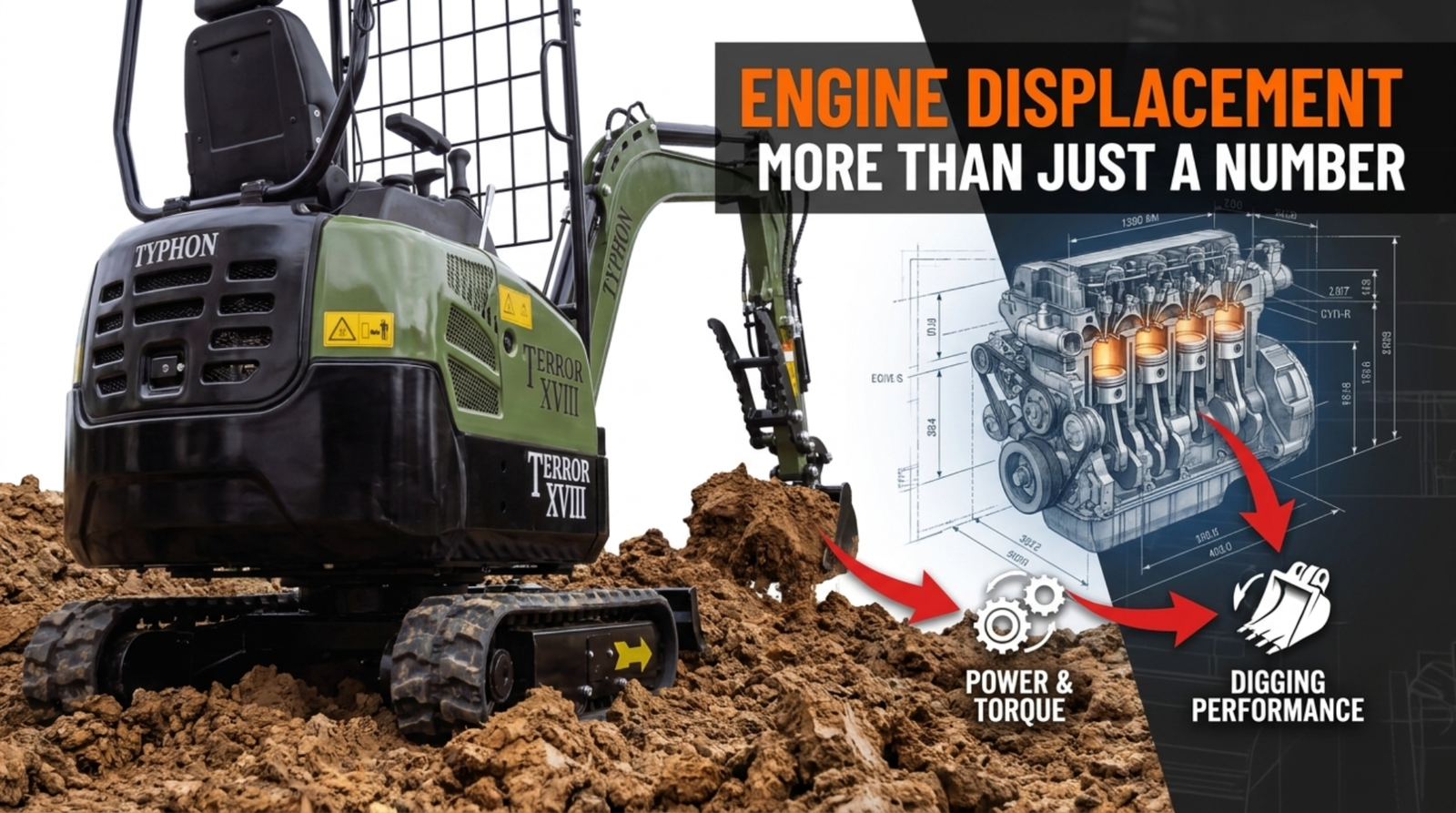
Buyers shopping for a compact excavator often focus on dig depth, weight, and lift capacity, yet engine displacement quietly shapes how well the machine performs every one of those tasks. Displacement, measured in liters or cubic centimeters, is the total volume the engine’s cylinders sweep as they run, and it directly influences the power and torque the machine can produce. Get the displacement right, and the excavator digs, lifts, and runs attachments with steady confidence. Overlook it, and you may face a machine that strains under load or wastes fuel it never needed to burn. This guide explains why engine displacement matters in a compact excavator, so you can choose a machine built to perform dependably on your jobs.
Engine Displacement Affects Power Delivery
Engine displacement is one of the clearest indicators of how much power a compact excavator can produce and how well it holds that power during demanding work. Displacement describes the combined volume of all the engine’s cylinders, and a larger swept volume generally allows the engine to draw in more air and fuel with each cycle. That capacity translates into greater potential power, which the machine relies on to dig through resistant material, swing its structure, and drive its hydraulic system without losing pace.
Power delivery is about more than a peak number on a spec sheet. What matters on the job is how consistently the engine holds its output when the work gets hard. A compact excavator with displacement suited to its size maintains steady performance as the bucket bites into dense soil or the machine lifts a heavy load. An undersized engine, by contrast, tends to bog down under the same conditions, slowing cycles and forcing the operator to work around its limits.
The right displacement helps the machine perform predictably across a full range of tasks. When you drive the bucket into compacted ground, the engine needs enough capacity to sustain force rather than stall. When you run a demanding attachment, the engine has to keep supplying power without faltering. Displacement matched to the machine’s operating demands gives the excavator the headroom it needs to handle these moments smoothly, delivering the reliable, consistent power that keeps work moving from the first pass to the last.
Larger Displacement Can Improve Low-Speed Torque
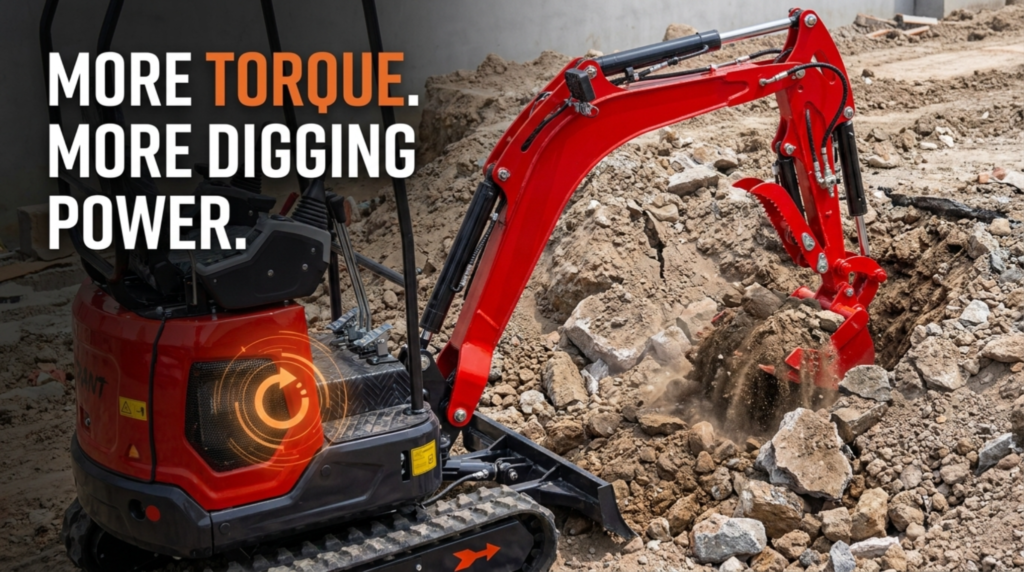
Torque is the twisting force an engine generates, and it is what actually drives a compact excavator through tough digging and heavy lifting. Displacement plays a central role here, because a larger engine can often produce stronger torque at lower engine speeds. That low-speed torque is exactly what excavation work demands, since much of the hardest effort happens when the engine is not revving high but is instead pushing steadily against resistant material.
Consider how this plays out in the field. When a bucket digs into hard clay, compacted soil, or rocky ground, the excavator needs sustained force to break through rather than a burst of high-speed power. An engine with ample low-speed torque supplies that force smoothly, letting the machine work through difficult ground without stalling or straining. The same principle applies when lifting heavy loads, where steady pulling force matters far more than raw engine speed.
Low-speed torque delivers real advantages in daily excavation work:
- Digging force: the machine drives through tough soil and dense material with steady, dependable power.
- Lifting capacity: strong torque at low speeds supports heavy loads without pushing the engine to its limit.
- Smooth operation: the engine handles demanding tasks calmly, reducing strain and keeping cycles consistent.
A compact excavator with displacement matched to produce solid low-speed torque feels confident and capable when the work turns difficult. It maintains its digging force through the hardest moments and lifts steadily without laboring. This is why displacement deserves attention beyond its influence on peak power. The torque it enables at working speeds is what allows the machine to tackle the toughest ground and heaviest loads reliably, shift after shift.
Displacement Influences Hydraulic Performance
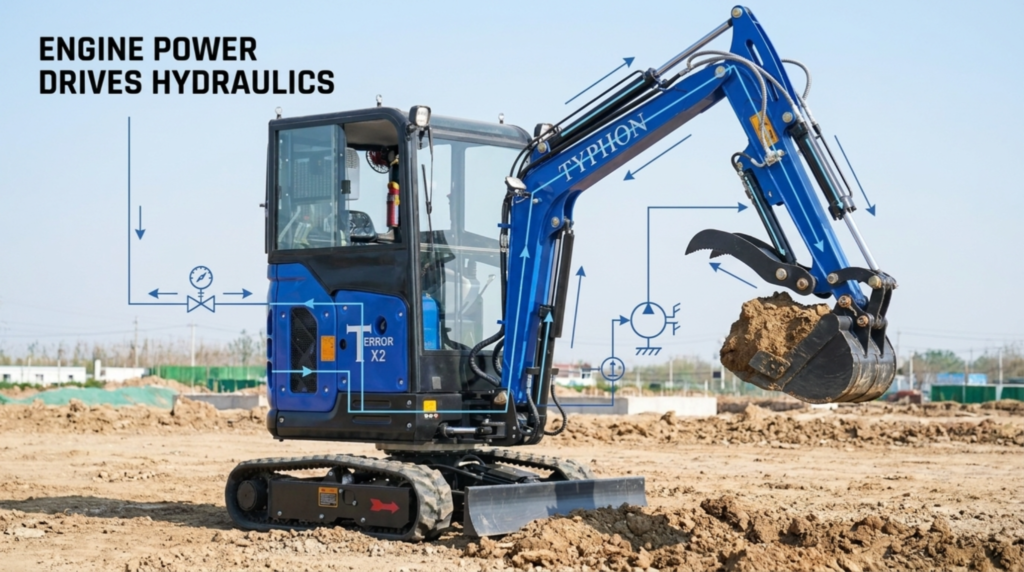
A compact excavator does most of its real work through its hydraulic system, and that system depends entirely on the engine for power. The engine drives the hydraulic pump, which supplies the flow and pressure that move the boom, arm, and bucket and run every hydraulic attachment. Because displacement shapes how much power the engine can deliver, it also affects how well the machine can drive its hydraulics under load.
Hydraulic flow controls how fast the machine’s functions operate, while hydraulic pressure controls how much force they generate. Both draw directly on engine power, so the engine must supply enough to keep the pump performing even when the machine works hard. An engine with displacement matched to the excavator can maintain useful hydraulic flow and pressure through demanding tasks, keeping cycle times quick and digging force strong. An underpowered engine, on the other hand, struggles to keep the pump supplied, and the hydraulics weaken exactly when the work needs them most.
This connection becomes most apparent under sustained load. When a compact excavator digs and lifts continuously, or runs a power-hungry attachment such as a breaker or auger, the hydraulic system needs steady power from the engine to hold its flow and pressure. If the engine cannot keep pace, lifting slows, attachments lose responsiveness, and the machine cannot reach its rated performance. A properly matched engine, with displacement suited to the hydraulic demands, keeps the system working smoothly and predictably. When you evaluate a compact excavator, look at how its engine supports the rated hydraulic flow and pressure, since that pairing determines how capable the machine performs the tasks you count on.
Fuel Consumption Depends on Engine Size and Workload
It is a common assumption that a larger displacement engine always burns more fuel, but the reality is more nuanced. Fuel consumption depends far more on how well the engine is matched to the machine and how much power the job actually requires than on displacement alone. A larger engine working comfortably within its efficient range can sometimes use fuel more sensibly than a smaller engine forced to strain near its limit all day.
The reason lies in how engines use fuel under load. An engine runs most efficiently within a comfortable band of its output, not at the extreme edge of its capacity. When a smaller-displacement engine is pushed hard to keep up with demanding work, it labors, runs hotter, and burns fuel less efficiently, which can erase the savings its smaller size seemed to promise. A larger engine handling the same work with reserve to spare may operate in its efficient range and deliver comparable or even better real-world economy.
Workload is the deciding factor. On light tasks, a smaller engine may sip fuel and prove economical. On heavy, sustained work, that same engine may consume more than expected as it struggles to cope. A larger engine matched to the machine and the job supplies the power the work demands without straining, converting fuel into productive output rather than wasting it on effort the engine cannot comfortably sustain. When you weigh fuel efficiency, look past displacement alone and consider how hard the engine has to work to do the job. An engine sized correctly for the machine and its typical workload usually delivers the most sensible fuel use over time.
Match Displacement to the Excavator’s Size
The best engine displacement for a compact excavator is not necessarily the largest available. What matters is how well the displacement suits the machine and the work it will do. A sound choice weighs the excavator’s operating weight, its hydraulic demands, its typical workload, and its intended applications together, so the engine delivers balanced performance rather than power the machine cannot use or capacity it cannot meet.
Operating weight is a natural starting point. A heavier machine needs more displacement to move, swing, and drive its working members through resistant material with ease, while a lighter machine performs well with a smaller engine. Hydraulic demands matter just as much, since the engine must supply the pump with enough power to maintain the flow and pressure the work requires. Beyond these, the machine’s duty cycle and the attachments it runs shape the right displacement, because long shifts and power-hungry tools call for more capacity than occasional light tasks.
Several factors deserve attention when matching displacement to a compact excavator:
- Operating weight: the engine needs enough displacement to move and control the machine’s full frame comfortably.
- Hydraulic requirements: displacement should support the rated flow and pressure the machine’s work demands.
- Workload and attachments: demanding tasks and power-hungry attachments call for greater engine capacity.
- Intended applications: the jobs the machine will handle most often should guide the balance of power and efficiency.
When these factors align, the excavator delivers dependable digging force, steady hydraulic performance, and sensible fuel use. A machine with displacement matched to its size and workload performs consistently and holds up under demanding conditions, giving you the balanced capability that makes a compact excavator a reliable investment.
Conclusion
Engine displacement shapes far more than a single number on a compact excavator’s spec sheet. It influences power delivery, enables the low-speed torque that drives tough digging and heavy lifting, supports the hydraulic flow and pressure the machine depends on, and plays a real role in fuel efficiency when weighed against the workload. The right displacement is not the biggest one available but the one matched to the excavator’s operating weight, hydraulic demands, duty cycle, and intended applications. When you choose your next compact excavator, look past displacement in isolation and study how well it fits the machine and the work. That balance is what delivers the consistent performance, dependable force, and sensible operation you can count on for years.
Frequently Asked Questions
1. What is engine displacement and why does it matter in a compact excavator?
Engine displacement is the total volume all the engine’s cylinders sweep as they run, usually measured in liters or cubic centimeters. It matters because it strongly influences how much power and torque the engine can produce. A larger swept volume generally lets the engine draw in more air and fuel with each cycle, which supports greater potential power. In a compact excavator, that power drives digging, lifting, swinging, and the hydraulic system. Displacement matched to the machine’s size and workload helps it hold steady performance under load, while an undersized engine tends to bog down when the work turns demanding.
2. Does a larger displacement engine always produce more torque?
A larger displacement engine can often produce stronger torque, particularly at lower engine speeds, which is exactly what excavation work needs. Torque is the twisting force that drives the bucket through hard ground and supports heavy lifting, and much of that effort happens at low engine speeds rather than high revs. That said, torque depends on more than displacement alone, including engine design, fuel delivery, and tuning. Still, ample displacement gives an engine the capacity to generate the sustained low-speed torque that lets a compact excavator work through tough soil and lift steadily without stalling or straining.
3. How does engine displacement affect hydraulic performance?
The engine drives the hydraulic pump that powers the boom, arm, bucket, and every hydraulic attachment, so displacement affects how well the machine can run its hydraulics. Hydraulic flow controls how fast functions operate, and pressure controls how much force they generate, and both draw directly on engine power. An engine with displacement matched to the excavator can keep the pump supplied with enough power to maintain useful flow and pressure, even under sustained load. An underpowered engine struggles to keep pace, so lifting slows, attachments lose responsiveness, and the machine cannot reach its rated hydraulic performance when the work demands it most.
4. Does a bigger engine always use more fuel?
Not necessarily. Fuel consumption depends more on how well the engine is matched to the machine and how much power the job requires than on displacement alone. Engines run most efficiently within a comfortable range of their output, not at the extreme edge of their capacity. A smaller engine forced to strain near its limit all day can burn fuel inefficiently, sometimes erasing the savings its size seemed to offer. A larger engine handling the same work with reserve to spare may operate in its efficient range and deliver comparable or better real-world economy. Workload is the deciding factor when judging fuel use.
5. How do I match engine displacement to the right compact excavator?
Match displacement to the machine rather than simply choosing the largest available. Consider the excavator’s operating weight, since a heavier machine needs more displacement to move and control its frame with ease. Factor in hydraulic requirements, because the engine must supply the pump with enough power for the flow and pressure your work demands. Account for the duty cycle and the attachments you plan to run, as long shifts and power-hungry tools call for more capacity. Finally, weigh the intended applications the machine will handle most often. When these factors align, the excavator delivers balanced digging force, steady hydraulics, and sensible fuel use.