

How to Maintain Forklift Wheels for Safer, Smoother Operation
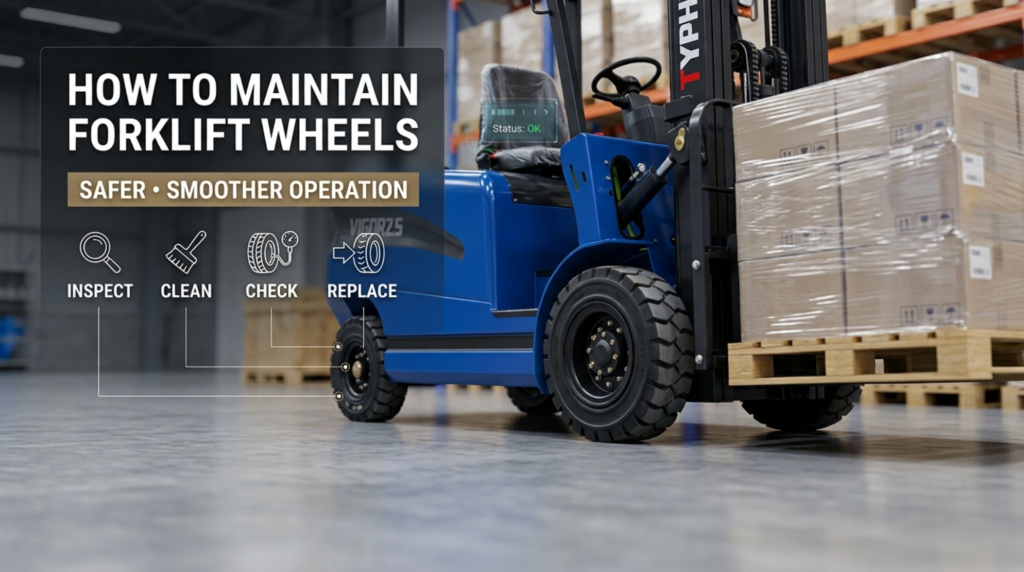
Forklift wheels take a beating every single shift, yet they’re easy to overlook until something goes wrong. Worn or damaged wheels don’t just make the ride rough; they compromise stability, traction, and control, putting both your operators and your loads at risk. The good news is that keeping wheels in top condition takes only consistent attention and a few straightforward habits. This post walks through five practical ways to maintain forklift wheels for safer, smoother operation, covering pre-shift inspections, monitoring tire wear, keeping wheels clean, checking alignment and hardware, and replacing damaged wheels promptly. Build these steps into your routine, and you’ll protect your equipment, your people, and your uptime.
Inspect Wheels Before Every Shift
A quick wheel inspection before each shift is one of the simplest, most valuable habits an operator can build. Forklift wheels endure constant stress from heavy loads, sharp turns, and rough surfaces, and small problems can develop quickly between one shift and the next. Taking a few minutes to look them over before starting work catches issues while they’re still minor, well before they turn into handling problems or unexpected downtime on the floor.
Focus your inspection on the specific signs that reveal a wheel in trouble. Each type of damage tells you something about how the wheel is wearing and whether it’s safe to keep in service:
- Cracks, which can spread under load and lead to sudden wheel failure.
- Flat spots, often caused by hard braking or dragging, create a rough, unstable ride.
- Chunking, where pieces of the tire material break away and compromise the wheel’s integrity.
- Excessive wear, showing that the wheel is approaching or has passed its usable limit.
- Embedded debris, such as metal shards, glass, or stones lodged in the tread or surface.
Any one of these findings deserves attention before the forklift goes to work.
Make the inspection a deliberate, consistent part of the pre-shift routine rather than a rushed glance. Walk around the machine, examine each wheel closely, and check both the tread surface and the sidewall or wheel body. Removing embedded debris right away prevents it from working deeper and causing further damage during operation. When operators know what to look for and check faithfully every shift, they spot developing problems early and keep the forklift running safely. This small daily habit protects the machine, the load, and everyone working nearby, making it a cornerstone of responsible forklift maintenance.
Monitor Tire Wear and Condition
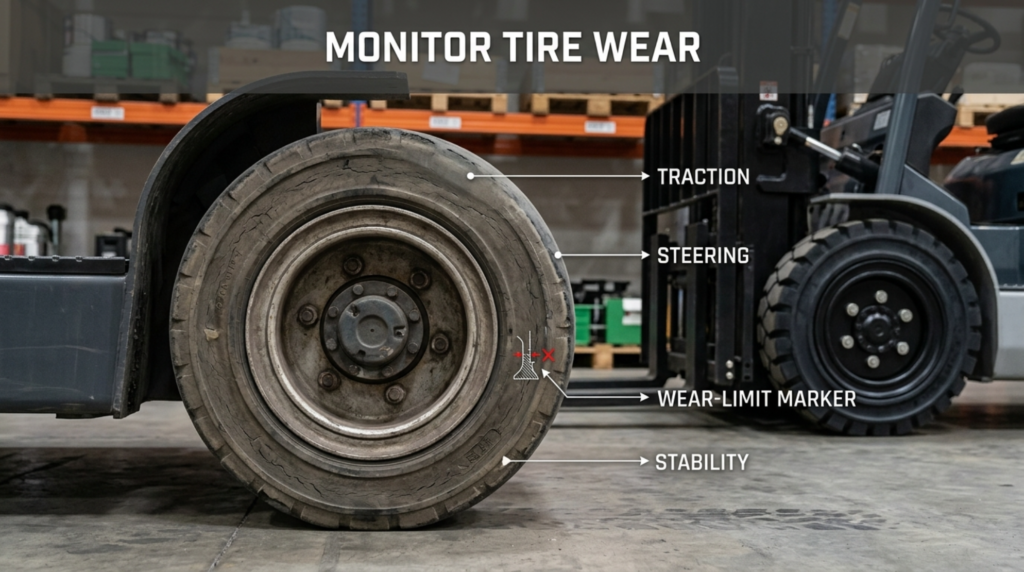
Beyond the daily inspection, keeping a longer-term eye on tire wear helps you understand how your wheels are holding up over time. Wear is a normal part of a forklift wheel’s life, but the way it wears tells you a great deal about the machine’s condition and how it’s being operated. Uneven or excessive wear doesn’t just shorten a wheel’s lifespan; it directly affects how safely and predictably the forklift handles, which makes ongoing monitoring well worth the effort.
The effects of worn wheels show up across several critical areas of performance. As tread and material wear down, the wheel loses its ability to grip and support the machine the way it should:
- Stability, which suffers when worn wheels change the machine’s ride height and balance under load.
- Traction, which weakens as tread wears away, raising the risk of slipping on smooth or wet surfaces.
- Steering, which becomes less precise and more difficult when wheels are worn unevenly.
Watching for these changes helps you catch a decline in handling before it becomes a safety concern.
Uneven wear in particular is worth investigating, because it often points to an underlying issue such as misalignment, a hardware problem, or improper operation. Rather than simply replacing the wheel and moving on, take the chance to identify and correct the root cause so the new wheel doesn’t wear the same way. Most importantly, replace wheels once they reach the manufacturer’s specified wear limits. Those limits exist for a reason, and pushing wheels beyond them trades a modest replacement cost for serious risks to stability, traction, and control. Monitoring wear consistently and replacing wheels on time keeps your forklift handling safely and dependably through every load it carries.
Keep Wheels Clean
Clean wheels are safer, longer-lasting wheels, and keeping them free of buildup is an easy habit that pays off. Forklifts work in environments full of dirt, debris, and spilled materials, and all of that can accumulate on the wheels over time. Left unchecked, this buildup damages the wheels, reduces traction, and hides developing problems that a clean surface would reveal during inspection. Regular cleaning protects both the condition of the wheels and the safety of every operation.
Different materials pose different threats, and knowing what to remove helps you clean effectively:
- Dirt and grime, which build up and can trap moisture and other contaminants against the wheel.
- Metal debris, such as shavings or shards that can embed in the tread and cause punctures or cuts.
- Oil and grease, which reduce traction dangerously and can degrade certain wheel materials.
- Other materials, including chemicals or spilled substances specific to your worksite that may harm the wheels.
Clearing these away regularly keeps the wheels performing the way they were designed to.
The traction benefit alone makes cleaning worthwhile. A wheel coated in oil or grease can’t grip the floor properly, and that loss of traction makes the forklift harder to control, especially when carrying a load or working on a smooth surface. Removing contaminants restores the wheel’s contact with the ground and keeps handling safe and predictable. Cleaning also protects the wheel material itself, since oil, chemicals, and embedded metal can slowly degrade or damage a wheel that would otherwise last much longer. As a bonus, clean wheels are far easier to inspect, letting operators spot cracks, wear, and debris that dirt would otherwise conceal. Working a quick cleaning into your maintenance routine keeps wheels in better shape and makes every other maintenance step more effective.
Check Wheel Alignment and Hardware
The wheels themselves are only part of the picture; the alignment and hardware that hold them in place matter just as much. Proper alignment and sound mounting components ensure the wheels turn true, wear evenly, and support the forklift the way they’re meant to. When alignment drifts or hardware loosens, the effects show up as uneven wear, poor handling, and premature wheel failure, so checking these components regularly is an essential part of keeping wheels in good condition.
Several components deserve regular attention during maintenance, and each plays a role in how well the wheels perform:
- Wheel alignment, which keeps the wheels tracking correctly and prevents the uneven wear that misalignment causes.
- Bearings, which allow the wheels to spin smoothly and, when worn, create noise, heat, and rough operation.
- Fasteners, including lug nuts and bolts that must stay properly tightened to hold the wheels securely.
- Mounting components, which connect the wheel assembly to the machine and must remain sound and undamaged.
Inspecting these together gives you a complete view of the wheel system’s health.
Alignment issues are especially worth catching early, because misaligned wheels wear unevenly and force the machine to work harder to travel and steer. That uneven wear shortens wheel life and can point to problems elsewhere in the running gear. Worn bearings, meanwhile, compromise smooth operation and can lead to more serious damage if ignored, so any grinding, wobbling, or excess heat calls for prompt attention. Loose or damaged fasteners and mounting components are a direct safety concern, since a wheel that isn’t held securely can shift or fail during operation. Checking alignment and hardware on a regular schedule prevents these problems from developing, protects your wheels from unnecessary wear, and keeps the forklift handling smoothly and safely across every shift.
Replace Damaged Wheels Promptly
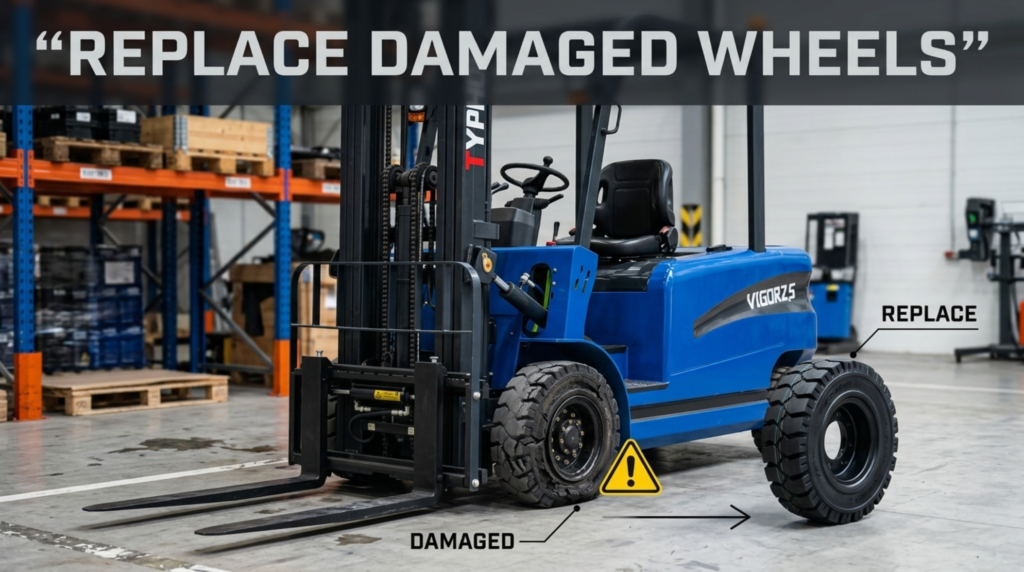
When a wheel shows serious wear or damage, the safest and smartest response is to replace it right away. It can be tempting to squeeze a little more life out of a worn wheel, but doing so trades a small, predictable expense for real risks to safety and productivity. Worn or damaged wheels make a forklift harder to control, and that loss of control endangers operators, loads, and everyone working nearby. Acting promptly protects your people and keeps your operation running smoothly.
The dangers of running a compromised wheel are significant and directly tied to how the machine handles. A damaged wheel undermines the forklift’s stability and control in ways that quickly become hazardous:
- Harder handling, as worn or damaged wheels make steering and maneuvering less predictable.
- Reduced stability, raising the risk of tipping, especially when lifting or carrying loads.
- Increased safety risks, including dropped loads, collisions, and accidents caused by poor control.
None of these risks is worth accepting when a replacement resolves them completely.
The key is to address problems before they affect daily operation, rather than waiting for a wheel to fail on the floor. A wheel that fails mid-shift causes far more disruption and danger than one replaced proactively during scheduled maintenance. When your inspections and wear monitoring reveal a wheel that’s cracked, badly worn, chunked, or otherwise damaged, take it out of service and replace it without delay. Prompt replacement restores the forklift’s full handling and stability, eliminates the safety hazards a bad wheel creates, and prevents the unplanned downtime that comes with sudden failure. Treating wheel replacement as a priority rather than an afterthought is one of the most direct ways to keep your forklift safe, reliable, and productive.
Conclusion
Well-maintained forklift wheels are the foundation of safe, smooth, and dependable operation. Inspect them before every shift for cracks, flat spots, chunking, wear, and debris, and monitor tire condition over time to protect stability, traction, and steering. Keep the wheels clean to preserve traction and reveal hidden problems, and check alignment, bearings, fasteners, and mounting hardware regularly to prevent uneven wear and handling issues. Above all, replace worn or damaged wheels promptly, before they compromise control or force unexpected downtime. Build these five habits into your maintenance routine, and your forklift will handle reliably, protect your team, and keep your operation moving safely every shift.