

Rated Horsepower vs. Gross Horsepower on Skid Steer Loaders
Horsepower is often the first number buyers look for on a skid steer specification sheet, and it is one of the easiest to misread. A brochure may list gross horsepower. A competing brochure may show rated horsepower, and a third may publish net power. These figures can look directly comparable, but they often describe different measurements. A buyer who treats them as equal can end up with a machine that looks stronger on paper than it performs on the job.
The differences come from how each figure is measured. The test standard, the engine speed, and the accessories connected during testing all change the published number. The word “rated” adds more confusion, because it describes the engine speed at which output is measured, not whether accessory loads were included. Depending on the manufacturer, a rated figure can be either gross or net.
Understanding gross, rated, and net horsepower helps buyers interpret engine specifications accurately. Engine power alone, however, does not determine how effectively a skid steer lifts loads, carries materials, or operates attachments. Evaluating hydraulic flow, operating capacity, breakout force, and other key specifications provides a more complete basis for matching a machine to job requirements and comparing models fairly.
What Gross Horsepower Means
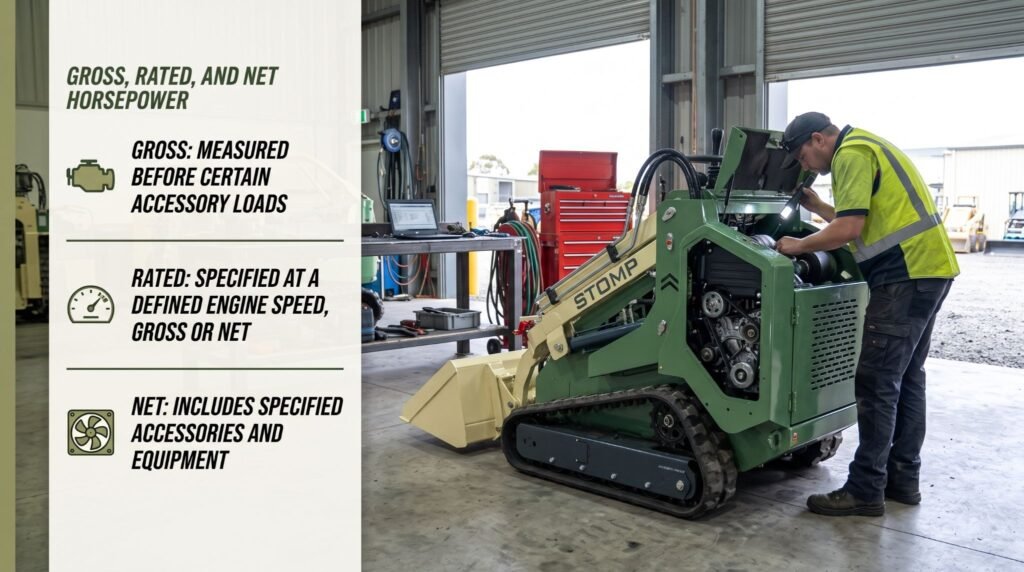
Gross horsepower generally describes engine output measured under specified test conditions before certain accessories and operating-system loads are accounted for. In off-road equipment, SAE J1995 is a widely used reference standard for this type of measurement. The test isolates the engine so its basic output can be recorded under controlled, repeatable conditions.
Some power-consuming components may be left out of the test. As a result, a gross figure usually reflects the engine in a lighter-loaded state than it experiences inside a working machine, and the number tends to be higher than a measurement taken with more operating loads connected. The exact test method and the equipment included can vary between standards and manufacturers, so the footnotes on a specification sheet matter.
Gross horsepower still has real value. When two engines are measured to the same standard, the gross figure offers a fair way to compare their basic output. It does not, however, describe what remains for productive work once the cooling fan, hydraulic pump, alternator, and other systems start drawing power. On a working skid steer, those systems run constantly.
Treat a gross figure as a description of the engine, not of the complete machine. The power that reaches the drive system, lift arms, and attachments depends on far more than the engine’s output on a test stand. That is why gross horsepower works best as one reference point inside a broader comparison.
Key takeaway: Gross horsepower describes engine output under defined test conditions, often referenced to SAE J1995, but it does not represent the power available while the skid steer is working.
Understanding Rated Horsepower
Rated horsepower is engine output specified at a defined rated engine speed under a stated test standard. The rated speed is usually the governed speed at which the engine is designed to deliver its listed output during normal operation. The figure tells you how much power the engine produces at that particular operating point.
The detail that trips up many buyers is that “rated” refers to the speed condition, not to the measurement type. A manufacturer may publish rated gross power, rated net power, or both. Two spec sheets that each list “rated horsepower” may therefore describe different measurements, even though the label is identical.
This is where many comparisons go wrong. Buyers often assume every rated figure is a net figure, then set it against a competitor’s gross rating without realizing it. The result can make one engine look noticeably weaker or stronger than it really is. That gap can shape a purchasing decision that later proves to be the wrong fit.
Read the notes beside every horsepower figure. Look for the measurement type, the rated engine speed, and the referenced standard. If a specification sheet doesn’t state these clearly, ask your dealer to confirm them before you rely on the number. A few minutes of checking protects a significant equipment investment.
Key takeaway: Rated horsepower is tied to a specific engine speed and test standard and may be gross or net, so always confirm the measurement type before comparing skid steers.
Matching Horsepower to the Job
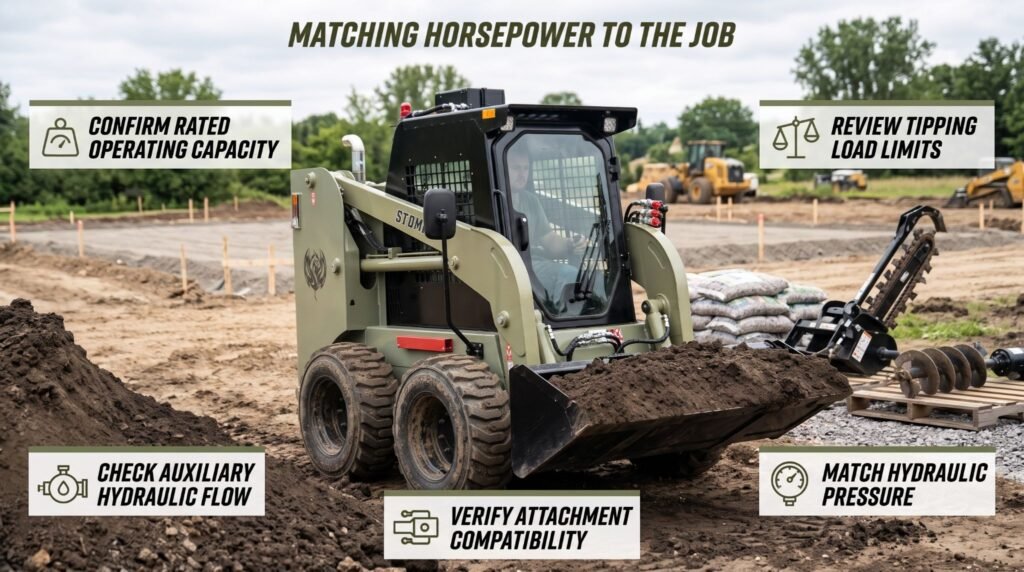
Grading, material handling, auger drilling, and trenching each place different demands on a skid steer. More horsepower does not help if the machine’s capacity or hydraulic setup doesn’t suit the work. Review these five factors against your typical tasks before giving engine output priority.
- Rated Operating Capacity: Confirm the machine can safely carry the loads you handle most often.
- Tipping Load: Review the tipping load to understand the machine’s stability limits.
- Auxiliary Flow: Check that hydraulic flow meets the requirements of your attachments.
- Hydraulic Pressure: Make sure circuit pressure suits the tools you plan to run.
- Attachment Compatibility: Verify coupler fit, hydraulic connections, and attachment weight for every tool.
Key takeaway: Rated operating capacity, tipping load, auxiliary flow, hydraulic pressure, and attachment compatibility often matter more than horsepower when matching a skid steer to the job.
Why Net Power May Also Matter
Net horsepower generally accounts for specified engine accessories and operating equipment under the relevant test procedure. SAE J1349 is a common reference standard for net engine power measurement. Because more of the engine’s working loads are included, the result describes the engine in a more fully configured state.
For many buyers, that view sits closer to what the engine can actually contribute once it is installed and supports the machine’s systems. A net figure reflects an engine that is already carrying part of the load it will face during real operation. That makes it a practical reference when you want to understand usable engine output.
Net figures are most meaningful when compared against other net figures. A machine listed at a lower net rating may deliver usable power similar to a competitor listed at a higher gross rating. Only equivalent standards and conditions produce a fair, accurate comparison.
When one manufacturer lists only gross power and another lists only net power, ask both dealers for figures measured to the same standard. This simple step removes one of the most common sources of misleading engine comparisons. It also gives you a clear, defensible basis for your decision.
Key takeaway: Net power, often referenced to SAE J1349, reflects the engine in a more configured state, and fair comparisons require both machines to use equivalent measurement standards.
Engine Power and Hydraulic Performance
Engine horsepower sets the power supply, but it does not decide how well a skid steer runs an attachment. The hydraulic system converts engine power into the flow and pressure that drive each tool. Flow mainly controls how fast the attachment works, while pressure contributes to the force it can apply.
Attachment performance depends on the complete hydraulic package. The pump, circuit design, cooling capacity, and machine controls all shape the final result. A strong engine paired with limited auxiliary flow can leave a mulcher, cold planer, or trencher underperforming. A well-matched hydraulic system can deliver dependable results from a more moderate engine rating.
Sustained work deserves special attention. Running an auger, trencher, or mulcher for hours generates heat, and excess heat can reduce hydraulic efficiency over a long shift. A machine that handles short bursts well may lose performance during continuous operation if its cooling system cannot keep pace with demand.
When you evaluate a skid steer for attachment work, review auxiliary flow and pressure alongside engine output. Then ask how the machine performs during extended use with the specific tools you plan to run. That combination tells you far more about productivity than horsepower alone.
Key takeaway: Attachment performance depends on hydraulic flow, pressure, cooling, and controls as much as on engine horsepower, especially during sustained hydraulic work.
Comparing Manufacturer Specifications
Official specification sheets remain the most reliable basis for comparison, provided you read the details carefully. For every machine on your shortlist, record the horsepower measurement type, rated engine speed, and test standard in one place. A simple side-by-side table makes mismatched figures easy to spot.
Look beyond engine power to the factors that shape daily operating cost. Fuel consumption, service intervals, maintenance access, and cooling performance all influence how the machine behaves under load and what it costs to own over time. These details often separate a dependable machine from one that simply posts a strong headline number.
Consider the tasks your crews complete most often rather than peak figures alone. A skid steer that delivers steady results during routine grading, loading, and cleanup may serve your business better than a machine built around a higher horsepower rating that your work rarely uses.
When your work calls for sustained hydraulic output, ask for a demonstration or verified performance information. Watching the machine run your attachment on representative material gives a clearer answer than any published figure. It also lets your operators judge controls, visibility, and comfort firsthand before you commit.
Key takeaway: Record the measurement type, rated speed, and test standard for every machine, and confirm performance through a demonstration when the work is demanding.
Conclusion
Gross, rated, and net horsepower each provide useful information, but their value depends on the testing standard and how each manufacturer reports engine output. Gross horsepower describes engine output under test conditions, rated horsepower is tied to a specific engine speed and may be gross or net, and net power reflects a more configured engine state. For buyers researching why skid steers are a good pick for landscaping, hydraulic flow, pressure, cooling, and attachment compatibility are equally important because they affect how well the machine operates tools such as grapples, augers, and soil conditioners. Rated operating capacity and tipping load also help define safe working limits. Before buying, compare equivalent horsepower ratings, lifting capacity, auxiliary hydraulic flow, system pressure, and attachment compatibility. Review fuel use, cooling performance, and service requirements, then test suitable skid steers with the attachments you rely on most to identify the best fit for your landscaping work.
Frequently Asked Questions
Is gross horsepower always higher than rated horsepower?
Not in every published comparison, because terms and test standards vary between manufacturers. A rated figure may itself be a gross measurement taken at a specified engine speed. Confirm each manufacturer’s definitions and referenced standards before comparing the numbers.
Does rated horsepower always mean net horsepower?
No. Rated horsepower describes engine output at a specified engine speed, and that output may be measured as gross or net. Check the specification notes and the applicable test standard before drawing any conclusions.
Can horsepower predict attachment performance by itself?
No. Hydraulic flow, pressure, cooling capacity, machine capacity, and attachment requirements all affect results. A well-matched hydraulic system often has a greater influence on attachment performance than the engine rating.
What is the best way to compare two skid steers?
Compare engine ratings measured to equivalent standards, along with rated operating capacity, tipping load, hydraulic specifications, and dimensions. Then arrange a demonstration with the attachments you use most. That step confirms how each machine performs under real working conditions.