

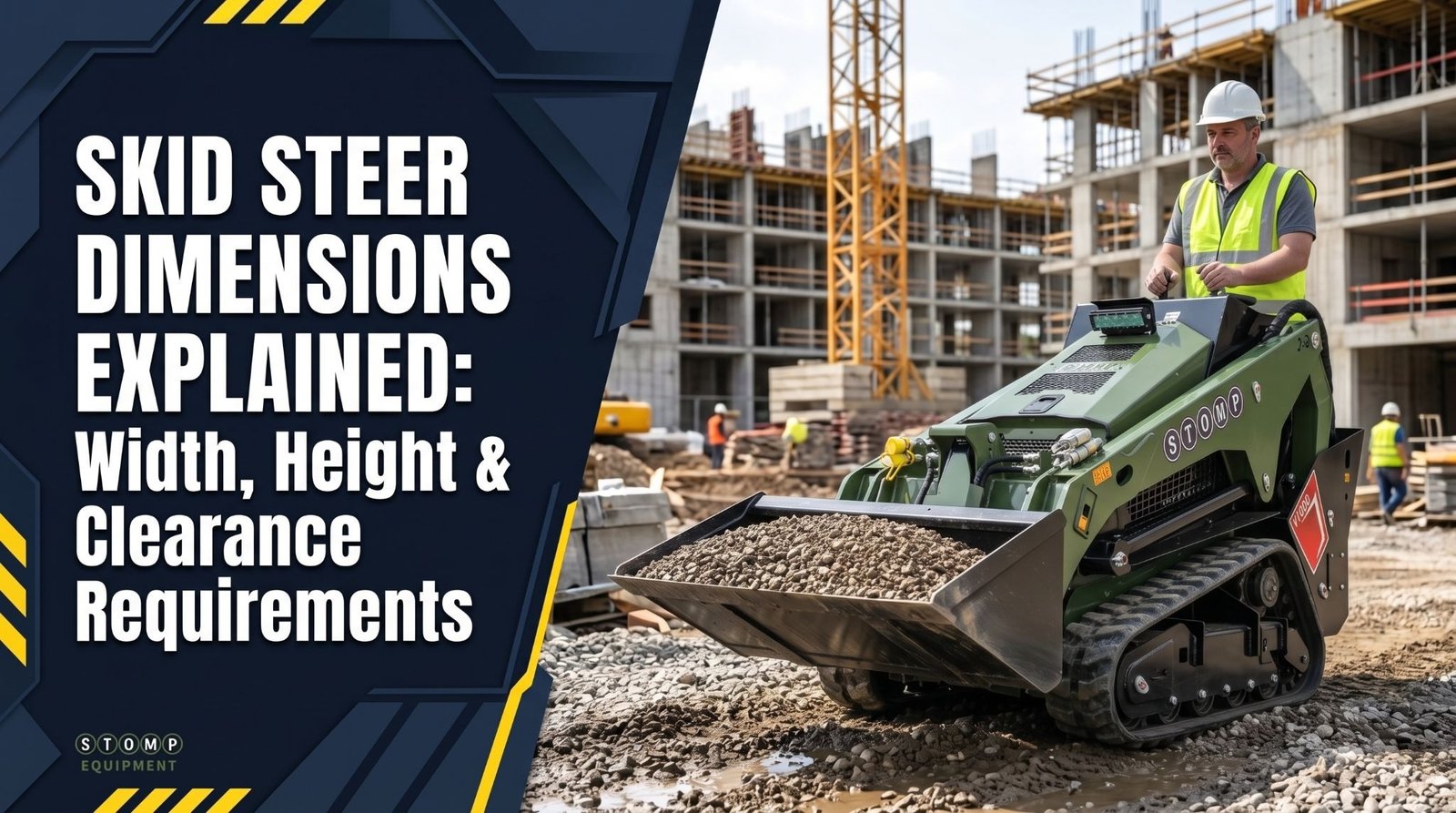
Skid Steer Dimensions Explained: Width, Height & Clearance Requirements
Machine dimensions decide whether your skid steer even reaches the work. You can pick the right attachment and the right horsepower, but if the machine won’t fit through the gate, clear the doorway, or turn safely in a tight yard, all that capability sits parked at the curb. Width, height, and clearance are the specs that quietly determine where your skid steer can go and what it can do once it gets there.
Many buyers focus on rated operating capacity and lift path, then treat the physical footprint as an afterthought. That’s a costly mistake. The wrong dimensions mean stalled jobs, damaged fences, scraped door frames, and machines that can’t access half the sites you bid on. Get the dimensions right, and a well-matched skid steer moves freely through spaces that leave oversized machines stranded outside.
Instead of focusing on engine power or lifting capacity alone, start with the dimensions that determine where a skid steer can actually work. Understanding machine width, overall height, and clearance requirements helps you avoid access problems, improve jobsite safety, and choose equipment that fits your daily projects. The sections below explain how each measurement influences real-world performance and why getting these dimensions right is essential before making a purchase.
Width and Access Through Tight Spaces
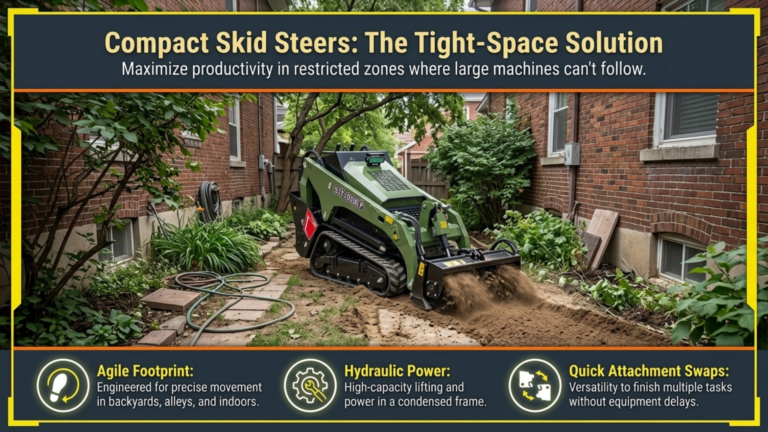
Machine width is the dimension that decides whether your skid steer clears the opening in front of it. Gates, doorways, fence gaps, and side yards all set hard limits, and a machine even an inch too wide simply stops at the threshold. Compact dimensions make it easier to navigate residential properties, landscaping projects, warehouses, and urban construction sites where access is limited.
Before choosing a skid steer, measure the narrowest entry points you regularly encounter and compare them with the machine’s overall width, including the tires or tracks if applicable. It’s also wise to leave a small clearance margin rather than selecting a machine that barely fits. Extra space allows for easier maneuvering, reduces the risk of damaging gates, walls, or fences, and helps operators move more confidently through tight work areas.
Fitting Through Gates and Doorways
Standard residential gates often run 36 to 48 inches wide, and interior doorways can be tighter still. A full-size skid steer may measure 66 to 78 inches across the tires, which leaves it stuck outside most backyard and interior jobs. That gap between machine width and opening width is where projects stall before they start.
Compact and narrow-frame skid steers exist for exactly this reason. Some models drop below 36 inches wide, letting them slip through a standard gate with room to spare. If you regularly work in fenced yards, older buildings, or landscaping sites, that narrow footprint isn’t a nice-to-have; it’s the difference between winning the job and passing on it.
Before you buy or rent, measure the tightest opening you expect to face and compare it to the machine’s width over the tires or tracks. Add a few inches of margin for safe steering, and you’ll know exactly which sites the machine can reach.
Takeaway: Measure your narrowest gate or doorway first, then choose a machine that fits with a few inches to spare.
Tire and Track Choices That Change Width
The same skid steer can measure different widths depending on how it’s outfitted. Wider tires add flotation and stability but also add inches to the overall footprint. Rubber tracks improve traction on soft ground yet often make the machine wider than a wheeled version of the same model.
That trade-off matters when access is tight. You might gain grip and gain stability, only to lose the ability to fit through the gate you needed to clear. On soft or muddy sites the extra width is worth it; on tight urban and residential work, a narrower wheeled setup often wins.
Think through your typical ground conditions and your typical access points together, not separately. Match the tire or track choice to both, and you avoid the frustration of a machine that grips beautifully but can’t reach the work.
Takeaway: Balance traction against access, and pick the tire or track setup that suits both your ground and your tightest openings.
Height and Overhead Clearance
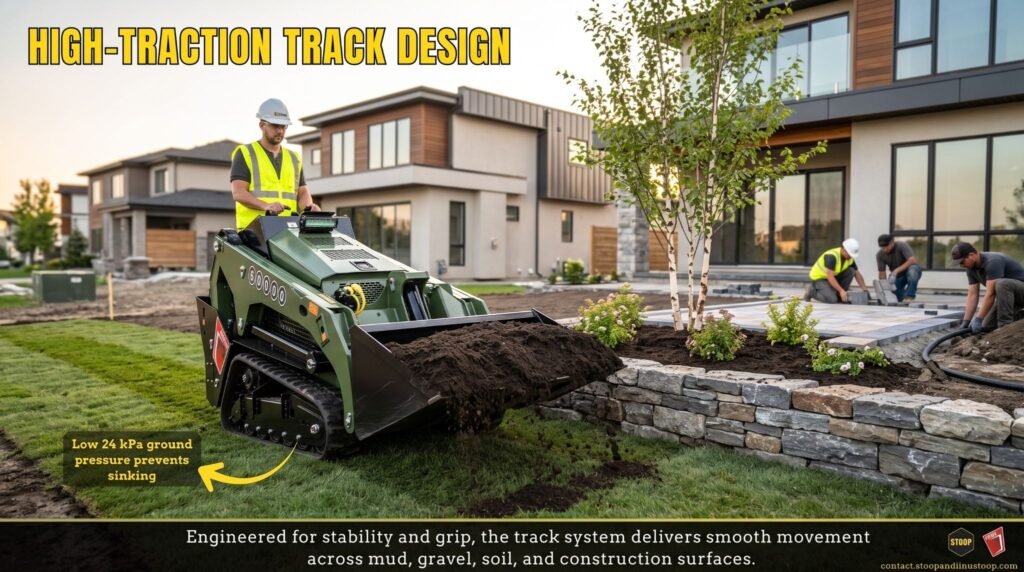
Width gets a machine to the site, but height determines whether it can work once inside. Overhead clearance inside buildings, under structures, and near doorways sets a ceiling on where the skid steer can safely operate. Even a few inches of extra height can prevent access to garages, warehouses, livestock barns, or parking structures, limiting where the machine can be used.
Before bringing a skid steer to a jobsite, measure the lowest overhead obstacles the machine will encounter, including door frames, beams, utility lines, and tree branches. Keep in mind that attachments and raised lift arms can increase the overall operating height during certain tasks. Allowing sufficient clearance not only prevents costly damage to equipment and structures but also improves operator safety and ensures smoother, more efficient jobsite operations.
Clearing Doorways and Low Ceilings
The height of a skid steer to the top of the cab or ROPS often runs 75 to 84 inches. Many garage doors, barn entrances, and warehouse bays sit right around that range, so a machine that fits through the width may still catch at the top. Height is the second gate you have to clear.
Indoor demolition, warehouse cleanup, and barn work all reward a lower profile. Some compact models are built specifically to duck under standard doorways and low beams, which opens up interior jobs that taller machines can’t touch. Knowing your building’s clear opening height before the machine arrives saves a wasted trip.
Measure the lowest overhead point along the machine’s full path, not just the entrance. A doorway might clear fine while a duct, beam, or sprinkler line farther inside forces you to stop short. Map the whole route, and you avoid surprises mid-job.
Takeaway: Check the cab height against every overhead obstacle along the route, not just the entrance, before the machine shows up.
Lift Height Versus Travel Height
Two height numbers matter, and confusing them causes problems. Travel height is how tall the machine sits with the loader arms lowered, while maximum lift height is how high the bucket reaches at full extension. You need the travel height to get inside and the lift height to actually do the work.
A machine might slip under a low doorway with arms down, then have nowhere near enough room to raise the bucket and dump into a bin inside. That mismatch turns a promising interior job into a frustrating one. Both numbers have to fit the space.
Check travel height against your entrances and lift height against your dump targets and interior ceiling. When both clear with margin, the machine can move in, work, and unload without fighting the building around it.
Takeaway: Confirm both travel height and lift height fit the space, so the machine can get in and still do the work.
Clearance Requirements for Safe Operation
Beyond fitting in and out, a skid steer needs the right clearances to operate safely and effectively on the jobsite. Ground clearance, turning space, and safe distances from people and structures all shape day-to-day performance. Adequate operating space allows the machine to maneuver efficiently, reduces the risk of accidental contact, and helps operators maintain better control when working in confined or busy environments.
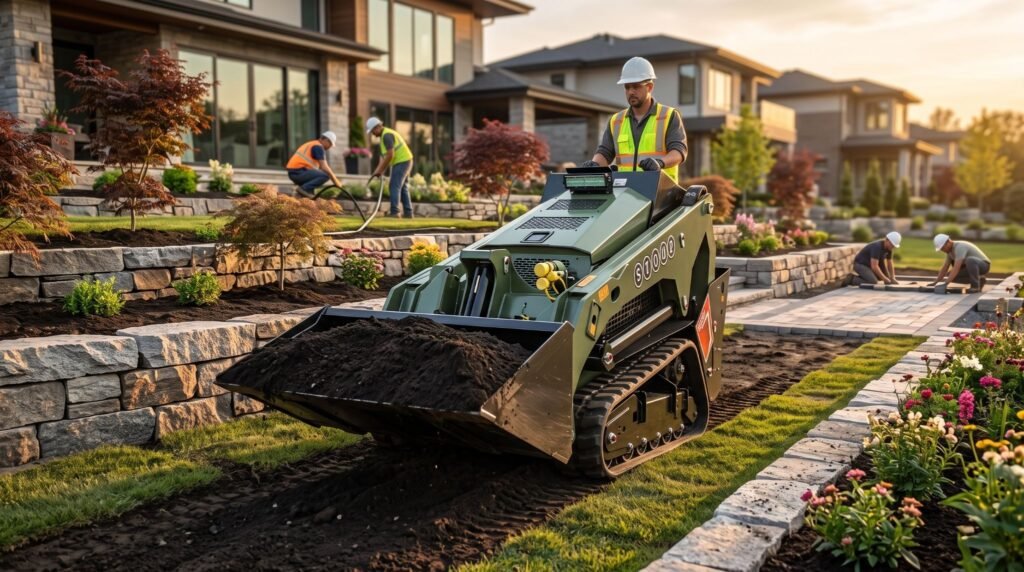
It’s also important to consider vertical and side clearance throughout the entire work cycle, not just when the machine is traveling. Raising the lift arms, dumping into trucks, or carrying bulky attachments can require additional room that isn’t obvious at first glance. Planning for these extra clearances improves jobsite safety, protects nearby equipment and buildings, and helps keep work moving without unnecessary interruptions or costly damage.
Ground Clearance and Terrain
Ground clearance is the gap between the lowest point of the chassis and the ground. On rough, rocky, or rutted terrain, that gap decides whether the machine rolls over obstacles or hangs up on them. Too little clearance and the frame drags, catching on debris and stalling progress.
Wheeled skid steers generally offer more ground clearance than tracked models, which sit lower to spread their weight. On smooth surfaces the low track profile is fine, but on uneven ground the extra clearance of a wheeled machine keeps it moving. Match the setup to the roughest terrain you expect to cross.
Look at your typical sites and pick the hardest one. If you regularly cross curbs, rubble, or graded fill, prioritize ground clearance so the machine works with the terrain instead of getting stuck on it.
Takeaway: Size ground clearance to the roughest terrain you cross, so the machine rolls over obstacles instead of dragging on them.
Safe Operating Space Around the Machine
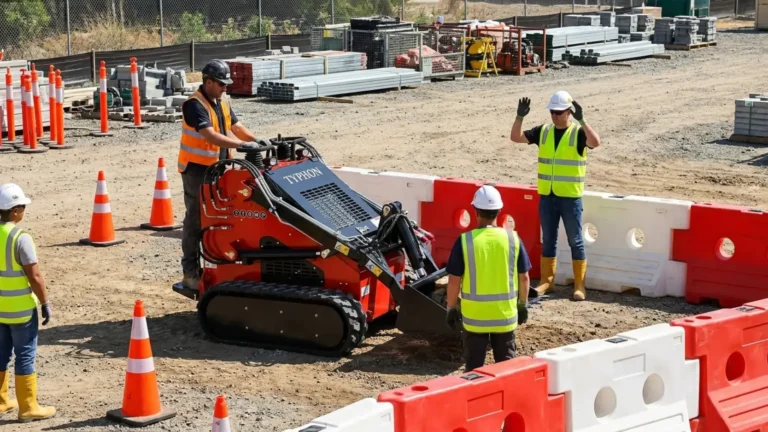
Clearance isn’t only about the machine’s dimensions; it’s about the space around it during operation. Skid steers turn by skidding, which means they need room on all sides to pivot without striking people, walls, or other equipment. Tight quarters raise the risk of collisions and pinch-point injuries.
Rollover and struck-by incidents are among the most serious hazards with this equipment, which is why keeping bystanders clear of the working zone matters so much. The National Institute for Occupational Safety and Health (NIOSH) has documented how visibility limits and confined work areas contribute to skid steer injuries, underscoring the need for clear operating space and defined exclusion zones around the machine.
Before you start, mark out a working area that gives the machine room to turn and keeps foot traffic well back. A little planning around clearance turns a cramped, risky setup into a controlled, productive one.
Takeaway: Mark out a clear working zone that gives the machine room to pivot and keeps people well clear of the danger area.
Skid Steer Dimensions Explained: Width, Height & Clearance Requirements
Machine skid steer dimensions decide whether your machine even reaches the work. You can pick the right attachment and the right horsepower, but if the machine won’t fit through the gate, clear the doorway, or turn safely in a tight yard, all that capability sits parked at the curb. Width, height, and clearance are the specs that quietly determine where your loader can go and what it can do once it gets there.
Many buyers focus on rated operating capacity and lift path, then treat the physical footprint and overall skid steer dimensions as an afterthought. That’s a costly mistake. Choosing the wrong skid steer dimensions means stalled jobs, damaged fences, scraped door frames, and machines that can’t access half the sites you bid on. Get the dimensions right, and a well-matched machine moves freely through spaces that leave oversized units stranded outside.
Instead of focusing on engine power or lifting capacity alone, start with the specific skid steer dimensions that determine where a loader can actually work. Understanding machine width, overall height, and clearance requirements helps you avoid access problems, improve jobsite safety, and choose equipment that fits your daily projects. The sections below explain how each measurement influences real-world performance and why getting these dimensions right is essential before making a purchase.
🚪 Width Access and Managing Your Skid Steer Dimensions
Machine width is the critical metric within overall skid steer dimensions that decides whether your machine clears the opening in front of it. Gates, doorways, fence gaps, and side yards all set hard limits, and a machine even an inch too wide simply stops at the threshold. Compact skid steer dimensions make it easier to navigate residential properties, landscaping projects, warehouses, and urban construction sites where access is limited.
Before choosing a loader frame, measure the narrowest entry points you regularly encounter and compare them with the machine’s overall skid steer dimensions, including the tires or tracks if applicable. It’s also wise to leave a small clearance margin rather than selecting a machine that barely fits. Extra space allows for easier maneuvering, reduces the risk of damaging gates, walls, or fences, and helps operators move more confidently through tight work areas.
Fitting Through Gates and Doorways
Standard residential gates often run 36 to 48 inches wide, and interior doorways can be tighter still. A full-size loader may measure 66 to 78 inches across the tires, which leaves it stuck outside most backyard and interior jobs. That gap between machine width and opening width is where projects stall before they start.
Compact and narrow-frame options exist specifically to provide smaller, highly accessible skid steer dimensions. Some models drop below 36 inches wide, letting them slip through a standard gate with room to spare. If you regularly work in fenced yards, older buildings, or landscaping sites, that narrow footprint isn’t a nice-to-have; it’s the difference between winning the job and passing on it.
Before you buy or rent, measure the tightest opening you expect to face and compare it to the machine’s width over the tires or tracks. Add a few inches of margin for safe steering, and you’ll know exactly which sites the machine can reach.
Takeaway: Measure your narrowest gate or doorway first, then choose a machine that fits with a few inches to spare.
Tire and Track Choices That Change Width
The same machine model can present completely different skid steer dimensions depending on how it’s outfitted. Wider tires add flotation and stability but also add inches to the overall footprint. Rubber tracks improve traction on soft ground yet often expand your skid steer dimensions compared to a wheeled version of the same model.
That trade-off matters when access is tight. You might gain grip and gain stability, only to lose the ability to fit through the gate you needed to clear. On soft or muddy sites the extra width is worth it; on tight urban and residential work, a narrower wheeled setup often wins.
Think through your typical ground conditions and your typical access points together, not separately. Match the tire or track choice to both, and you avoid the frustration of a machine that grips beautifully but can’t reach the work.
Takeaway: Balance traction against access, and pick the tire or track setup that suits both your ground and your tightest openings.
🏗️ Height Constraints and Overhead Skid Steer Dimensions
Width gets a machine to the site, but height determines whether it can work once inside. Overhead clearance inside buildings, under structures, and near doorways sets a ceiling on where the machine can safely operate. Evaluating these environmental constraints alongside your standard skid steer dimensions ensures seamless interior workflow.
Before bringing a loader to a jobsite, measure the lowest overhead obstacles the machine will encounter, including door frames, beams, utility lines, and tree branches. Keep in mind that attachments and raised lift arms can increase the overall operating height during certain tasks. Allowing sufficient clearance not only prevents costly damage to equipment and structures but also improves operator safety and ensures smoother, more efficient jobsite operations.
Clearing Doorways and Low Ceilings
The height of a loader to the top of the cab or ROPS often runs 75 to 84 inches. Many garage doors, barn entrances, and warehouse bays sit right around that range, so a machine that fits through the width may still catch at the top. Height is the second gate you have to clear.
Indoor demolition, warehouse cleanup, and barn work all reward a lower structural profile. Some compact models are built specifically to duck under standard doorways and low beams, opening up interior jobs that taller machines can’t touch. Knowing your building’s clear opening height before the machine arrives saves a wasted trip.
Measure the lowest overhead point along the machine’s full path, not just the entrance. A doorway might clear fine while a duct, beam, or sprinkler line farther inside forces you to stop short. Map the whole route, and you avoid surprises mid-job.
Takeaway: Check the cab height against every overhead obstacle along the route, not just the entrance, before the machine shows up.
Lift Height Versus Travel Height
Two height numbers matter within overall skid steer dimensions, and confusing them causes problems. Travel height is how tall the machine sits with the loader arms lowered, while maximum lift height is how high the bucket reaches at full extension. You need the travel height to get inside and the lift height to actually do the work.
A machine might slip under a low doorway with arms down, then have nowhere near enough room to raise the bucket and dump into a bin inside. That mismatch turns a promising interior job into a frustrating one. Both numbers have to fit the space.
Check travel height against your entrances and lift height against your dump targets and interior ceiling. When both clear with margin, the machine can move in, work, and unload without fighting the building around it.
Takeaway: Confirm both travel height and lift height fit the space, so the machine can get in and still do the work.
📐 Terrain Adjustments Altering Practical Skid Steer Dimensions
Beyond fitting in and out, a machine needs the right clearance boundaries to operate safely and effectively on the jobsite. Ground clearance, turning space, and safe distances from people and structures all shape day-to-day performance. Dynamic job site tasks will often alter your working skid steer dimensions on the fly.
It’s also important to consider vertical and side clearance throughout the entire work cycle, not just when the machine is traveling. Raising the lift arms, dumping into trucks, or carrying bulky attachments can require additional room that isn’t obvious at first glance. Planning for these extra clearances improves jobsite safety, protects nearby equipment and buildings, and helps keep work moving without unnecessary interruptions or costly damage.
Ground Clearance and Terrain
Ground clearance is the gap between the lowest point of the chassis and the ground. On rough, rocky, or rutted terrain, that gap decides whether the machine rolls over obstacles or hangs up on them. Too little clearance directly compromises your operational skid steer dimensions, making the frame drag, catching on debris, and stalling progress.
Wheeled skid steers generally offer more ground clearance than tracked models, which sit lower to spread their weight. On smooth surfaces the low track profile is fine, but on uneven ground the extra clearance of a wheeled machine keeps it moving. Match the setup to the roughest terrain you expect to cross.
Look at your typical sites and pick the hardest one. If you regularly cross curbs, rubble, or graded fill, prioritize ground clearance so the machine works with the terrain instead of getting stuck on it.
Takeaway: Size ground clearance to the roughest terrain you cross, so the machine rolls over obstacles instead of dragging on them.
Safe Operating Space Around the Machine
Clearance isn’t only about the machine’s factory blueprints; it’s about the space around it during operation. Loaders turn by skidding, which means they need room on all sides to pivot without striking people, walls, or other equipment. Tight quarters raise the risk of collisions and pinch-point injuries.
Rollover and struck-by incidents are among the most serious hazards with this equipment, which is why keeping bystanders clear of the working zone matters so much. The National Institute for Occupational Safety and Health (NIOSH) has documented how visibility limits and confined work areas contribute to loader accidents, underscoring the need for clear operating space and defined exclusion zones around the machine’s moving path.
Before you start, mark out a working area that gives the machine room to turn and keeps foot traffic well back. A little planning around clearance turns a cramped, risky setup into a controlled, productive one.
Takeaway: Mark out a clear working zone that gives the machine room to pivot and keeps people well clear of the danger area.
❓ Frequently Asked Questions About Skid Steer Dimensions
- What are the typical skid steer dimensions for an average model? While frames vary, a standard medium-frame loader typically measures between 66 to 72 inches wide, 75 to 80 inches tall at travel height, and requires ample turning room to avoid striking nearby structures.
- Can tire or track swaps completely change my skid steer dimensions? Yes. Swapping standard tires out for wide flotation setups or tracking systems can add 4 to 8 inches to the machine’s total width. Always check your site clearances after retrofitting wheels or tracks.
📈 Conclusion: Maximizing Fleet Value via Correct Skid Steer Dimensions
Choosing a loader is an investment that should support both your current needs and future growth. A model with the appropriate dimensions and capabilities can improve efficiency, expand the range of tasks you can handle, and provide dependable operation across different environments.
Rather than focusing on specifications alone, think about the projects you complete most often, the attachments you plan to use, and the physical constraints you face throughout the year. Taking a practical approach to selection helps ensure your chosen skid steer dimensions deliver consistent results without unnecessary operational limitations.
If you’re comparing different structural models, speak with a trusted equipment specialist who can evaluate your applications and recommend the best configuration for your requirements. A well-informed decision today will provide greater versatility, smoother operation, and long-term value as your business continues to grow.