

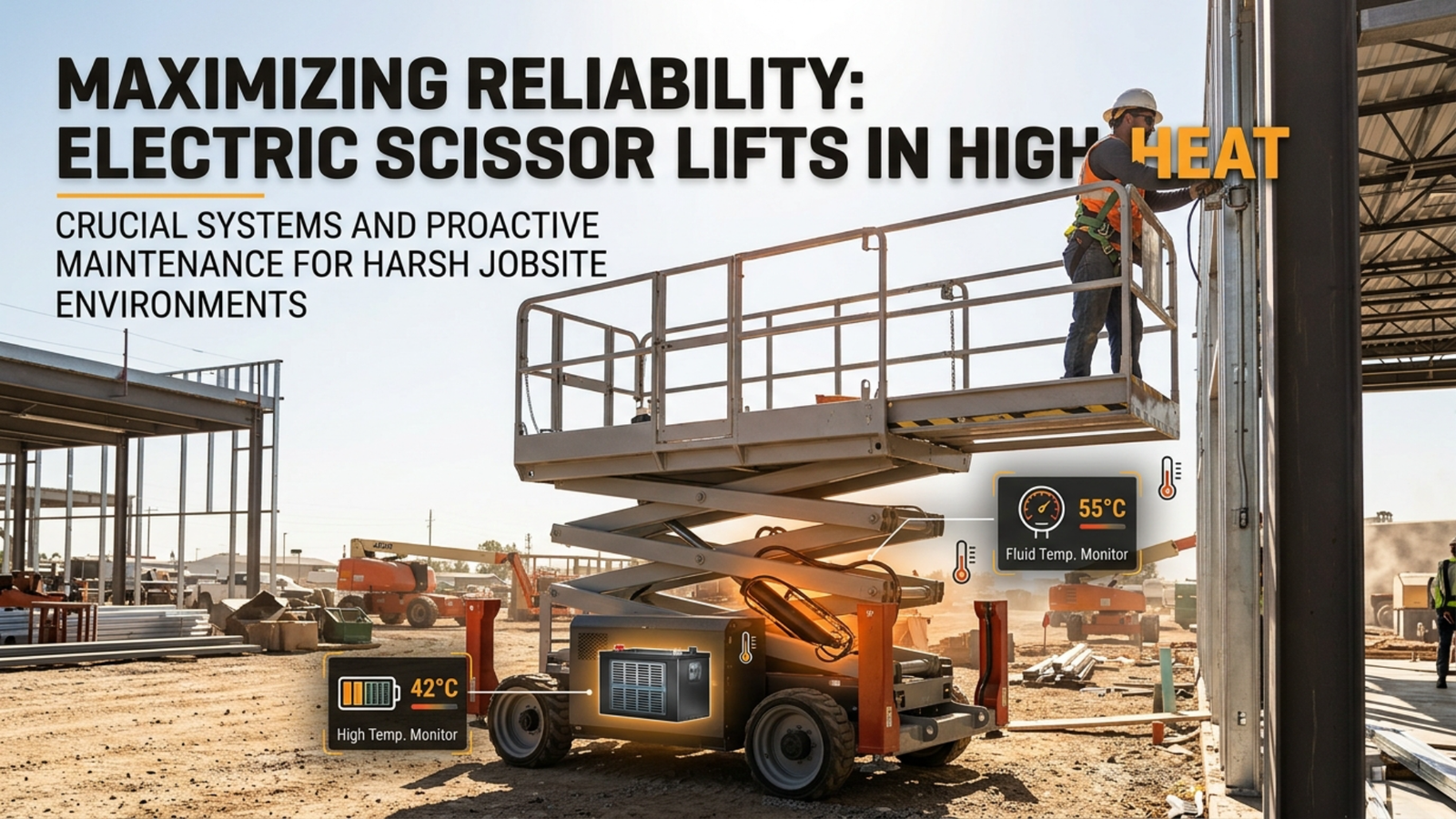
How Heat Affects Scissor Lift Batteries and Hydraulics
Heat is one of the most underestimated threats to a scissor lift’s performance. On a hot day, the same machine that runs flawlessly in mild conditions can lose lifting power, drain its batteries faster, and wear out components sooner than expected. Two systems bear the brunt of this stress: the batteries that supply the machine’s energy and the hydraulics that raise and lower the platform. Understanding how heat affects each one helps operators and owners protect their equipment, avoid unexpected breakdowns, and keep work moving safely through the warmest months. This guide explains how high temperatures impact batteries and hydraulics, the warning signs to watch for, and the maintenance and operating habits that keep a scissor lift dependable in the heat.
How High Temperatures Impact Battery Performance
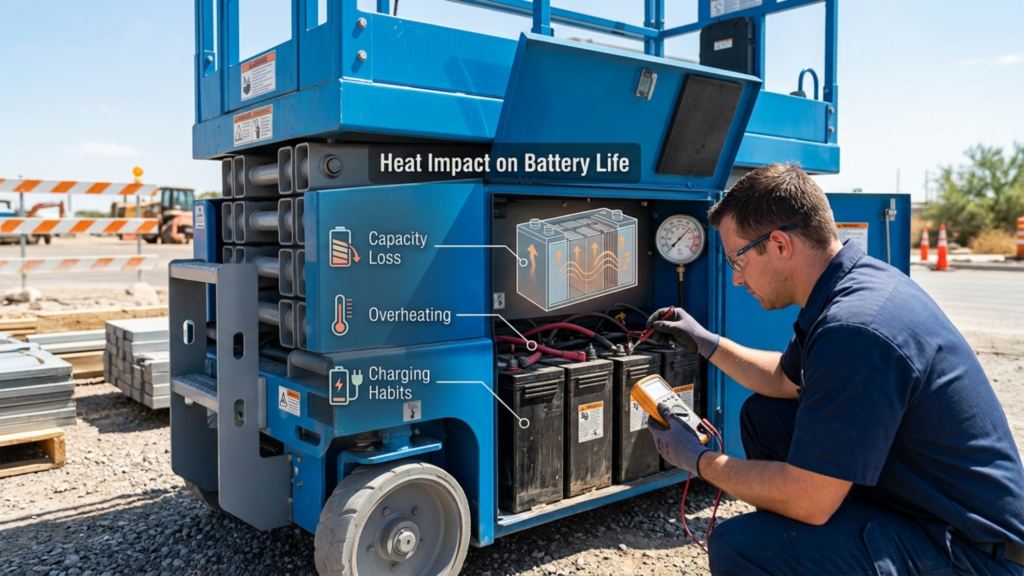
Heat and batteries do not mix well, and understanding why helps you protect one of the most valuable parts of your scissor lift. Inside every battery, chemical reactions generate the energy that powers the machine, and those reactions speed up as temperatures rise. In the short term, that can seem harmless, but sustained heat accelerates the reactions to the point where they wear the battery down faster than normal. The result is a shorter battery life and a steady reduction in long-term capacity, meaning the battery holds less charge and needs replacing sooner than it otherwise would.
The damage from heat often builds quietly over time rather than announcing itself all at once. A battery repeatedly exposed to high temperatures loses capacity gradually, so operators may not notice the decline until runtime drops noticeably or the machine struggles to hold a charge through a full shift. By then, the battery has already suffered lasting harm that no amount of careful use can reverse.
The good news is that proper charging habits and temperature management go a long way toward preserving battery health:
- Charge in cooler conditions where possible, rather than immediately after heavy use when the battery is already hot.
- Avoid overcharging, which adds unnecessary heat and stress to the cells.
- Store and park in shade to keep the battery out of direct sun during breaks.
- Follow the manufacturer’s charging guidance to protect the cells from harmful cycles.
By managing temperature and charging thoughtfully, you slow the wear that heat causes and extend the working life of your batteries. That care pays off directly in reliable runtime, fewer premature replacements, and a machine you can count on even when the weather turns hot.
Heat and Hydraulic System Efficiency
The hydraulic system is what gives a scissor lift its lifting power, and heat can quietly undermine that power in ways operators do not always recognize. At the center of the system is the hydraulic fluid, which transmits force from the pump to the cylinders that raise the platform. This fluid is engineered to work within a specific temperature range, and its viscosity, or thickness, is central to how well it performs. As hydraulic fluid heats up, its viscosity decreases, meaning it grows thinner and flows more freely than intended. While that might sound harmless, thinner fluid is less effective at transmitting power efficiently through the system.
When the fluid can no longer transmit force as it should, the effects show up directly in the machine’s performance. Excessive temperatures can reduce lifting performance, leaving the platform slower to rise or less capable under load. The system has to work harder to accomplish the same tasks, and that added strain takes a toll on the components over time.
Heat also increases wear on hydraulic components in several connected ways:
- Thinner fluid offers less protection, allowing more friction and wear between moving parts.
- Higher operating temperatures strain seals, hoses, and cylinders that are built for a specific range.
- Reduced efficiency forces the system to work harder, generating even more heat in a damaging cycle.
Left unchecked, this combination of reduced performance and accelerated wear shortens the life of expensive hydraulic components and chips away at the machine’s reliability. Keeping the hydraulic system operating within its intended temperature range is essential to preserving both lifting power and the longevity of the equipment. When the fluid stays at the right viscosity, the system transmits power efficiently, protects its own components, and delivers the dependable performance that demanding work requires.
Signs of Heat-Related Performance Issues
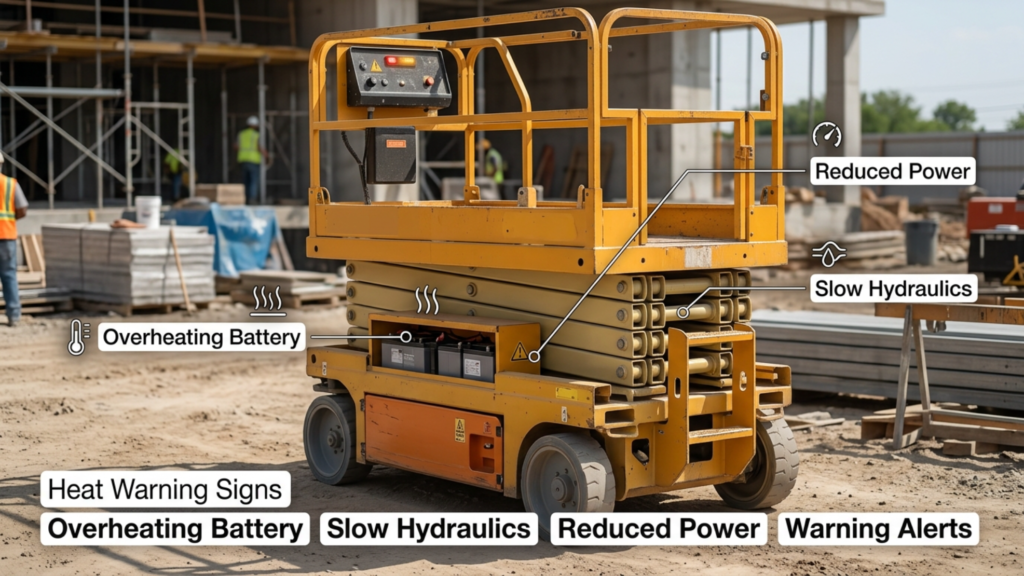
Recognizing the warning signs of heat stress early is one of the most valuable skills an operator can develop, because catching problems before they escalate helps prevent costly downtime. A scissor lift working under excessive heat rarely fails without warning; instead, it tends to show a series of symptoms that signal trouble. Learning to spot these signs lets you intervene while the issue is still minor, sparing yourself the expense and disruption of a machine that quits in the middle of a job.
Several common symptoms point to a scissor lift operating under too much heat:
- Overheating batteries that feel unusually hot, drain quickly, or struggle to hold a charge.
- Slower hydraulic response, where the platform rises or lowers more sluggishly than normal.
- Reduced lifting power, with the machine straining or underperforming under loads it usually handles with ease.
- Warning indicators on the machine’s display or control panel that flag temperature or system faults.
Each of these signs tells its own part of the story, and together they paint a clear picture of a machine under thermal stress. Overheating batteries reveal that the electrical system is taking on more heat than it can manage, while sluggish hydraulic response and weakened lifting power point to fluid that has thinned and a system straining to keep up. Warning indicators, when present, offer the most direct alert of all and should never be ignored.
The key is to treat these symptoms as early calls to action rather than minor annoyances. When you notice any of them, it is time to pause, let the machine cool, and check the systems involved before continuing. Responding promptly protects both the equipment and the safety of everyone relying on it, and it keeps a small, manageable problem from becoming an expensive breakdown that halts your work.
Preventing Heat Damage Through Proper Maintenance
Consistent maintenance is the most effective defense against heat-related damage, because a well-maintained machine handles thermal stress far better than a neglected one. Routine inspections allow you to catch small issues before heat turns them into serious problems, and they keep the systems most vulnerable to high temperatures in sound working order. Making these checks a regular habit protects both the performance and the longevity of your scissor lift, especially during the demanding summer months.
A thorough maintenance routine focuses on the components that heat affects most:
- Battery terminals, kept clean and secure so the electrical connection stays efficient and free of corrosion.
- Cooling systems, inspected to ensure they work properly and keep operating temperatures in check.
- Hydraulic fluid levels, checked regularly so the system has enough fluid to transmit power and manage heat.
- Hoses, examined for wear, cracks, or leaks that heat can worsen over time.
Beyond inspecting these specific parts, keeping components clean plays a larger role than many operators realize. Dirt, grease, and debris trap heat and reduce a system’s ability to shed it, so a clean machine runs cooler and more reliably than one caked in buildup. Wiping down components, clearing away debris, and keeping cooling surfaces unobstructed all help the machine manage heat more effectively during hard use.
Following the recommended service intervals ties the whole effort together. Manufacturers set these schedules precisely to keep the machine running dependably, and adhering to them ensures fluids are changed, filters are replaced, and components are checked before problems develop. A scissor lift maintained on schedule and kept clean resists heat damage far better, delivering consistent performance and reliability job after job. That disciplined care is one of the smartest investments you can make in protecting your equipment.
Best Practices for Operating in Hot Weather
How you operate a scissor lift in hot weather matters just as much as how you maintain it. Smart operating habits reduce the thermal stress placed on the batteries and hydraulics, protecting both systems and preserving overall machine performance through the hottest conditions. These practices cost nothing but attention and discipline, yet they can meaningfully extend the life of your equipment and keep it running reliably when the temperature climbs.
A few straightforward habits make a real difference during hot-weather operation:
- Avoid prolonged operation during extreme heat, giving the machine’s systems relief from continuous thermal stress.
- Park in shaded areas when possible, keeping the batteries and hydraulics out of direct sun during breaks.
- Allow the equipment to cool between demanding tasks, so heat does not build up faster than the machine can shed it.
Each of these practices addresses heat at its source. Limiting continuous operation in extreme temperatures prevents the batteries and hydraulic fluid from reaching the levels where damage accelerates, while parking in shade spares the machine from absorbing additional heat while it sits idle. Building in cooling periods between heavy tasks is especially valuable, because it lets the systems recover before the next demanding cycle rather than compounding heat load upon heat load.
Taken together, these habits form a practical, everyday approach to protecting your scissor lift in the heat. An operator who paces the work, seeks out shade, and allows the machine to cool treats the equipment with the care that hot conditions demand. The reward is a machine that maintains its lifting power, preserves its battery life, and holds up dependably through the summer. Combining these operating best practices with regular maintenance and early recognition of warning signs gives you the strongest possible protection against the wear and downtime that heat can cause, keeping your scissor lift safe, capable, and ready for work.
Scissor lift heat damage can reduce battery life, weaken hydraulic performance, decrease lifting power, and accelerate component wear. High temperatures place extra stress on both the batteries and hydraulic systems that keep a scissor lift operating efficiently. Understanding scissor lift heat damage helps operators recognize overheating problems early, prevent unexpected downtime, and protect equipment during hot-weather operation.