

Choosing the Best Compact Loaders for Tight Spaces
Cramped job sites present significant operational challenges for any contractor. When your access points are narrow and your working footprint remains severely restricted, massive earthmoving equipment simply cannot do the job. You need machinery that delivers exceptional power without the bulky frame.
Compact loaders solve this exact problem. They offer the necessary muscle for heavy lifting in environments where every single inch matters. Whether you work in urban construction, residential landscaping, or indoor demolition, utilizing the proper compact equipment guarantees your crew stays productive and safe. We know that equipment reliability directly drives your business profitability. Choosing the right machinery ensures you meet tight deadlines without damaging existing structures.
This guide explores the immense value of compact loaders in restricted environments. We will detail the critical selection factors you must evaluate, from machine width to operator visibility. By understanding these core elements, you will make a confident, informed decision when adding a compact loader to your professional equipment fleet.
The Value of Loaders in Restricted Environments
Standard heavy machinery requires wide access roads and massive turning radiuses. Many modern projects do not offer these luxuries. Compact loaders fill a vital role by bringing commercial-grade power directly into highly confined areas.
Conquering Urban Construction
City infrastructure projects often leave contractors with barely enough room to park a pickup truck. Urban job sites feature narrow alleyways, closely spaced buildings, and busy pedestrian sidewalks. Compact loaders navigate these urban mazes effortlessly. They transport heavy materials like concrete, gravel, and steel right to the exact point of work, eliminating the need for slow, manual wheelbarrow labor.
Protecting Residential Landscaping
Homeowners expect contractors to improve their properties without destroying their existing yards. Standard excavators and large track loaders easily tear up delicate turf and crack residential driveways. Compact loaders feature lower operating weights. When paired with the correct turf tires or wide rubber tracks, these machines distribute their weight evenly. This low ground pressure allows your crew to move heavy hardscaping materials through standard backyard gates without ruining the lawn.
Enabling Indoor Demolition
Interior renovation projects demand specialized equipment. Crews must frequently rip out concrete floors, tear down masonry walls, and transport heavy debris out of fully enclosed buildings. Specialized compact loaders, particularly mini track loaders and narrow-frame skid steers, fit perfectly through standard commercial doorways. They maneuver tightly around support columns and navigate enclosed hallways, drastically accelerating the demolition process while maintaining rigorous safety standards.
Key Selection Factors for Tight Spaces
Selecting the best compact loader requires evaluating several specific machine characteristics. You cannot simply buy the smallest machine on the market. You must match the equipment’s specifications directly to your project demands.
Machine Width and Height
Physical dimensions represent the most critical selection factor for tight spaces. Before you evaluate engine power, you must know exactly how much clearance you have. Measure your most restrictive access points, such as fence gates, side yards, and doorways.
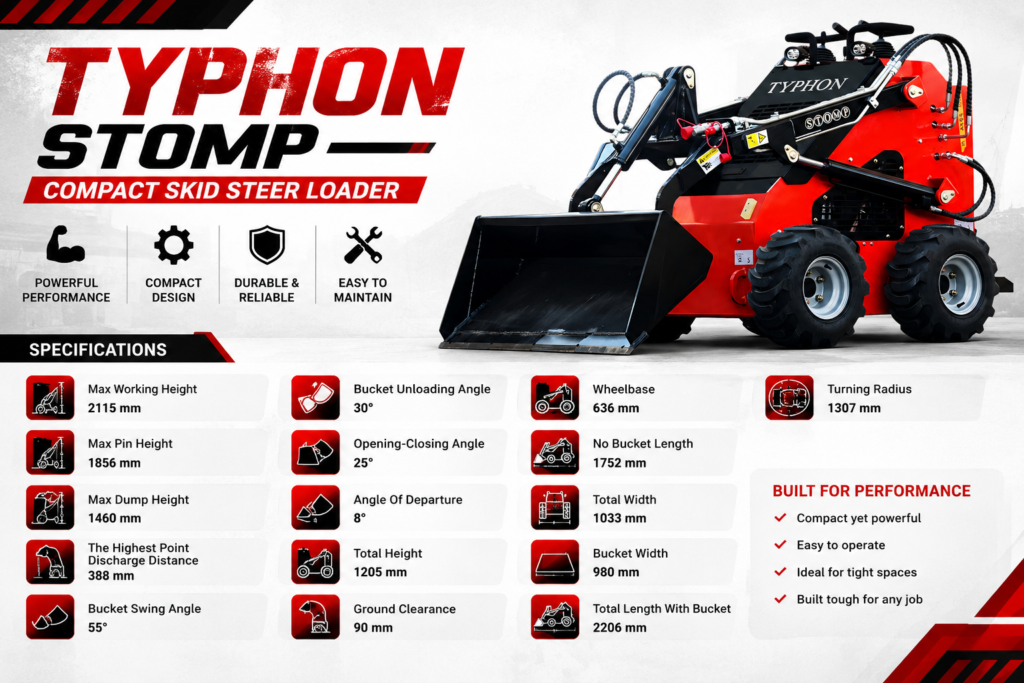
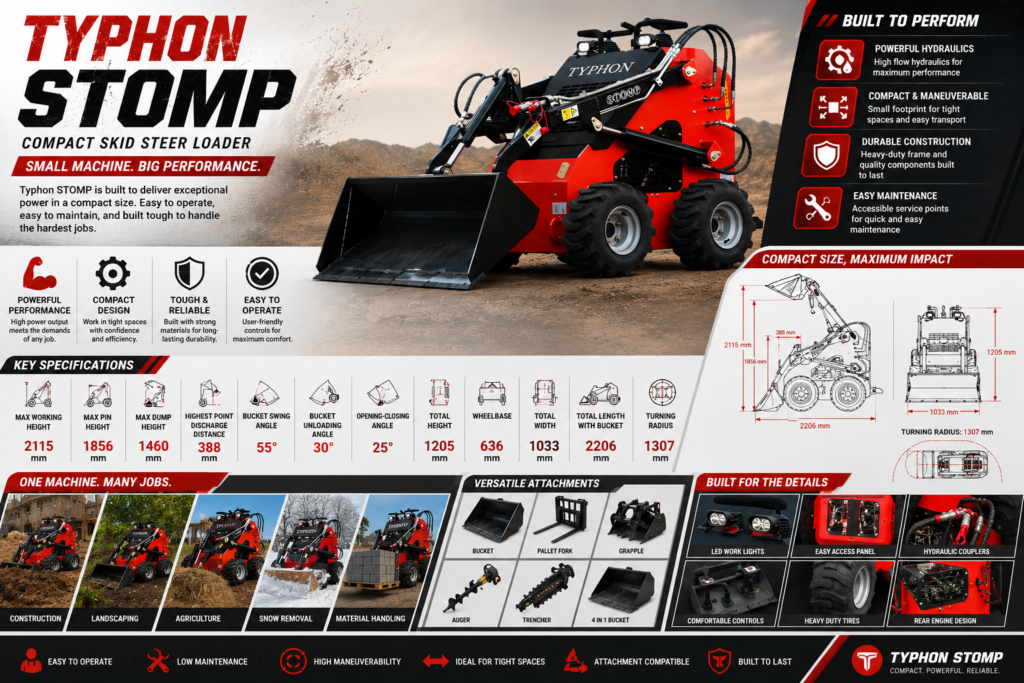
Many compact loaders feature operating widths of 36 inches or less. This narrow profile allows operators to drive straight through a standard three-foot gate. Additionally, you must evaluate the overall height of the machine. If you work in basements, parking garages, or under low-hanging tree branches, you need a loader with a low-profile roll-over protection structure (ROPS) to avoid overhead collisions.
Turning Radius and Maneuverability
Getting through the gate only solves half the problem. Once inside the work zone, the machine must maneuver effectively. You need a loader capable of changing direction in extremely tight quarters.
Skid-steer loaders steer by rotating their left and right wheels at different speeds. This allows them to execute a zero-radius turn, spinning completely around within their own exact footprint. Articulated loaders offer a different advantage. They feature a central pivot point that bends the machine in the middle. This articulation prevents the tires from tearing up the ground, making them highly desirable for delicate landscaping operations.
Lifting Capacity vs. Size
Small machines still need to perform heavy labor. You must evaluate the Rated Operating Capacity (ROC) of the compact loader. The ROC indicates exactly how much weight the machine can safely lift and transport without tipping over.
Never compromise safety for size. If your daily tasks involve moving pallets of brick that weigh 1,500 pounds, you must purchase a compact loader engineered to handle that specific weight. Overloading a small machine damages the hydraulic systems and creates a severe safety hazard for your entire crew.
Operator Visibility and Safety
Working in confined spaces inherently increases the risk of accidental collisions. An operator must see exactly where the bucket is and what sits immediately behind the machine. Poor visibility leads to property damage and compromises worker safety.
Look for compact loaders designed with excellent sightlines. Many mini track loaders utilize a stand-on platform at the rear of the machine. This design provides the operator with a completely unobstructed, 360-degree view of the job site. For sit-in loaders, evaluate the cab design to ensure blind spots remain minimal.
Attachment Compatibility
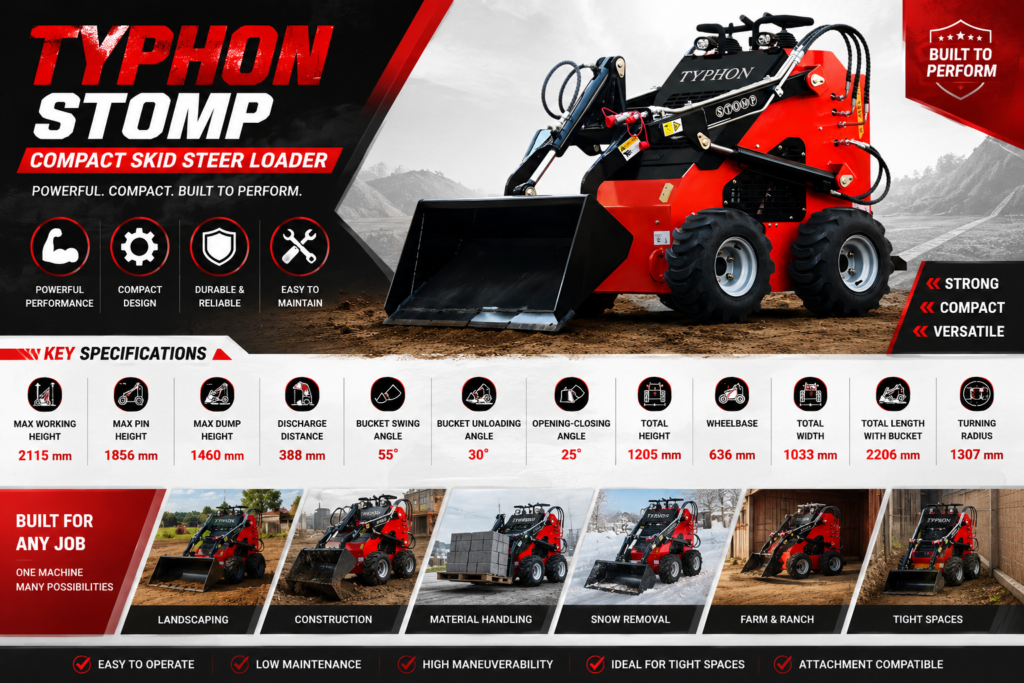
The true value of any compact loader lies in its versatility. You want a single machine that can sweep concrete, drill fence posts, and haul dirt. To maximize your investment, ensure the compact loader features a universal quick-attach system.
Furthermore, check the machine’s hydraulic flow rate. Standard attachments like buckets and pallet forks require minimal hydraulic power. However, if you plan to run aggressive tools like cold planers, trenchers, or hydraulic breakers, you must select a compact loader with high-flow hydraulic capabilities.
Top Loader Categories for Confined Spaces
Manufacturers produce several distinct types of compact loaders. Each category excels in different environments.
Mini Track Loaders (Stand-On)
Mini track loaders have revolutionized residential construction and landscaping. Because the operator stands on a rear platform rather than sitting inside a cab, the machine remains incredibly short and narrow. These machines boast tremendous pushing power and easily fit through narrow gates. They offer an ideal solution for contractors who require operators to step on and off the machine frequently during a shift.
Small-Frame Skid Steers
Small-frame skid steers provide a traditional sit-in cab experience within a scaled-down footprint. They generally weigh less than 1,750 pounds but deliver substantial lifting power. These machines offer excellent operator protection from dust and falling debris, making them highly suitable for interior demolition and tight urban construction sites.
Compact Articulated Loaders
Compact articulated loaders feature a jointed frame and a steering wheel. They cause significantly less ground disturbance than skid steers. If your primary focus involves working on established lawns, golf courses, or high-end residential properties, an articulated loader delivers the necessary lifting power while keeping the grass completely intact.
Practical Advice for Contractors
When choosing the right model, always prioritize your specific daily tasks over peak specifications. A massive lifting capacity means nothing if the machine cannot fit into your work zone.
Start by auditing your typical job sites. Record the measurements of the tightest spaces you encounter regularly. Evaluate the ground conditions you face most often. If you work on soft mud or wet slopes, prioritize machines with dedicated rubber tracks. If you work primarily on solid concrete or asphalt indoors, a wheeled machine will serve you perfectly and reduce your long-term maintenance costs.
Finally, consider the power source. If your business focuses heavily on indoor demolition, internal combustion engines pose a deadly carbon monoxide risk. Many manufacturers now offer fully electric compact loaders. These battery-powered machines deliver the exact same hydraulic performance as diesel models but produce zero emissions and minimal noise, making them the ultimate tool for enclosed spaces.
Secure the Right Equipment for Your Fleet
Operating efficiently in tight spaces requires strategic planning and reliable machinery. Compact loaders provide the robust power, precise maneuverability, and exceptional versatility needed to conquer confined job sites. By carefully evaluating dimensions, lifting capacity, and attachment compatibility, you ensure your business remains highly competitive and profitable.
Take the time to evaluate your current equipment needs. Speak with an authorized dealer to schedule a hands-on demonstration of a mini track loader or small-frame skid steer. Equipping your crew with the proper compact machinery guarantees you deliver flawless results, no matter how tight the working conditions get.