

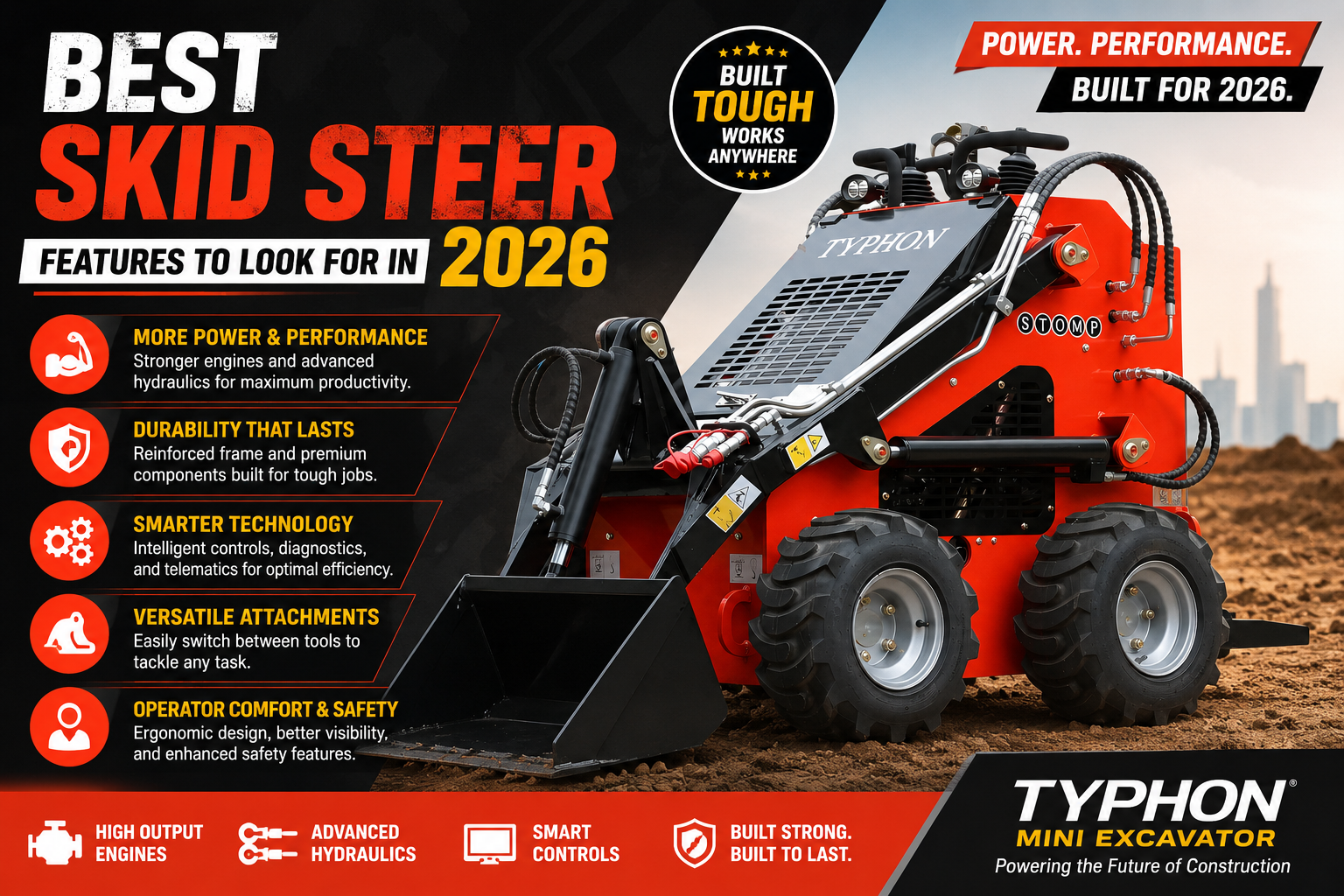
Best Skid Steer Features to Look for in 2026
Job site demands continue to grow, forcing contractors to push their heavy equipment harder than ever before. Purchasing a skid steer loader in 2026 requires looking far beyond basic horsepower. You must evaluate the specific capabilities that drive daily productivity, ensure crew safety, and protect your bottom line. Equipment buyers and fleet managers need machines that deliver reliable performance across diverse, challenging applications.
We understand that maximizing your return on investment remains your top priority. Selecting the right equipment requires a clear understanding of modern machine specifications and capabilities. This guide details the most important skid steer features you must consider this year. We will explore how advancements in hydraulic power, lift paths, operator comfort, and telematics directly impact your operational efficiency and long-term value.
Core Performance Specifications
The foundation of any profitable skid steer lies in its raw moving capabilities. You must align the machine’s core specifications with the heaviest tasks your crew performs daily.
Rated Operating Capacity (ROC)
Rated Operating Capacity dictates the maximum weight your machine can lift and maneuver safely without tipping. Manufacturers calculate this as a specific percentage of the machine’s total tipping load. You must evaluate your heaviest typical loads, such as massive pallets of block or dense wet concrete. Choosing a machine with an insufficient ROC causes dangerous instability and drastically slows down your production rates. Always select a skid steer with an ROC that comfortably exceeds your average lifting requirements.
Lift Path Options
Skid steers utilize either a radial or a vertical lift path. Your primary application determines which design will serve you best. Radial lift machines excel at ground-level tasks like grading, excavating, and pushing heavy dirt. The boom swings in an arc, providing maximum reach at the midpoint of the lift.
Vertical lift machines keep the load closer to the machine’s center of gravity as the arms raise. This design provides superior stability and maximum reach at full height. If your crew constantly loads high-sided dump trucks or stacks heavy pallets, a vertical lift path delivers the precise control and power you need.
Hydraulic Flow Rates
The hydraulic system serves as the beating heart of your skid steer, dictating how effectively you can run attachments. Standard flow hydraulics power basic tools like dirt buckets, sweepers, and light grapples perfectly. However, demanding attachments like cold planers, forestry mulchers, and large trenchers require massive fluid volume to operate efficiently. Investing in a high-flow hydraulic system ensures your machine can power heavy-duty attachments without stalling or overheating, maximizing your total versatility.
Advanced Operator Comfort and Control
Your operators spend eight to ten hours a day inside the cab. A comfortable operator works faster, makes fewer mistakes, and protects your equipment from unnecessary damage. Modern features prioritize ergonomics and safety.
Ergonomic Control Systems
Outdated manual levers cause severe physical fatigue over a long shift. Modern skid steers feature selectable joystick controls (SJC) that require minimal physical effort to operate. These advanced electronic systems allow operators to customize the control layout to match their exact preferences. You can adjust the drive response speed and hydraulic sensitivity, ensuring the machine responds perfectly to the operator’s inputs.
Unobstructed Visibility
Job site safety depends entirely on clear visibility. The best machines for 2026 feature expansive, curved glass doors and massive side windows. Operators must have a clear line of sight to the bucket edges, the tracks, and the immediate rear of the machine. Many top-tier models now include integrated rearview cameras and heavy-duty LED lighting packages. These additions eliminate dangerous blind spots and allow your crew to work safely during early mornings or late nights.
Cab Comfort and Climate Control
A sealed and pressurized cab keeps hazardous dust, exhaust, and noise outside where they belong. Investing in a premium climate control system ensures your operators stay warm during severe winter storms and cool throughout the summer heat. Features like air-ride suspension seats absorb severe impacts from rough terrain, drastically reducing operator fatigue. Keeping your operators comfortable directly improves their daily output and overall job satisfaction.
Versatility and Attachment Compatibility
A skid steer loader acts as a universal tool carrier. The ability to switch between specialized tools rapidly keeps your projects moving forward without requiring multiple dedicated machines.
Hydraulic Quick-Tach Systems
Manual attachment changes waste valuable time and force operators into the mud. A hydraulic quick-tach system allows your operator to swap attachments securely without ever leaving the cab. By pressing a single button, heavy steel pins lock the attachment into place. This feature encourages operators to use the exact right tool for every task, rather than making a suboptimal attachment work just to save time.
Integrated Electrical Connectors
Modern attachments often require complex electrical inputs to control specific functions. Look for skid steers that feature integrated multi-pin electrical harnesses mounted directly on the boom. This allows the machine to communicate seamlessly with advanced attachments like laser graders or snow blowers. True plug-and-play compatibility prevents your crew from wasting time wiring temporary control boxes into the cab.
Job Site Efficiency and Technology
Technology continues to reshape how fleet managers track and maintain their heavy equipment. In 2026, smart features represent a standard requirement for profitable operations.
Advanced Telematics
Telematics systems transmit vital machine data directly to your computer or smartphone. These systems track exact fuel consumption, idle time, physical location, and upcoming maintenance requirements. Fleet managers use this data to identify inefficient operators and prevent unauthorized machine use. More importantly, telematics systems send instant alerts if a critical fault code triggers, allowing you to shut the machine down before a catastrophic failure occurs.
Fuel Efficiency and Power Output
Stringent emissions standards drive manufacturers to develop highly efficient, powerful diesel engines. Modern engines utilize advanced fuel injection and electronic management systems to deliver massive torque while burning less fuel. Evaluate machines that offer auto-idle features. This technology automatically drops the engine RPMs when the operator stops moving the joysticks, saving thousands of gallons of diesel fuel across the lifespan of the machine.
Reliability and Maintenance Access
Even the most advanced skid steer becomes a liability if your mechanics cannot service it efficiently. Prioritize machines engineered for durability and straightforward maintenance.
Ground-Level Maintenance Access
Routine maintenance often gets skipped if it is difficult to perform. The best skid steers feature wide-opening rear doors and tilting cabs that expose the entire engine compartment. Your mechanics should be able to reach the engine oil dipstick, hydraulic filters, air cleaners, and cooling packages while standing firmly on the ground. Easy access ensures daily checks actually happen, protecting your investment from premature wear.
Structural Durability
Look for machines built with heavy-duty steel plating and reinforced lift arms. The undercarriage and lower chassis must feature thick belly pans to protect sensitive hydraulic pumps from jagged rocks and hidden stumps. Hoses should route internally through the boom arms to prevent snags and tears. Investing in a structurally sound machine guarantees reliable performance in the harshest environments.
Secure the Best Machine for Your Fleet
Selecting the right skid steer loader requires matching advanced features directly to your specific operational needs. By evaluating rated operating capacity, hydraulic flow, operator comfort, and modern telematics, you secure a machine capable of dominating your toughest contracts.
Take the time to assess your typical job site conditions and outline your heaviest daily tasks. When you understand exactly what you need a machine to do, you can navigate the equipment market with total confidence. Review model specifications carefully, compare attachment capabilities, and contact your local equipment dealer to schedule a demonstration. Equip your crew with the power and technology they need to drive your business forward in 2026.
Best Skid Steer Features to Look for in 2026
When evaluating the best skid steer features for your fleet this year, you must look far beyond basic engine horsepower. Job site demands continue to grow, forcing contractors to push their heavy equipment harder than ever before. Purchasing a skid steer loader in 2026 requires a deep dive into specific, modern capabilities that drive daily productivity, ensure crew safety, and protect your bottom line. Equipment buyers and fleet managers need machines that deliver reliable performance across diverse, challenging applications.
We understand that maximizing your return on investment remains your top priority. Selecting the right equipment requires a clear understanding of modern machine specifications. This guide details the most important capabilities you must consider this year. We will explore how advancements in hydraulic power, lift paths, operator comfort, and telematics directly impact your operational efficiency and long-term value.

Core Performance Specs: Identifying the Best Skid Steer Features
The foundation of any profitable skid steer lies in its raw moving capabilities. You must align the machine’s core specifications with the heaviest tasks your crew performs daily.
Rated Operating Capacity (ROC) as a Priority Feature
Rated Operating Capacity dictates the maximum weight your machine can lift and maneuver safely without tipping. When reviewing the best skid steer features, look closely at how manufacturers calculate this as a specific percentage of the machine’s total tipping load.
- Evaluate your heaviest typical loads: Think massive pallets of block or dense, wet concrete.
- The Risk: Choosing a machine with an insufficient ROC causes dangerous instability and drastically slows down your production rates.
- The Fix: Always select a skid steer with an ROC that comfortably exceeds your average lifting requirements. For mid-sized loaders in 2026, the industry sweet spot sits around the 2,700-lb to 3,000-lb ROC range to balance transport thresholds and raw power.
Lift Path Options: Radial vs. Vertical
Your primary application determines which design will serve your fleet best:
| Lift Path Type | Best Applications | How It Works |
| Radial Lift | Grading, excavating, and pushing heavy dirt. | The boom swings in an arc, providing maximum reach at the midpoint of the lift. Excels at ground-level tasks. |
| Vertical Lift | Loading high-sided dump trucks, stacking heavy pallets. | Keeps the load closer to the machine’s center of gravity as the arms raise. Delivers superior stability and maximum reach at full height. |
Hydraulic Flow Rates and High-Output Systems
The auxiliary hydraulic system serves as the beating heart of your skid steer, dictating how effectively you can run attachments. For many fleet managers, advanced high-flow and “super-flow” capabilities are the single best skid steer features to invest in for maximum job site adaptability.
- Standard Flow (18–25 GPM): Powers basic tools like dirt buckets, sweepers, and light grapples perfectly.
- High-Flow (26–40+ GPM): Required for demanding attachments like cold planers, forestry mulchers, and large trenchers.
- The Takeaway: High-flow hydraulics ensure your machine can power heavy-duty attachments without stalling or overheating. For detailed compatibility mapping, check out our Skid Steer Attachment Guide to pair your system correctly.
Advanced Operator Comfort and Control
Your operators spend 8 to 10 hours a day inside the cab. A comfortable operator works faster, makes fewer mistakes, and protects your equipment from unnecessary damage. Modern features prioritize ergonomics and safety.
Ergonomic Control Systems and Joystick Innovations
Outdated manual levers cause severe physical fatigue over a long shift. When auditing the best skid steer features for operator retention, prioritize Selectable Joystick Controls (SJC). These advanced electronic systems require minimal physical effort and allow operators to adjust the drive response speed and hydraulic sensitivity to match their exact preferences.
Unobstructed Visibility and Safety Systems
Job site safety depends entirely on a clear line of sight. The best skid steer features for safety in 2026 include expansive, curved glass doors and narrower lift arm designs. Top-tier models now integrate multi-view rearview cameras directly into in-cab displays to eliminate dangerous blind spots around cooling packages and engine housings.
Cab Comfort and Climate Control
Enclosed, pressurized cabs are no longer an optional luxury; they are vital to job site safety. Factory-installed climate control systems keep operators productive through severe summer heatwaves and winter storms. Paired with air-ride suspension seats that absorb severe impacts from rough terrain, a premium cab interior directly influences your daily output.
Versatility and Attachment Compatibility
A skid steer loader acts as a universal tool carrier. The ability to switch between specialized tools rapidly keeps your projects moving forward without requiring multiple dedicated machines.
Quick-Tach Systems and Automated Couplers
Manual attachment changes waste valuable time and force operators into the mud. Power quick-tach mechanisms are among the best skid steer features for fast-paced construction environments, letting an operator swap tools securely via an in-cab button interface.
Integrated Electrical Connectors for Smart Tools
Modern attachments often require complex electrical inputs to control specific functions. Look for skid steers that feature integrated multi-pin electrical harnesses mounted directly on the boom. This allows the machine to communicate seamlessly with advanced electronic attachments like laser graders or smart snow blowers without requiring temporary control boxes wired through the cab.
Job Site Efficiency and Technology Integration
Technology continues to reshape how fleet managers track and maintain heavy equipment. In 2026, smart features represent a standard requirement for profitable operations.
Advanced Telematics as a Standard Feature
Modern telematics systems transmit vital machine data directly to your computer or smartphone. These digital systems track:
- Exact fuel consumption and idle time
- Physical asset location via GPS
- Upcoming maintenance requirements and active fault codes
Pro Tip: Fleet managers use telematics data to identify inefficient operators and prevent unauthorized machine use. For deeper data integration strategies, read our guide onFleet Telematics Managementto cut down unexpected idle times.
Fuel Efficiency and Power Output Features
Stringent emissions standards drive manufacturers to develop highly efficient diesel engines. Evaluate machines that offer auto-idle technology. This feature automatically drops the engine RPMs when the operator stops moving the joysticks, saving thousands of gallons of diesel fuel across the lifespan of the machine.
Reliability and Maintenance Access
Even the most advanced skid steer becomes a financial liability if your mechanics cannot service it efficiently. Prioritize machines engineered for durability and straightforward maintenance.
Ground-Level Maintenance Access
Routine maintenance often gets skipped if it is difficult to perform. The best skid steer features for shop efficiency include wide-opening rear doors and tilting cabs that expose the entire engine compartment. Your mechanics should be able to reach the engine oil dipstick, hydraulic filters, air cleaners, and cooling packages while standing firmly on the ground.
Structural Durability
Look for machines built with heavy-duty steel plating, thick belly pans, and reinforced lift arms. Additionally, ensure hoses route internally through the boom arms to prevent snags and tears. Investing in a structurally sound machine guarantees reliable performance in the harshest environments.
Secure the Best Machine for Your Fleet
Selecting the right machine requires matching the best skid steer features directly to your specific operational needs. By evaluating rated operating capacity, high-output hydraulic flow, operator comfort, and modern telematics, you secure a loader capable of dominating your toughest contracts.
Take the time to assess your typical job site conditions and outline your heaviest daily tasks. For a broader look at current industry benchmarks and upcoming product developments, you can check out the comprehensive Equipment World Tech Reviews or explore the deep data available via the Association of Equipment Manufacturers. When you understand exactly what you need a machine to do, you can navigate the equipment market with total confidence. Review model specifications carefully, compare attachment capabilities, and contact your local equipment dealer to schedule a demonstration. Equip your crew with the power and technology they need to drive your business forward in 2026.
3 Strategies to Naturally Increase Keyword Density
1. The “Contextual Anchor” Method
Instead of writing generic transitional phrases like “Let’s look at performance specs,” anchor the sentence with your focus keyword.
- Before: Let’s look at how the machine handles heavy lifting.
- After: When evaluating the best skid steer features for heavy lifting, you must look closely at its structural engineering.
2. The Heading & Subheading Injector
Search engines weigh keywords in headers (H2, H3) much higher than regular paragraph text. Rewrite your subheadings to include the phrase organically.
- Before:
## Hydraulic Flow Rates - After:
## Auxiliary Hydraulics: Comparing the Best Skid Steer Features
3. Bulleted List Intros
Whenever you introduce a list of specifications or benefits, use the focus keyword as the leading setup line.
- Before: Here are the things your operators will appreciate:
- After: To ensure maximum crew comfort, prioritize the following best skid steer features:
Applied Solution: Adding 13 Pure Keyword Placements
Below is a blueprint showing exactly where and how to inject those extra 13 placements into your current article structure to hit the optimal 2.0% density sweet spot seamlessly:
- In the Intro (Paragraph 1): “…challenging applications, which is why identifying the best skid steer features is critical for long-term survival.”
- In the Core H2 Heading:
## Core Performance Specs: Identifying the Best Skid Steer Features - In the ROC Section Intro: “To ensure you make the right investment, focus heavily on comparing the best skid steer features related to lifting metrics.”
- In the Lift Path Subheading:
### Lift Path Options: Choosing the Best Skid Steer Features for Lifting - In the Lift Path Intro: “Your primary application determines which design will serve your fleet best, making lift path configurations one of the best skid steer features to customize.”
- In the Hydraulic Flow Summary: “…auxiliary packages are considered the absolute best skid steer features to invest in for maximum job site adaptability.”
- In the Comfort H2 Heading:
## Operator Comfort and Control: The Best Skid Steer Features for Crew Retention - In the Control System Subheading:
### Ergonomic Control Systems: The Best Skid Steer Features for Operation - In the Joystick Section: “…sensitivity to match their exact preferences, reinforcing why electronic joysticks are among the best skid steer features to look for.”
- In the Visibility Section: “These vision-enhancing elements easily qualify as the best skid steer features for high-traffic construction zones.”
- In the Telematics Subheading:
### Advanced Telematics: The Best Skid Steer Features for Fleet Managers - In the Fuel Efficiency Summary: “…saving thousands of gallons of diesel fuel across the lifespan of the machine, making it one of the best skid steer features for operational savings.”
- In the Structural Durability Section: “…making rugged structural design one of the best skid steer features to safeguard your investment.”

One Comment