

10 Powerful Uses for a Skid Steer Loader in Construction and Landscaping
Time equals money on any job site. When you face a demanding project schedule with limited working space, you need machinery that delivers uncompromising versatility. You cannot afford to keep single-purpose machines sitting idle on the sidelines. Skid steer loaders solve this operational challenge directly by offering incredible hydraulic power within a highly maneuverable frame.
By understanding the full range of skid steer applications, you can transform a single machine into an entire fleet. This guide explores exactly how contractors, landscapers, and property owners leverage this compact construction equipment to dominate their daily tasks. We will outline the most profitable skid steer loader uses, explain how different attachments drive efficiency, and help you select the perfect machine for your business operations.
1. Rapid Job Site Cleanup
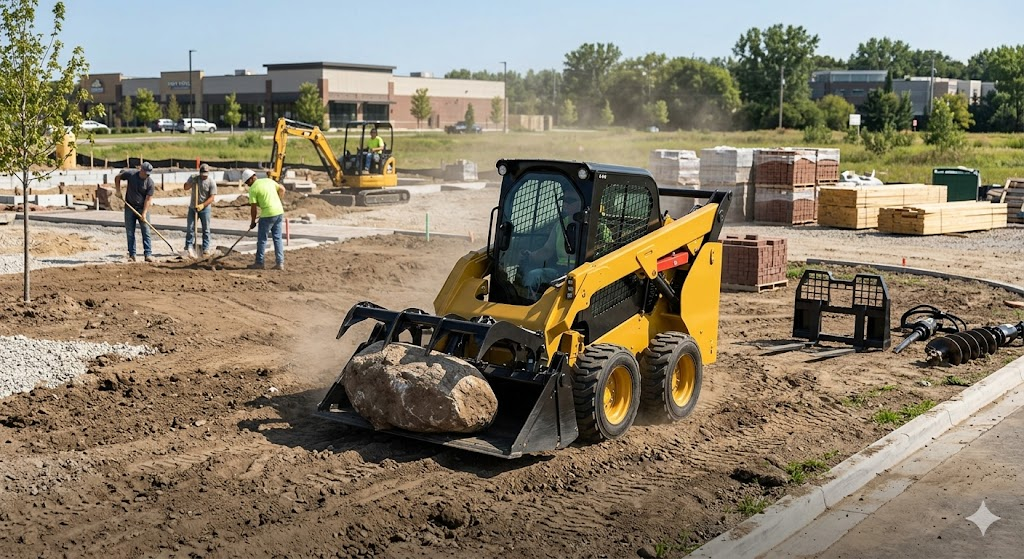
Maintaining a clean job site ensures your crew remains safe and your project stays on schedule. Manual cleanup wastes valuable labor hours and exhausts your workers. Skid steer loaders excel at rapidly clearing debris, saving you time and money.
By equipping your machine with a root grapple or a heavy-duty bucket, you can easily gather large piles of jagged concrete, scrap lumber, and twisted rebar. The machine’s tight turning radius allows operators to navigate easily around existing structures to load dump trucks safely. For finer debris, hydraulic broom attachments sweep dust and gravel off finished asphalt, leaving the site looking highly professional.
2. Efficient Material Handling
Moving heavy materials safely represents a constant challenge for construction crews. When you swap the standard bucket for a set of pallet forks, your skid steer instantly becomes a rough-terrain forklift. This immediate transformation keeps your supply lines moving without requiring specialized lifting equipment.
Operators use this setup to transport heavy pallets of brick, block, and lumber directly across muddy, uneven job sites. You can deliver heavy roofing materials right to the edge of the structure or move large bundles of steel pipe with precision. This efficient material handling prevents worker fatigue and dramatically accelerates your daily production rates.
3. Trenching and Excavation
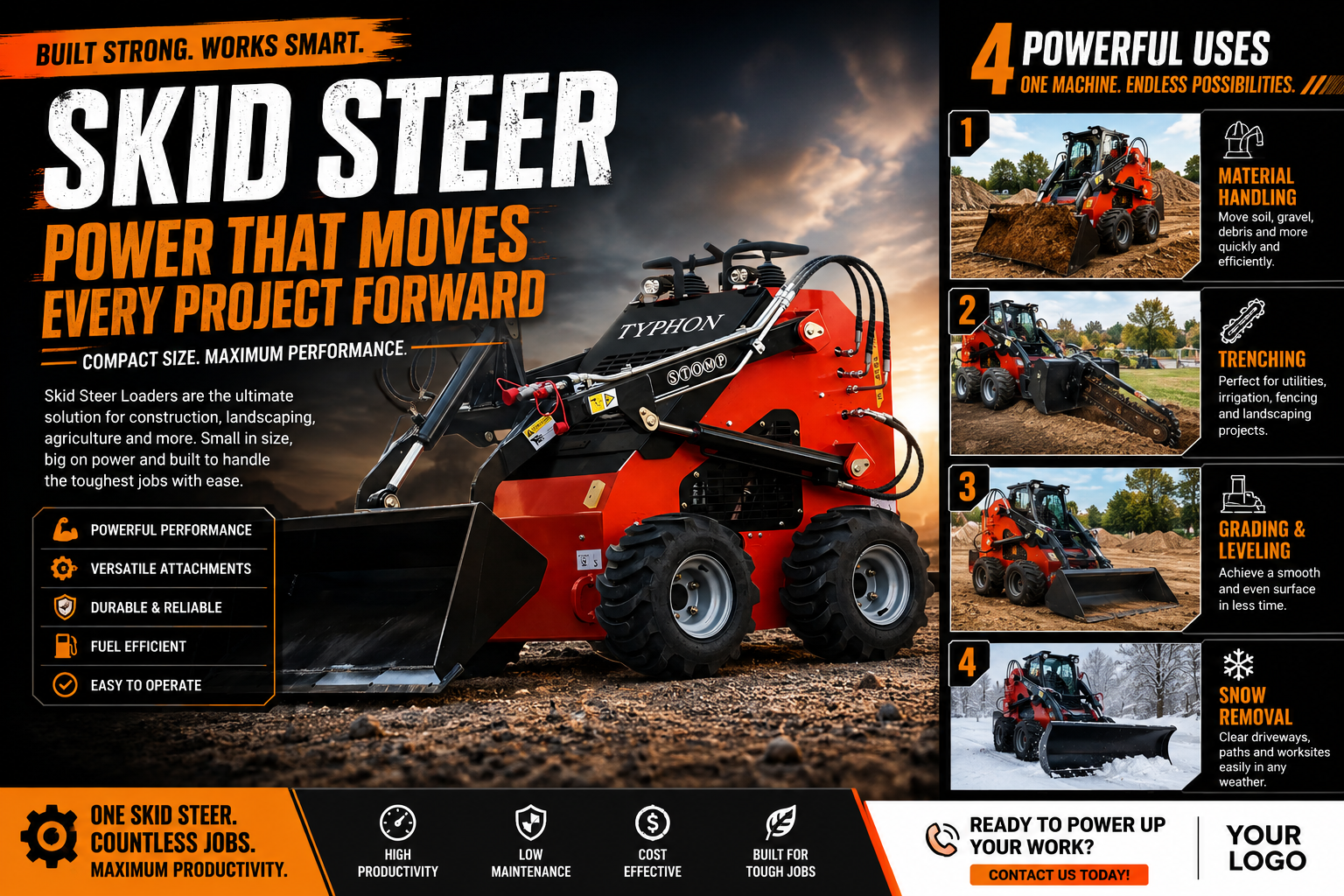
Underground utility installation requires precise, deep cuts into compacted soil. While standard excavators handle massive earthmoving tasks, a skid steer equipped with a trencher attachment dominates shallow utility work. This setup allows crews to slice through rocky dirt to install water lines, electrical conduits, and irrigation pipes.
Because skid steers steer by rotating their left and right wheels independently, operators can line up their trenches perfectly. You can also utilize backhoe attachments for more complex excavation tasks. These skid steer attachments give you the aggressive digging force necessary to carve out footings and foundation lines without bringing a massive excavator onto the property.
4. Precision Grading and Leveling
A flawless foundation dictates the success of any construction or hardscaping project. Paving contractors and builders rely heavily on skid steers to establish perfect grades before pouring concrete or laying asphalt. The rigid frame of the machine pushes earth smoothly, eliminating high spots and filling in dangerous depressions.
Using a box blade or a heavy grading bar attachment allows operators to achieve laser-accurate leveling. Many modern machines also support automated grade control systems. This technology ensures your crew hits the exact specified elevation on the first pass, drastically reducing expensive material waste and rework.
5. Commercial Snow Removal
Savvy contractors know that heavy equipment should generate revenue year-round. When winter storms halt traditional construction projects, skid steers transition seamlessly into highly effective snow removal machines. Their enclosed, heated cabs keep operators comfortable while they clear large commercial parking lots and long private access roads.
By equipping the machine with a massive snow pusher, an operator can clear acres of snow in a fraction of the time it takes a standard pickup truck. For deep, heavy drifts, a hydraulic snow blower attachment cuts through the ice and throws it safely out of the way. This capability ensures your business remains profitable even in the harshest winter conditions.
6. Heavy-Duty Demolition Work
Interior and exterior demolition requires brute mechanical force. Compact construction equipment brings this necessary power directly into highly confined spaces. Skid steers fit easily down narrow city alleys and can even drive straight through standard commercial garage doors to tackle indoor teardowns.
Attaching a hydraulic breaker allows your operator to shatter thick concrete foundations, old driveways, and solid rock ledges effortlessly. You can then quickly switch back to a grapple bucket to load the heavy debris into roll-off dumpsters. This continuous workflow keeps your demolition timeline moving forward rapidly and safely.
7. Versatile Landscaping Applications
Professional landscapers must completely transform outdoor spaces without destroying the existing property. The best skid steer for landscaping features a light operating weight and turf-friendly tires to minimize ground disturbance. These machines give your crew the muscle to sculpt the earth exactly as the client envisions.
Landscaping crews use hydraulic auger attachments to drill dozens of perfectly uniform holes for heavy fence posts and mature trees in a matter of hours. Tree spade attachments allow you to transplant large, valuable trees safely without damaging the root ball. From spreading topsoil to hauling massive decorative boulders, this machinery tackles every heavy lifting task on your landscaping schedule.
8. Essential Farming Uses
Agricultural operations demand durable machinery that functions reliably in severe environments. Farmers and ranchers utilize skid steers daily to manage their livestock facilities and maintain their vast acreage. The ability to switch tools quickly makes these machines invaluable around the barnyard.
Using bale spear attachments, operators easily transport heavy round bales of hay to feed livestock. Manure scraper attachments allow workers to clean out dense dairy barns and feedlots in a fraction of the time it takes by hand. Whether you need to repair a washed-out gravel driveway or stretch miles of high-tensile wire fencing, a skid steer provides the necessary mechanical advantage.
Why Skid Steers Provide a Cost-Effective Solution
Managing an equipment fleet requires a strict focus on your operational budget. Purchasing dedicated, single-purpose machinery drains your capital and complicates your logistics. Skid steers provide an unmatched return on investment because they serve as universal tool carriers.
Instead of buying a separate forklift, trencher, and street sweeper, you simply invest in one reliable power unit and the necessary skid steer attachments. This strategy lowers your initial purchase costs, reduces your insurance premiums, and slashes your long-term maintenance expenses. Furthermore, transporting a single compact machine to a job site requires only a standard heavy-duty pickup and a flatbed trailer, eliminating expensive commercial hauling fees.
Choosing the Right Skid Steer for Your Fleet
Selecting the proper machine guarantees your crew works safely and efficiently. You must evaluate your specific daily tasks to determine the right specifications. First, check the Rated Operating Capacity (ROC) of the machine. The ROC tells you exactly how much weight the loader can lift safely. Never purchase a machine that cannot handle your heaviest typical loads.
Next, decide between a radial lift and a vertical lift path. Radial lift machines excel at digging, grading, and pushing materials at ground level. Vertical lift machines keep the load closer to the machine’s center of gravity as the arms raise, making them superior for loading high-sided dump trucks and lifting heavy pallets.
Finally, consider the hydraulic flow rate. Standard flow runs basic buckets and grapples perfectly. However, if you plan to operate demanding attachments like forestry mulchers or cold planers, you must invest in a machine with high-flow hydraulic capabilities.
Secure Your Job Site Productivity
Operating a profitable business requires equipping your crew with reliable, highly capable machinery. A skid steer loader provides the exact versatility and power needed to conquer your toughest construction, landscaping, and maintenance projects. By matching the right machine and attachments to your exact job requirements, you secure an asset that will drive your business forward for years.
Evaluate your current project demands and review your upcoming contracts. When you understand your specific lifting, digging, and clearing needs, you can make a highly informed purchasing decision. Contact our equipment specialists today to explore our full lineup of machines and discover how the right compact equipment will elevate your daily operations.
Primary Skid Steer Loader Uses on Commercial Job Sites
1. Rapid Job Site Cleanup
Maintaining a clean job site ensures your crew remains safe and your project stays on schedule. Manual cleanup wastes valuable labor hours and exhausts your workers. High-utility skid steer loader uses include rapidly clearing heavy debris, saving you time and money.
By equipping your machine with a root grapple or a heavy-duty bucket, you can easily gather large piles of jagged concrete, scrap lumber, and twisted rebar. The machine’s tight turning radius allows operators to navigate easily around existing structures to load dump trucks safely. For finer debris, hydraulic broom attachments sweep dust and gravel off finished asphalt, leaving the site looking highly professional.
2. Efficient Material Handling
Moving heavy materials safely represents a constant challenge for construction crews. When you swap the standard bucket for a set of pallet forks, your machinery instantly becomes a rough-terrain forklift. This immediate transformation keeps your supply lines moving without requiring specialized lifting equipment.
Operators leverage these material-handling skid steer loader uses to transport heavy pallets of brick, block, and lumber directly across muddy, uneven job sites. You can deliver heavy roofing materials right to the edge of the structure or move large bundles of steel pipe with precision. This efficient material handling prevents worker fatigue and dramatically accelerates your daily production rates.
3. Trenching and Excavation
Underground utility installation requires precise, deep cuts into compacted soil. While standard excavators handle massive earthmoving tasks, a loader equipped with a trencher attachment dominates shallow utility work. This setup allows crews to slice through rocky dirt to install water lines, electrical conduits, and irrigation pipes.
Because these units steer by rotating their left and right wheels independently, operators can line up their trenches perfectly. You can also utilize backhoe attachments for more complex excavation tasks. These attachments give you the aggressive digging force necessary to carve out footings and foundation lines without bringing a massive excavator onto the property.
4. Precision Grading and Leveling
A flawless foundation dictates the success of any construction or hardscaping project. Paving contractors and builders rely heavily on diverse skid steer loader uses to establish perfect grades before pouring concrete or laying asphalt. The rigid frame of the machine pushes earth smoothly, eliminating high spots and filling in dangerous depressions.
Using a box blade or a heavy grading bar attachment allows operators to achieve laser-accurate leveling. According to the OSHA Skid Steer Operating Safety Guidelines, maintaining a graded, debris-free ground profile drastically reduces tip-over risks and accidents related to shifting loads. Many modern machines also support automated grade control systems to ensure your crew hits the exact specified elevation on the first pass.
Landscaping and Winter Skid Steer Loader Uses
5. Commercial Snow Removal
Savvy contractors know that heavy equipment should generate revenue year-round. When winter storms halt traditional construction projects, sub-zero operations become primary skid steer loader uses. Their enclosed, heated cabs keep operators comfortable while they clear large commercial parking lots and long private access roads.
By equipping the machine with a massive snow pusher, an operator can clear acres of snow in a fraction of the time it takes a standard pickup truck. For deep, heavy drifts, a hydraulic snow blower attachment cuts through the ice and throws it safely out of the way. This capability ensures your business remains profitable even in the harshest winter conditions.
6. Heavy-Duty Demolition Work
Interior and exterior demolition requires brute mechanical force. Compact construction equipment brings this necessary power directly into highly confined spaces. Loaders fit easily down narrow city alleys and can even drive straight through standard commercial garage doors to tackle indoor teardowns.
Attaching a hydraulic breaker allows your operator to shatter thick concrete foundations, old driveways, and solid rock ledges effortlessly. You can then quickly switch back to a grapple bucket to load the heavy debris into roll-off dumpsters. This continuous workflow keeps your demolition timeline moving forward rapidly and safely.
7. Versatile Landscaping Applications
Professional landscapers must completely transform outdoor spaces without destroying the existing property. The best machine for landscaping features a light operating weight and turf-friendly tires to minimize ground disturbance. These units give your crew the muscle to sculpt the earth exactly as the client envisions.
Landscaping crews use hydraulic auger attachments to drill dozens of perfectly uniform holes for heavy fence posts and mature trees in a matter of hours. Tree spade attachments allow you to transplant large, valuable trees safely without damaging the root ball. From spreading topsoil to hauling massive decorative boulders, landscaping projects represent some of the most popular skid steer loader uses in the industry.
8. Essential Farming Uses
Agricultural operations demand durable machinery that functions reliably in severe environments. Farmers and ranchers utilize compact loaders daily to manage their livestock facilities and maintain their vast acreage. The ability to switch tools quickly makes these machines invaluable around the barnyard.
Using bale spear attachments, operators easily transport heavy round bales of hay to feed livestock. Manure scraper attachments allow workers to clean out dense dairy barns and feedlots in a fraction of the time it takes by hand. Whether you need to repair a washed-out gravel driveway or stretch miles of high-tensile wire fencing, a compact loader provides the necessary mechanical advantage.
Advanced Industrial Skid Steer Loader Uses
9. Forestry Mulching and Land Clearing
In rural and suburban land development, clearing dense brush, small trees, and stubborn undergrowth is a vital phase. When equipped with a high-flow forestry mulcher, a compact loader can cut through thick vegetation and grind it into organic mulch in seconds. This eliminates the need for manual chain-sawing or hauling away brush piles. For a complete breakdown of available tool options, check out our internal Skid Steer Attachments Compatibility Guide.
10. Asphalt Milling and Patching
Road maintenance crews and commercial paving contractors regularly turn to compact machinery for asphalt repairs. Attaching a cold planer allows the operator to mill away deteriorated pavement, cut clean edges for utility patches, and clean up frost heaves before laying fresh hot mix asphalt. This agility makes asphalt rehabilitation one of the most profitable skid steer loader uses for municipal crews.
Why Skid Steers Provide a Cost-Effective Solution
Managing an equipment fleet requires a strict focus on your operational budget. Purchasing dedicated, single-purpose machinery drains your capital and complicates your logistics. Compact machinery provides an unmatched return on investment because the units serve as universal tool carriers for all your skid steer loader uses.
Instead of buying a separate forklift, trencher, and street sweeper, you simply invest in one reliable power unit and the necessary attachments. This strategy lowers your initial purchase costs, reduces your insurance premiums, and slashes your long-term maintenance expenses. Furthermore, transporting a single compact machine to a job site requires only a standard heavy-duty pickup and a flatbed trailer, eliminating expensive commercial hauling fees.
Evaluating Machine Specs for Your Skid Steer Loader Uses
Selecting the proper machine guarantees your crew works safely and efficiently across all skid steer loader uses. You must evaluate your specific daily tasks to determine the right specifications based on industry standards like the Caterpillar Compact Equipment Performance Guide:
- Rated Operating Capacity (ROC): The ROC tells you exactly how much weight the loader can lift safely. Never purchase a machine that cannot handle your heaviest typical loads.
- Lift Path Configuration: Radial lift machines excel at digging, grading, and pushing materials at ground level. Vertical lift machines keep the load closer to the machine’s center of gravity as the arms raise, making them superior for loading high-sided dump trucks and lifting heavy pallets.
- Hydraulic Flow Rate: Standard flow runs basic buckets and grapples perfectly. However, if you plan to operate demanding tools like forestry mulchers or cold planers, you must invest in a machine with high-flow hydraulic capabilities.
Secure Your Job Site Productivity
Operating a profitable business requires equipping your crew with reliable, highly capable machinery. A compact loader provides the exact versatility and power needed to conquer your toughest construction, landscaping, and maintenance projects. By matching the right machine and attachments to your exact job requirements, you secure an asset that will drive your business forward for years.
Evaluate your current project demands and review your upcoming contracts. When you understand your specific lifting, digging, and clearing needs, you can make a highly informed purchasing decision. Learn more about selecting equipment by reading our guide on How to Calculate Equipment ROI.
Contact our equipment specialists today to explore our full lineup of machinery and discover how maximizing your skid steer loader uses will elevate your daily operations.