

Every construction, landscaping, or agricultural project demands specific tools to reach successful completion. When you need raw power, exceptional maneuverability, and unmatched versatility, few machines rival the skid steer loader. However, selecting the correct machine goes far beyond simply picking the first model you see. You must evaluate your specific needs carefully to ensure maximum efficiency and productivity on your site.
We know that purchasing or renting heavy equipment represents a significant investment. You need a machine that works as hard as you do, day in and day out. Making an informed decision prevents costly downtime and keeps your projects moving forward on schedule. Choosing the wrong machine can lead to wasted fuel, insufficient lifting capacity, and dangerous operating conditions.
This guide will walk you through the essential factors you must consider when selecting a skid steer. We will cover how to assess your job requirements, choose the proper size, evaluate terrain conditions, and select the right attachments. By the end of this post, you will possess the knowledge needed to match the perfect machine to your daily operations.
Understanding Your Core Job Requirements
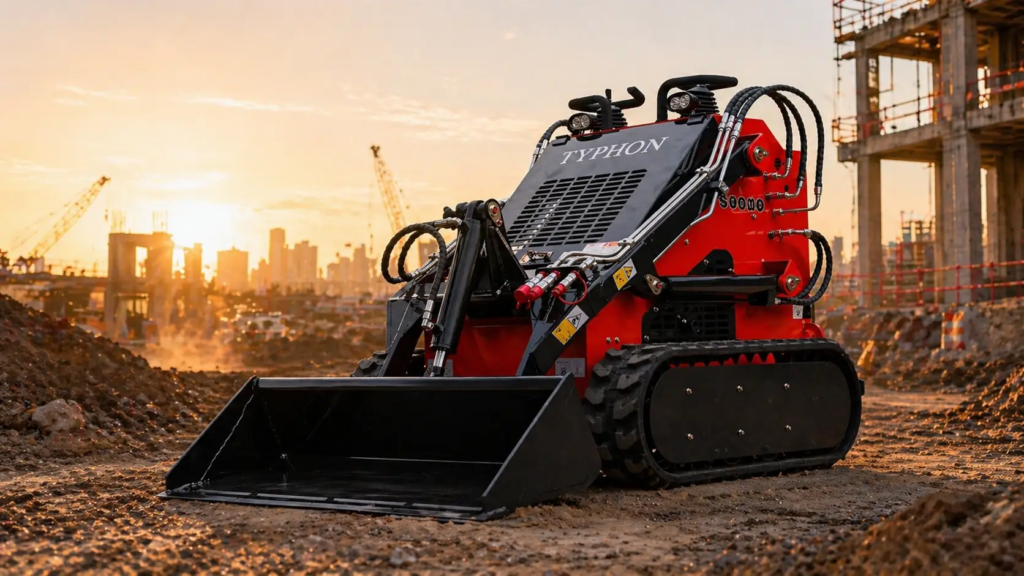
Before you look at horsepower or lift capacity, you must clearly define what you need the machine to accomplish. A skid steer designed for heavy demolition will differ vastly from one built for tight residential landscaping.
Start by listing your most common daily tasks. Will you primarily move heavy pallets of bricks across a flat concrete yard? Or do you need to dig trenches through dense, rocky soil? Defining these core tasks helps you narrow down your options immediately. You want a machine that handles your standard workload effortlessly, without constantly pushing its mechanical limits.
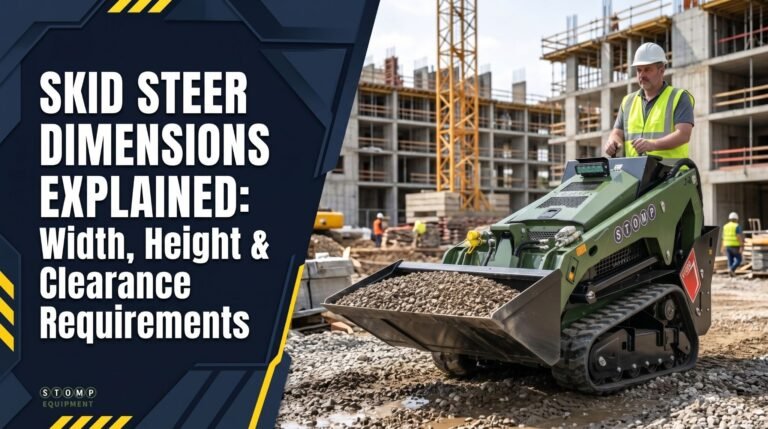
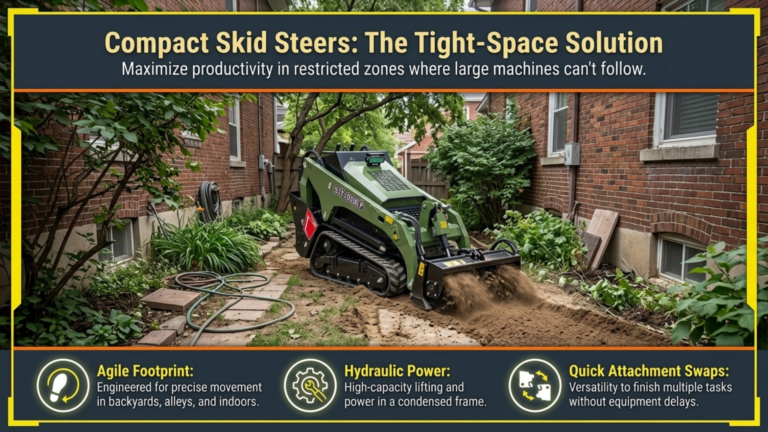
Consider the physical constraints of your typical work environment as well. If you frequently work in narrow residential backyards, a massive, high-capacity machine simply will not fit through the gate. Conversely, if you operate on sprawling commercial construction sites, a small unit will take too long to complete heavy grading tasks. Match the machine to both the task and the environment to ensure consistent, reliable performance.
Sizing Up Your Skid Steer Options
Skid steers generally fall into three main size categories: small, medium, and large frames. Each frame size offers distinct advantages based on your operational needs. Understanding these categories helps you pinpoint the right balance of size, power, and maneuverability.
Small Frame Skid Steers
Small frame skid steers prioritize agility. These compact machines typically weigh under 1,750 pounds and feature a smaller footprint. They excel in tight spaces where larger equipment cannot maneuver.
Landscapers, interior demolition crews, and residential contractors often rely on small frame models. They easily fit through standard fence gates and navigate closely spaced trees or narrow alleyways. While they lack the lifting power of larger units, their light weight minimizes damage to finished turf and delicate hardscapes.
Medium Frame Skid Steers
Medium frame models serve as the versatile workhorses of the industry. Weighing between 1,750 and 2,200 pounds, they offer a perfect compromise between power and maneuverability. These machines deliver enough muscle to tackle demanding jobs while remaining compact enough for standard construction sites.
If your projects vary significantly from week to week, a medium frame skid steer often makes the most sense. They easily handle tasks like loading debris, grading driveways, and moving heavy pallets. Because of their balanced design, they represent the most popular choice for general contractors and rental fleets.
Large Frame Skid Steers
When you need uncompromising power and heavy lifting capabilities, large frame skid steers deliver. These robust machines weigh over 2,200 pounds and feature high-horsepower engines. They dominate heavy construction sites, major excavation projects, and large-scale agricultural operations.
Large frame models easily lift massive loads of dirt, gravel, and construction materials. They handle aggressive attachments like large cold planers and forestry mulchers without stalling. If your daily operations involve heavy lifting and fast material movement across wide-open spaces, a large frame machine will maximize your productivity.
Navigating the Terrain: Wheels vs. Tracks
The ground conditions on your job site heavily influence the type of machine you should choose. You generally have two options: wheeled skid steer loaders or compact track loaders (CTLs). While they perform similar tasks, they interact with the ground very differently.
Wheeled skid steers perform best on hard, flat surfaces like concrete, asphalt, and compacted dirt. They drive faster than track models, making them highly efficient for moving materials quickly across paved yards. Furthermore, wheeled machines generally cost less to purchase and maintain, as replacing tires costs significantly less than replacing heavy rubber tracks.
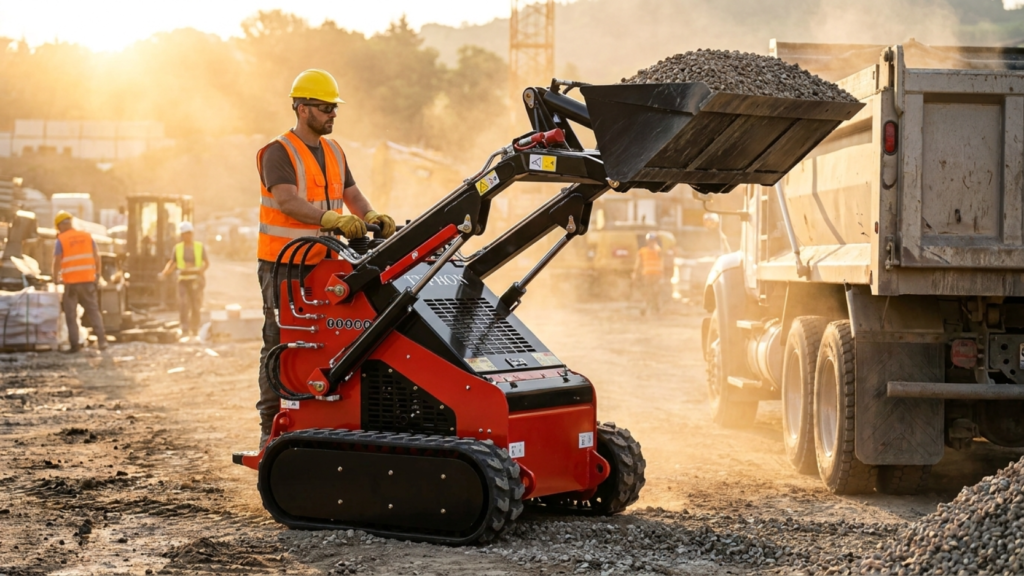
Compact track loaders feature wide rubber tracks that distribute the machine’s weight over a much larger surface area. This low ground pressure allows them to float over soft mud, loose sand, and wet clay without sinking. If you frequently work on soft, uneven, or muddy terrain, a track loader ensures you keep working even after heavy rain. Tracks also provide superior traction for pushing heavy loads up steep inclines.
Power and Performance Specifications
Once you determine the correct size and traction system, you must evaluate the machine’s lifting capabilities. You need to understand two critical specifications: Rated Operating Capacity (ROC) and lift geometry.
Rated Operating Capacity (ROC)
The Rated Operating Capacity tells you exactly how much weight the skid steer can safely lift and maneuver. Manufacturers calculate the ROC as exactly 50 percent of the machine’s tipping load. Never guess the weight of your materials. If you routinely lift pallets of pavers that weigh 2,500 pounds, you must select a machine with an ROC that exceeds that number. Pushing a machine past its ROC creates a severe safety hazard and strains the hydraulic system.
Radial vs. Vertical Lift
Skid steers feature two distinct arm designs: radial lift and vertical lift. Radial lift arms swing upward in an arc. They offer maximum reach at the midpoint of the lift cycle, making them ideal for digging, grading, and loading materials onto low trucks.
Vertical lift arms move straight up and down, keeping the load closer to the machine’s center of gravity. This design provides maximum reach at the very top of the lift cycle. If you primarily load materials into high-sided dump trucks or stack heavy pallets on tall shelves, a vertical lift machine offers superior stability and reach.
Selecting the Right Attachments
The true value of a skid steer lies in its incredible versatility. By swapping out attachments, you transform one machine into a sweeper, an auger, a trencher, or a snowplow. Evaluating your attachment needs helps dictate the hydraulic requirements of your machine.
Standard flow hydraulics handle the majority of common attachments, such as standard buckets, grapple buckets, and basic augers. However, if you plan to run power-hungry tools like cold planers, heavy-duty brush cutters, or large trenchers, you must choose a machine with high-flow hydraulics. High-flow systems pump significantly more hydraulic fluid per minute, giving demanding attachments the power they need to slice through tough materials efficiently.
Always plan for the future. Even if you only need a bucket today, buying a machine with high-flow capabilities gives you the flexibility to expand your services and run advanced attachments later.
Prioritizing Operator Comfort
An uncomfortable operator quickly becomes a fatigued, unproductive operator. When you invest in heavy equipment, you must prioritize the comfort and safety inside the cab. Modern skid steers offer numerous features designed to keep operators alert and comfortable during long, demanding shifts.
Look for machines with spacious cabs, excellent visibility, and adjustable suspension seats. Sealed and pressurized cabs prevent dust from entering the workspace, which proves essential during dry excavation or demolition work. If you operate in extreme weather conditions, an enclosed cab with powerful heating and air conditioning keeps your team comfortable and focused year-round. Intuitive joystick controls also reduce hand and arm fatigue compared to older lever systems.
Secure Your Productivity Today
Choosing the right skid steer requires careful evaluation of your daily tasks, typical terrain, and lifting requirements. When you match the specific capabilities of the machine to the precise demands of your job site, you unlock unparalleled efficiency and reliability. We know that building a dependable equipment fleet directly drives your business success and customer satisfaction.
Do you need more expert guidance on finding the perfect heavy equipment for your next big project? We are here to help you make the most informed decision possible. Visit https://skidsteers.org/ today to explore detailed specifications, compare top models, and secure the reliable machinery you need to get the job done right.