

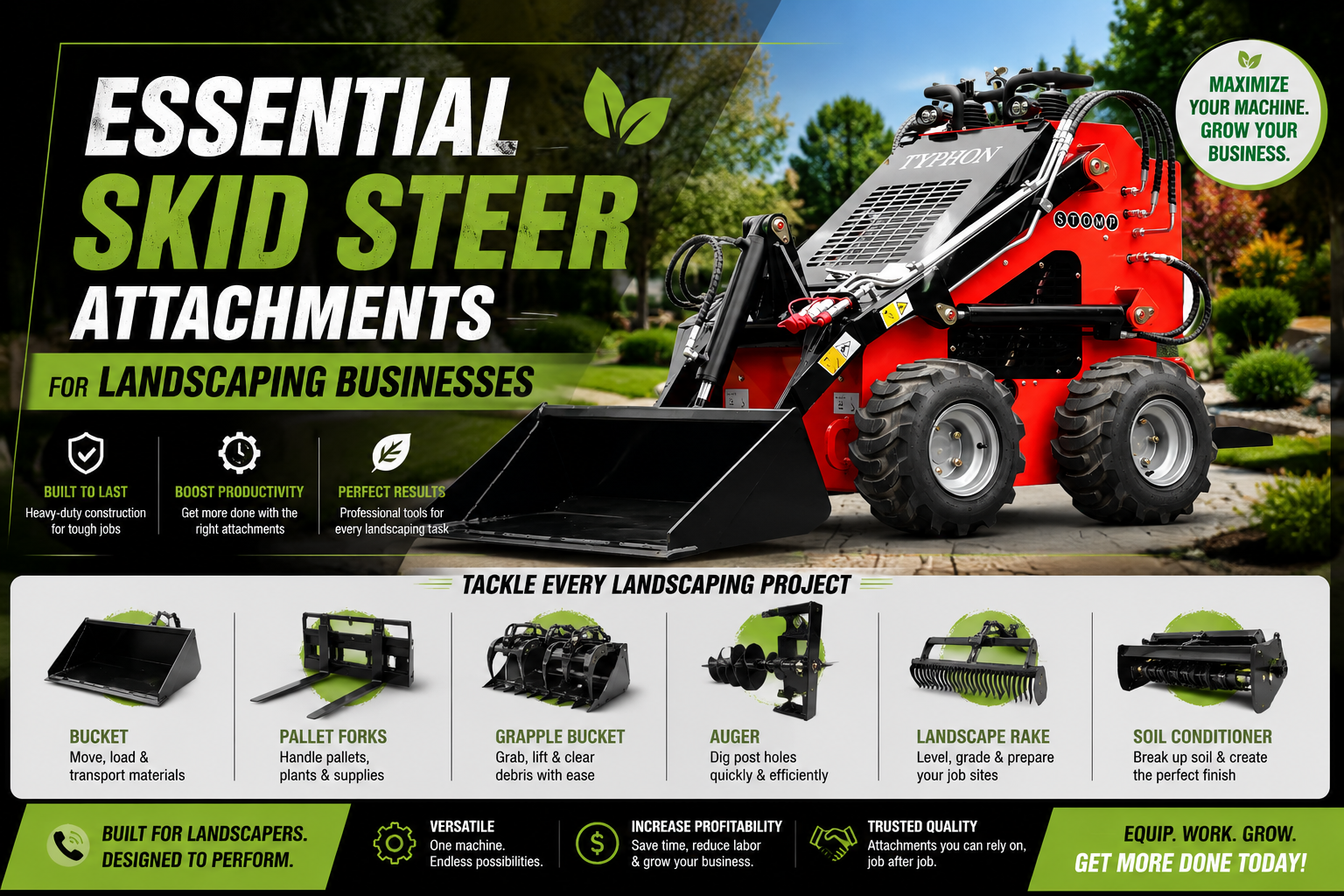
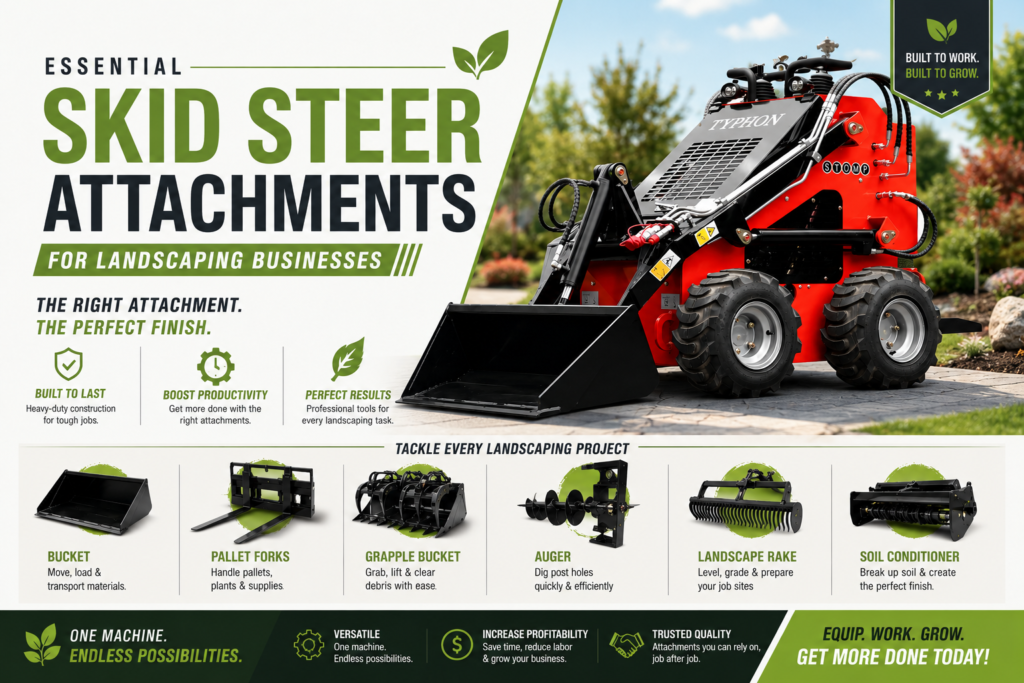
Essential Skid Steer Attachments for Landscaping Businesses
A skid steer without the right attachments is just an engine on tracks. The machine’s real value comes from what you bolt onto the front of it — and for landscaping crews, the difference between owning three or four smart attachments and owning none can decide how many jobs you bid, how fast you finish, and how much profit you keep.
This guide is built for landscaping business owners, contractors, and equipment buyers who want to get the most out of their skid steer. You’ll learn which attachments matter most for landscaping work, what each one does, when to reach for it, and how to choose tools that actually fit your machine and your jobs.
Here’s what you’ll walk away with:
- A practical rundown of the core landscaping attachments and their best uses
- How the right attachments boost productivity and return on investment
- What to check for compatibility before you buy — couplers, hydraulic flow, and machine capacity
Why Attachments Define a Landscaping Skid Steer
A landscaping job rarely involves just one task. You might grade a yard, dig planting beds, drill fence-post holes, clear brush, and haul material — all on the same property, sometimes the same day. A skid steer with the right attachments handles every one of those tasks without bringing in extra machines or crews.
That versatility is the whole point. One operator, one machine, and a set of quick-change tools can replace a trailer full of single-purpose equipment. Each attachment you add widens the range of work you can take on and bill for.
Takeaway: Treat attachments as profit centers, not accessories. The right lineup turns one skid steer into an entire fleet’s worth of capability.
The Core Landscaping Attachments
These are the attachments that earn their place on most landscaping crews. Match them to the work you do most, and add specialty tools as your jobs demand.
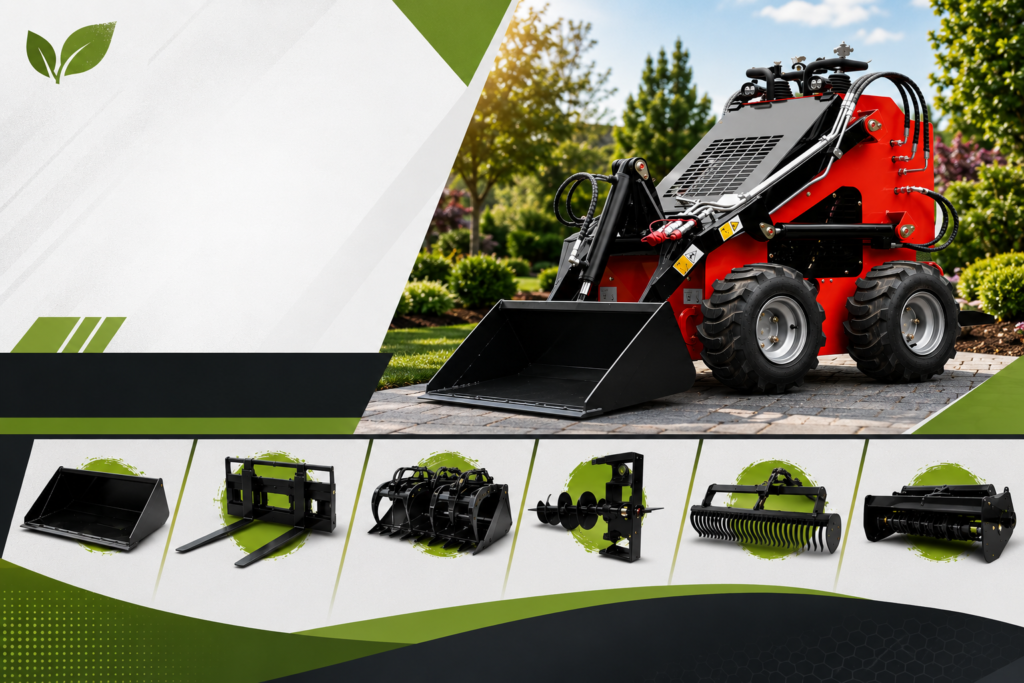
Buckets
The bucket is the workhorse you’ll use every day. It digs, scoops, carries, grades, and backfills — the foundation of nearly every landscaping job.
- General-purpose buckets handle soil, mulch, gravel, and debris hauling.
- Low-profile buckets improve visibility for precise grading and material spreading.
- Light-material buckets carry high volumes of mulch, compost, or snow without overloading the machine.
When to use it: loading trucks, moving material across a site, rough grading, and cleanup. If you buy nothing else, you buy a quality bucket.
Augers
An auger drills clean, consistent holes fast — a job that’s miserable and slow by hand. For landscapers, that means planting trees and shrubs, setting fence posts, installing deck footings, and digging for signage.
Auger bits come in a range of diameters, so one drive unit serves many jobs. Match the bit size to the hole you need, and swap bits rather than buying a new drive.
When to use it: planting projects, fencing, decking, and any repetitive hole-digging task. An auger turns a half-day of manual labor into an hour of machine time.
Trenchers
A trencher cuts narrow, even trenches for irrigation lines, drainage, electrical conduit, and lighting wire. It does in minutes what a shovel does in hours, and it leaves a cleaner, more consistent trench.
When to use it: installing irrigation systems, low-voltage landscape lighting, French drains, and underground utility runs. For any crew doing regular irrigation or drainage work, a trencher pays for itself quickly.
Brush Cutters
A brush cutter (or rotary cutter) clears overgrown vegetation, saplings, tall grass, and light brush. It’s the tool for taming a neglected lot or clearing land before a new install.
When to use it: land clearing, lot reclamation, and maintaining large or overgrown properties. A brush cutter lets you bid clearing jobs that crews without one have to turn down.
Tillers
A tiller breaks up and conditions soil, mixing in amendments and creating a smooth, loose seedbed. It saves enormous time on lawn installations and renovations.
When to use it: prepping soil for new sod or seed, breaking up compacted ground, and blending in compost or topsoil. For lawn-installation crews, a tiller delivers consistent, professional results far faster than hand tilling.
Grapples
A grapple grips and moves irregular material that a bucket can’t hold — logs, brush, rocks, root balls, and storm debris. The hydraulic jaws clamp down so you can lift and carry awkward loads securely.
- Root grapples handle brush, rock, and debris while letting dirt sift through.
- Industrial grapples grip logs and heavy material with a solid plate.
When to use it: storm cleanup, land clearing, hauling brush piles, and moving boulders for hardscape work. A grapple makes cleanup jobs faster and safer than wrestling material by hand.
Grading Blades and Box Blades
Grading attachments level and finish ground to a smooth, even surface — critical for lawns, driveways, patios, and walkways. A box blade with scarifier teeth loosens, levels, and grades in one pass.
When to use it: final grading before sod or seed, leveling gravel driveways, and prepping base for hardscaping. Clean grading is what separates a professional finish from an amateur one, and the right blade gets you there fast.
Snow Blowers and Snow Pushes
Winter doesn’t have to mean idle equipment. Snow attachments turn your skid steer into a revenue source through the cold months.
- Snow blowers throw snow clear of lots, driveways, and walkways.
- Snow pushes and pusher boxes move large volumes across open areas like parking lots.
- Snow buckets and blades handle lighter clearing and tight spaces.
When to use it: commercial and residential snow removal contracts. The same machine that landscapes all summer keeps earning all winter — a major argument for year-round ROI.
Takeaway: Start with a bucket, auger, and grading attachment, then add trenchers, grapples, brush cutters, and snow tools as your job mix grows.
How Attachments Boost Productivity and ROI
The math behind attachments is straightforward, and it favors the contractor who invests wisely.
One machine, many jobs. Instead of buying a dedicated trencher, a separate tiller, and a standalone post-hole digger, you run them all off one skid steer. That cuts purchase, transport, storage, and maintenance costs across the board.
Higher utilization. A skid steer that works across more tasks and more seasons spends less time sitting idle. Equipment that earns year-round — landscaping in summer, snow removal in winter — returns its cost far faster than a single-season machine.
Faster job completion. An auger that drills 20 holes in the time a crew digs three. A trencher that runs irrigation line in an afternoon instead of two days. Speed lets you complete more jobs per week and bid more competitively.
New revenue streams. Each attachment unlocks work you couldn’t take before. A brush cutter lets you bid land clearing. A snow pusher opens winter contracts. Every tool widens the services you can sell.
Real-world example: a landscaping crew that adds a trencher and an auger can bring irrigation installs and tree planting in-house instead of subcontracting them. That captured margin often covers the cost of both attachments within a single busy season.
Takeaway: Attachments aren’t an expense — they’re leverage. The right ones lower your cost per job while expanding what you can charge for.
How to Choose the Right Attachments
Buying smart starts with an honest look at the work you actually do. Use these steps to build a lineup that fits your business.
- Map your most common jobs. List the tasks you perform week after week. The attachments that match your highest-frequency work deliver the fastest payback.
- Prioritize versatility first. A quality bucket, an auger, and a grading attachment cover a huge share of landscaping work. Build from that base.
- Match attachments to your machine’s capacity. An attachment that’s too large strains the machine and stalls under load. Confirm each tool suits your skid steer’s rated operating capacity and horsepower.
- Weigh buy vs. rent. Buy the attachments you use constantly. Rent the specialty tools you need only a few times a year — at least until the demand justifies ownership.
- Favor quality over the cheapest option. Landscaping is hard on equipment. A well-built attachment lasts longer, performs better, and holds more resale value than a bargain tool that fails mid-season.
Takeaway: Let your job mix drive your buying decisions, lead with versatile core tools, and right-size every attachment to your machine.
Compatibility Considerations Before You Buy
The best attachment is useless if it won’t run on your machine. Check these three areas before any purchase.
Quick-Coupler Systems
Most modern skid steers use a universal quick-attach plate, which lets you swap attachments in minutes without leaving the cab. Confirm your machine and the attachment share the same standard so they connect cleanly. A mismatch means costly adapters — or a tool you can’t use at all.
Hydraulic Flow and Pressure
Powered attachments — augers, trenchers, brush cutters, tillers, and snow blowers — run on your skid steer’s auxiliary hydraulics. Each tool needs a specific flow rate (measured in gallons per minute) and pressure to perform.
- Standard-flow attachments suit most augers and lighter tools.
- High-flow attachments — many brush cutters and snow blowers — demand more from the machine.
Before buying any hydraulic attachment, match its flow and pressure requirements to what your skid steer delivers. Running a high-flow tool on a standard-flow machine means weak, sluggish performance or no performance at all.
Machine Size and Operating Capacity
Confirm your skid steer has the rated operating capacity and weight to handle the attachment safely. An oversized grapple or overloaded bucket compromises stability and overworks the hydraulics. Matching the tool to the machine protects both your equipment and your operators.
Takeaway: Verify the coupler fits, the hydraulics match, and the machine can handle the load — every time, before you buy.
Build the Attachment Lineup That Fits Your Business
The right skid steer attachments transform a single machine into a versatile, year-round profit driver. Buckets handle your daily material work. Augers and trenchers speed up planting and irrigation. Brush cutters, grapples, and tillers expand the jobs you can take on. Grading blades deliver the professional finish clients pay for, and snow attachments keep the machine earning through winter.
Start with an honest inventory of the work you do most often, then build from a versatile core — a quality bucket, an auger, and a grading attachment — and add specialty tools as demand grows. Before every purchase, confirm the quick-coupler fits, the hydraulic flow matches, and your machine has the capacity to run the tool safely.
Your next step: write down your five most common job types this week, then match each one to the attachment that would speed it up or open new revenue. That short list turns a vague shopping trip into a focused investment plan — and gets your skid steer earning its keep on every job, in every season.
Why You Need Essential Skid Steer Attachments for Landscaping
A landscaping job rarely involves just one task. You might grade a yard, dig planting beds, drill fence-post holes, clear brush, and haul material—all on the same property, sometimes on the same day.
Treating your tools as profit centers, rather than accessories, is the secret to scaling your business. One operator, one machine, and a set of quick-change tools can replace a trailer full of single-purpose equipment. For more operational strategies, read our companion guide on how to optimize landscaping crew workflows (Internal Link).
The Core List of Essential Skid Steer Attachments for Landscaping
Match these tools to the work you do most frequently, adding specialty tools as your project mix demands.
1. Buckets (The Foundation)
The bucket is your everyday workhorse for digging, scooping, carrying, grading, and backfilling.
- General-Purpose Buckets: Best for soil, mulch, gravel, and debris hauling.
- Low-Profile Buckets: Feature a longer bottom plate to improve visibility for precise grading and material spreading.
- Light-Material Buckets: Deep-capacity buckets designed to move high volumes of light material like mulch, compost, or snow without overloading the engine.
2. Augers
An auger turns hours of brutal hand-digging into minutes of precise machine work. It uses high-torque planetary drives to drill clean holes for trees, shrubs, fence posts, deck footings, or signs. You can swap out different bit diameters on a single drive unit to fit the job.
3. Trenchers
Perfect for cutting narrow, even trenches for irrigation lines, landscape lighting, French drains, and underground utility runs. It leaves a clean trench with minimal turf disruption compared to an excavator bucket.
4. Brush Cutters
Also known as rotary cutters, these heavy-duty decks clear overgrown vegetation, saplings, tall grass, and light brush. They are crucial for land clearing and reclaiming neglected lots before a new landscape installation.
5. Tillers
Tillers break up heavily compacted ground, condition the soil, and cleanly mix in compost or topsoil amendments. This is an essential time-saver for preparing flawless seedbeds or sod installations.
6. Grapples
Grapples feature hydraulic jaws that clamp down securely on awkward, irregular loads that a standard bucket simply cannot carry.
- Root Grapples: Feature skeleton bottoms that scoop up brush, logs, and rocks while letting loose dirt sift through.
- Industrial Grapples: Utilize a solid bottom or side plates to grip scrap and heavy materials tightly.
7. Grading Blades & Box Blades
Critical for professional-grade hardscaping base prep and final turf grading. Box blades use scarifier teeth to loosen hard dirt and level the surface in a single pass.
8. Winter Attachments (Snow Pushes & Blowers)
Don’t let your investment sit idle when the ground freezes. Snow pushes move massive volumes across open parking lots, while snow blowers throw heavy drifts clear of commercial walkways and tight driveways, ensuring year-round ROI.
How Heavy Equipment Specs Impact Your Attachment ROI
Before purchasing any tool, it is important to understand how machine sizes are standardized. According to the Association of Equipment Manufacturers (AEM) (DoFollow External Link), operating capacities determine both job site safety and hydraulic tool efficiency. To maximize your equipment utilization, make sure you align your job types with our internal checklist on choosing between compact track loaders and skid steers (Internal Link).
Critical Compatibility Checklist
Before signing any purchase order for your essential skid steer attachments for landscaping, verify these three critical connection metrics to ensure the tool actually runs safely on your machine.
| Metric | What to Verify | Why It Matters |
| Coupler Standard | Confirm both your machine and the attachment utilize the universal skid-steer quick-attach plate. | A mismatch prevents mechanical connection, requiring expensive aftermarket adapter plates. |
| Hydraulic Flow & Pressure | Check if the tool requires Standard-Flow or High-Flow auxiliary hydraulics (measured in GPM and PSI). | Running a high-flow tool (like a heavy snow blower) on a standard-flow machine results in sluggish or completely stalled performance. |
| Machine Operating Weight | Ensure the combined weight of the attachment and its maximum cargo load stays safely within your skid steer’s ROC. | Overloading causes dangerous tipping risks, loss of steering control, and premature hydraulic system wear. |
For detailed engineering standards on hydraulic pressure limits, you can consult the official Society of Automotive Engineers (SAE) International (DoFollow External Link) database.
Finalizing Your List of Essential Skid Steer Attachments for Landscaping
To convert this guide into a focused investment plan, take five minutes to write down your crew’s five most common job site delays this past week. Match those specific bottlenecks to the options listed above. If hand-digging or manual material hauling is slowing down your turnaround times, that is exactly where your next profit center should be bolted on.