

What Makes Compact Skid Steer Loaders Unique?
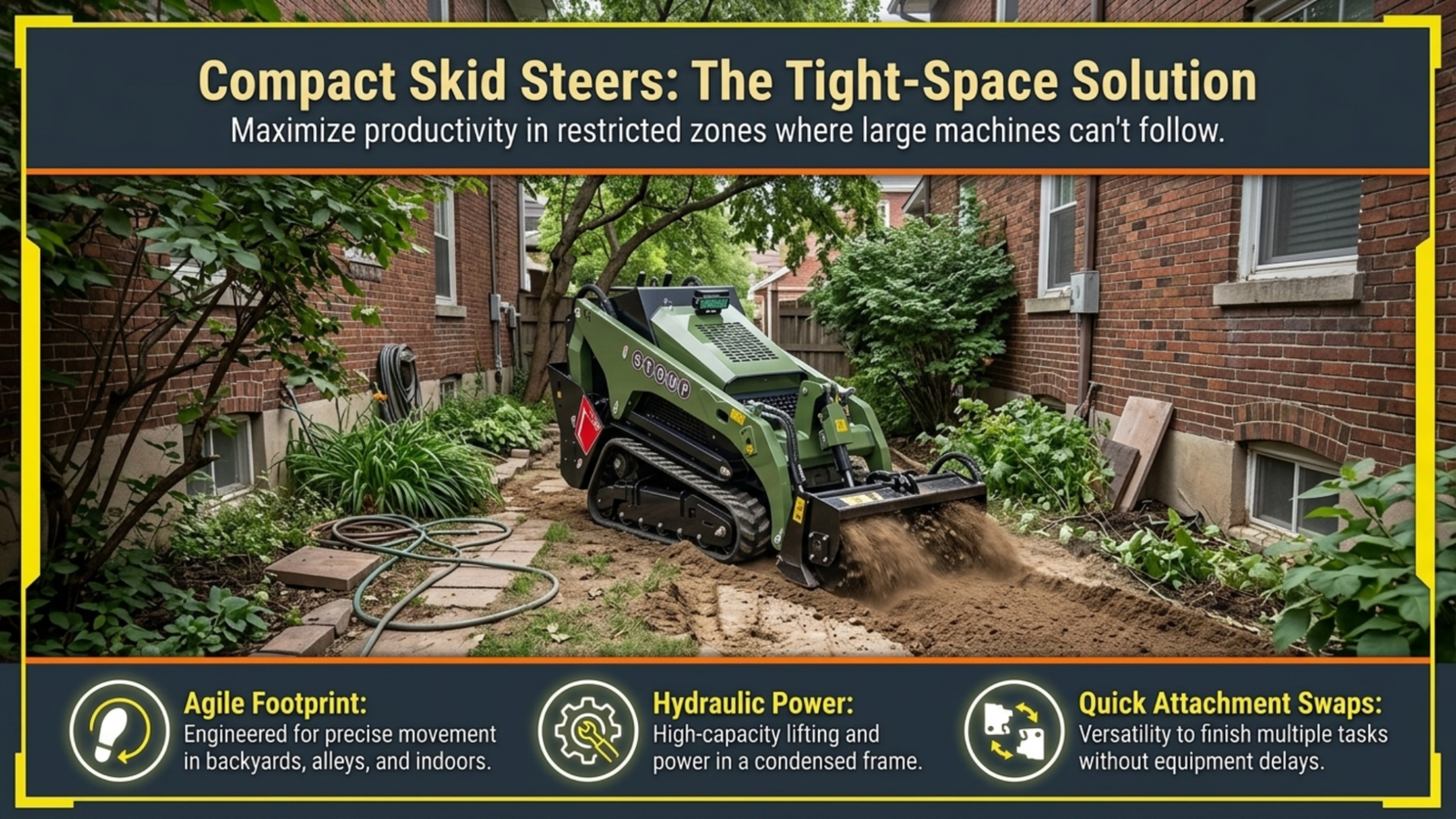
Cramped jobsites used to mean slow, manual work and a lot of compromise. Compact skid steer loaders change that. Their small footprint, tight turning, and quick attachment swaps let crews move material, grade ground, and finish jobs in spaces full-size equipment simply can’t reach. For contractors who work in backyards, alleys, and indoor sites, that capability turns tight quarters into productive ground.
This guide explains why compact skid steers excel in confined construction. You’ll learn what makes them so maneuverable, the real benefits they bring to tight jobsites, where they perform best, and how to choose and operate one well. By the end, you’ll know exactly why these machines have become a go-to for space-limited work.
What Makes a Skid Steer Compact
Before you can see why these machines shine, it helps to understand what “compact” really means. The term covers more than just a smaller frame.
Compact skid steers are engineered to balance maneuverability with productivity. Their design allows operators to access restricted work areas while still delivering the hydraulic power, lifting capability, and versatility needed for a wide variety of construction, landscaping, and agricultural tasks.
A Smaller Footprint
A compact skid steer is built to fit where bigger machines can’t. Narrow width lets it pass through standard gates, doorways, and tight side yards. Short overall length keeps it nimble in confined work zones where every inch matters.
The reduced machine size also minimizes disturbance to surrounding surfaces. This makes compact skid steers especially useful for residential projects, finished landscapes, and indoor renovations where preserving the work area is just as important as completing the task efficiently.
That smaller body doesn’t mean less capability. Modern compact models pack strong lift and breakout force into a frame designed for tight access.
Tight Turning and Skid Steering
The name says it all. A skid steer turns by varying the speed and direction of its wheels or tracks on each side, which lets it pivot in place. This zero-radius style turning is the core reason these machines thrive in cramped spaces.
Because the machine can rotate within its own footprint, operators spend less time repositioning between tasks. This efficient maneuverability helps maintain a smooth workflow, particularly on busy jobsites where space is shared with materials, equipment, and other workers.
You can spin the machine within its own length, reposition fast, and work close to walls and obstacles without backing up and realigning. That agility saves time on every cycle.
Why Tight Spaces Demand a Compact Machine
Confined jobsites bring challenges that full-size equipment struggles with. A compact skid steer is purpose-built to handle them. Understanding those challenges shows why the right machine matters so much.
Working efficiently in restricted areas requires equipment that can balance power with maneuverability. Compact skid steers are designed to perform demanding tasks without sacrificing control, making them a practical solution for projects where available working space is limited.
Limited Access Points
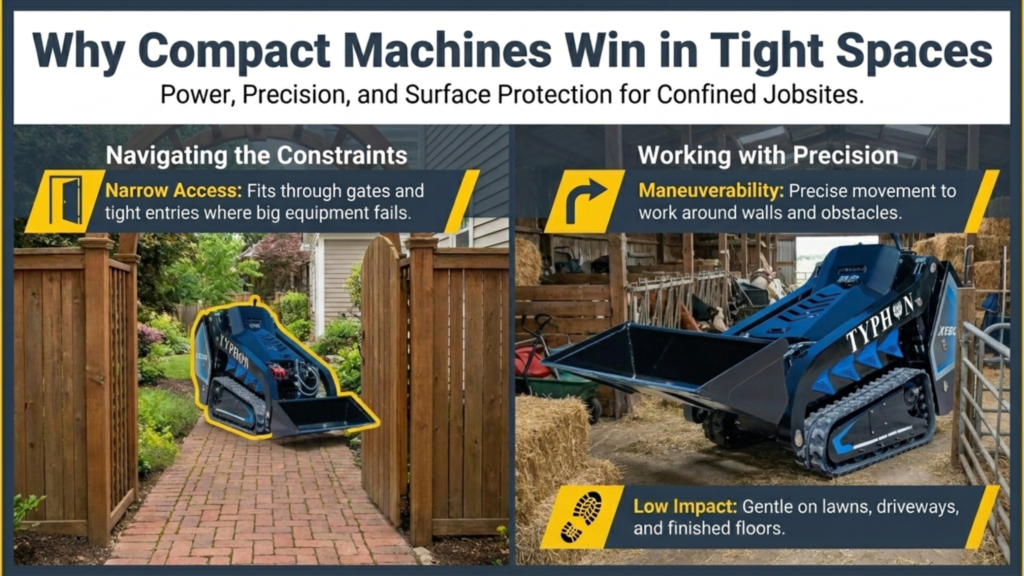
Many jobsites have just one narrow way in. Fenced backyards, gated developments, and interior renovations all restrict how big a machine can be. A compact skid steer fits through these tight entries, so you can bring real power to spots that once meant shovels and wheelbarrows.
This easier access also reduces the need to remove fencing, dismantle structures, or create temporary entry points. Contractors can begin work more quickly while minimizing disruption to the surrounding property.
Getting the machine onto the site is half the battle. A compact frame wins that battle before the work even starts.
Obstacles on Every Side
Tight sites are crowded with things you can’t hit. Walls, fences, landscaping, parked vehicles, and other trades fill the space. A maneuverable machine lets you work around these obstacles with precision instead of constant repositioning.
The ability to make quick, controlled turns also improves workflow when multiple tasks are performed in a confined area. Operators can move efficiently between loading, grading, and material handling without wasting time on unnecessary machine movements.
The smaller the machine, the more margin you have. That margin keeps the work moving and the surroundings safe.
Sensitive Surfaces
Finished driveways, lawns, and interior floors can’t take heavy traffic or torn-up ground. Compact skid steers, especially track models, spread their weight and tread lightly. That gentler footprint protects the surfaces you’re working around.
Careful machine selection also helps reduce restoration costs after the job is complete. By minimizing soil compaction, rutting, and surface damage, compact equipment allows contractors to deliver cleaner results while spending less time on repairs and site cleanup.
Less surface damage means less repair and cleanup later. On finishing work, that protection is a real advantage.
Key Benefits for Tight-Space Construction
The reason compact skid steers dominate confined work comes down to clear, measurable advantages. These benefits show up in productivity, versatility, and safety on every job.
Their combination of compact dimensions and high performance allows contractors to complete projects that would be difficult or inefficient with larger equipment. This balance of accessibility and capability makes compact skid steers a valuable asset across residential, commercial, and municipal construction projects.
Exceptional Maneuverability
The biggest benefit is how easily the machine moves. Zero-radius turning lets you work in spaces barely larger than the machine itself. You reposition quickly, dig close to structures, and navigate around obstacles without wasted motion.
The compact design also allows operators to maintain better control when working around utilities, landscaping, and existing structures. Precise maneuvering helps reduce the risk of accidental contact while improving efficiency in crowded work environments.
That agility translates directly into faster cycles. Less time maneuvering means more time getting work done.
Versatility Through Attachments
A compact skid steer is far more than a loader. Swap the bucket for an auger, grapple, trencher, breaker, or sweeper, and one machine handles a dozen tasks. That versatility is gold on tight sites where you can’t fit several large machines.
This flexibility also helps contractors reduce equipment costs by replacing multiple specialized machines with a single versatile unit. As project requirements change, operators can quickly install the appropriate attachment and continue working without significant downtime.
Quick-attach systems make the swaps fast. You can move from digging to grading to material handling in minutes, all with one compact machine.
Strong Power in a Small Package
Don’t let the size fool you. Compact skid steers deliver impressive lift capacity, breakout force, and hydraulic power. You get real production capability without the bulk, so demanding work gets done even in cramped quarters.
Modern hydraulic systems and efficient engine designs allow these machines to handle challenging workloads while maintaining smooth, reliable performance. This combination of power and compactness gives operators the confidence to tackle heavy-duty applications in areas where larger equipment simply cannot operate.
This power-to-size ratio is what makes the category so valuable. You sacrifice footprint, not performance. To get the most from that capability, it pays to follow proven skid steer operation and maintenance best practices that keep the machine running at full strength.
Easier Transport
Smaller machines move between sites more easily. Many compact skid steers fit on a standard trailer behind a pickup, which simplifies logistics and cuts hauling costs. You spend less time and money getting the machine where it needs to be.
The reduced transportation requirements also make scheduling more flexible. Contractors can relocate equipment quickly between multiple jobsites in a single day, improving machine utilization while reducing delays associated with larger transport vehicles and specialized permits.
Operating Tips for Tight Spaces
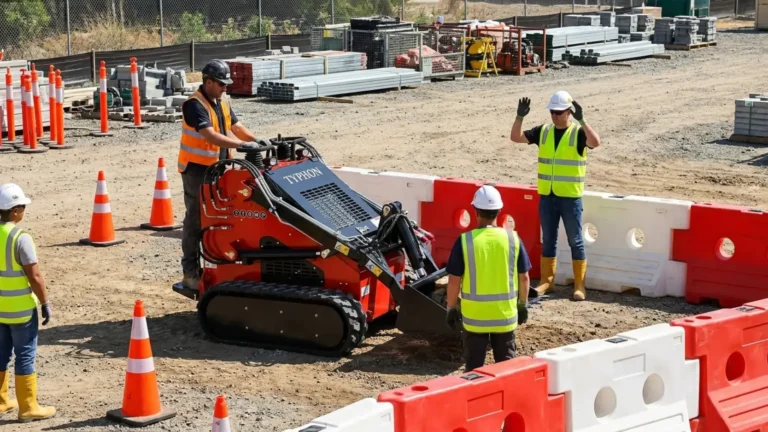
Owning the right machine is only half the job. Sound operating habits help you capture every advantage the compact design offers.
Successful operation begins with awareness and preparation. Taking time to understand the work area, identify potential hazards, and position the machine strategically allows operators to work more efficiently while maintaining a safe environment for everyone on site.
Plan Your Approach
Before you start, walk the site and plan how you’ll move through it. Identify your access point, work path, and where you’ll stage material. A clear plan means fewer wasted moves once you’re working in the tight space.
Planning ahead also helps reduce unnecessary reversing, tight turns, and repeated repositioning throughout the job. An organized workflow improves productivity, conserves fuel, and minimizes wear on both the machine and the working surface.
Use Smooth, Deliberate Controls
Tight spaces leave little room for error. Move the controls smoothly and deliberately rather than fast and jerky. Precise, measured inputs keep the machine predictable and protect the obstacles around you.
Maintaining a steady operating pace also improves attachment performance and reduces the chance of spilling materials or damaging nearby structures. Controlled movements allow the skid steer to work more efficiently while giving operators greater confidence in confined environments.
Conclusion
Compact skid steer loaders earn their place on any jobsite where space is tight and access is limited. By combining a small footprint, zero-radius turning, and broad attachment versatility, they bring real construction power to spaces full-size machines can’t touch. That capability translates directly into faster cycles, safer operation, and access to jobs other equipment simply can’t handle cleanly.
Whether you’re working on residential construction, commercial developments, landscaping projects, or utility installations, a compact skid steer provides the flexibility needed to handle a wide range of tasks efficiently. Its ability to adapt to changing jobsite demands makes it a valuable investment for contractors who regularly work in confined environments.
The smart move is matching the machine to your work, choosing the right wheels or tracks and hydraulics, and operating with smooth, deliberate control. Do that, and a compact skid steer will reward you with dependable performance, lower costs, and the versatility to take on the most demanding tight-space projects your business pursues.
Operating Tips for Tight Spaces
Owning the right machine is only half the job. Sound operating habits help you capture every advantage the compact design offers. Successful operation always aligns with official OSHA safety guidelines for earthmoving equipment.
Plan Your Approach
Pro Tip: Before you start, walk the site and plan how you’ll move through it. Identify your access point, work path, and where you’ll stage material.
A clear plan means fewer wasted moves once you’re working in the tight space. Planning ahead reduces unnecessary reversing, tight turns, and repeated repositioning, which conserves fuel and minimizes wear on the machine.
Use Smooth, Deliberate Controls
Tight spaces leave little room for error. Move the controls smoothly and deliberately rather than fast and jerky. Precise, measured inputs keep the machine predictable and protect the obstacles around you. Maintaining a steady operating pace also improves attachment performance and reduces the chance of spilling materials.