

How Often Should You Service a Skid Steer?
Your skid steer acts as the absolute workhorse of your fleet. When you push this machine hard, it delivers massive power and versatility on the job site. But that performance comes with a strict requirement: consistent, timely maintenance. Skipping service intervals leads to sudden breakdowns, dangerous operating conditions, and massive repair bills. By understanding exactly how often you should service your skid steer, you protect your total cost of ownership and keep your crew working safely.
Start with Daily Inspections
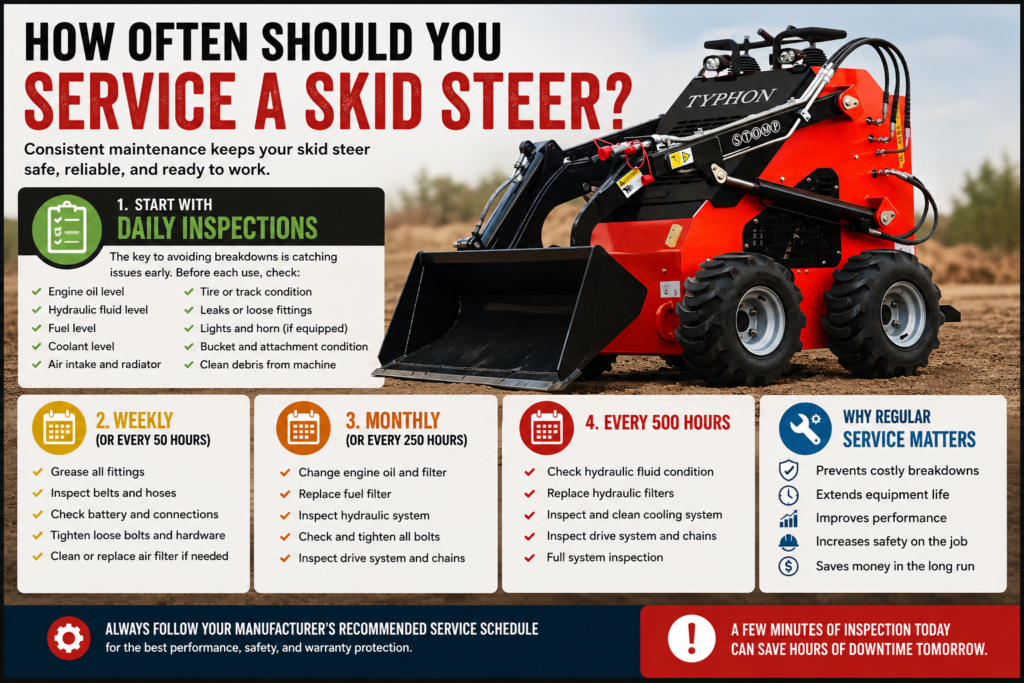
Good maintenance starts before you even turn the key. We recommend a strict daily walkaround before every single shift. Check the engine oil and hydraulic fluid levels to ensure they sit at the correct marks. Walk around the machine and look for fresh leaks, cracked hoses, or loose bolts.
You must also grease the pivot points daily. A skid steer loader arm handles massive stress, and fresh grease pushes out dirt while protecting the metal pins from severe wear. Inspect your tires for deep cuts, or check your rubber tracks for proper tension. Finally, clear any debris from the radiator and engine compartment to prevent overheating.
Follow Manufacturer Hourly Intervals
Every machine features a specific service schedule built by the manufacturer. You should measure these intervals in engine hours, not calendar days. While you must always check your specific operator’s manual, most skid steers follow a standard timeline.
50 to 100 Hours
At this stage, you need to dig a bit deeper. Check the tension on your drive chains or tracks. A loose track will slip off the sprocket and halt your work instantly. Inspect the air filters and tap out any heavy dust. You should also check the battery terminals for corrosion and ensure the cab safety features operate perfectly.
250 to 500 Hours
This interval usually marks your first major fluid change. You will need to drain the engine oil and replace the oil filter. Change the main fuel filters to keep the engine running smoothly. We also suggest a close inspection of your hydraulic lines. Look closely for swollen spots or worn patches that might burst under high pressure.
1,000 Hours and Beyond
Hitting the 1,000-hour mark requires a comprehensive system overhaul. You will drain and replace the hydraulic fluid and swap out the heavy hydraulic filters. You must also flush the engine coolant, check the drive motors, and replace the drive belts. This major service resets the core systems of your machine and prepares it for another long stretch of heavy work.
How Job Site Conditions Change the Rules
Standard service schedules assume standard working conditions. If your job site pushes the machine to its limits, you must service it much more often.
- Heavy Dust and Debris: Working in demolition or dry dirt chokes your air filters rapidly. You must check and replace filters much faster to prevent engine damage.
- Deep Mud and Water: Water degrades grease and attacks exposed metal. If you work in heavy mud, you need to grease the pivot points twice a day to push the water out of the joints.
- Heavy Lifting: Constantly lifting materials at the maximum capacity limit puts extreme stress on the hydraulic system and tires. You must check hydraulic fluid quality and tire pressure constantly.
- Extreme Temperatures: Freezing weather thickens engine oil and strains the battery. High heat stresses the cooling system. Adjust your fluid weights based on the season to keep the machine running right.
Protect Your Investment
Keeping a skid steer running strong requires discipline. When you follow a strict service timeline, you eliminate surprises and keep your projects moving forward. Do not rely on your memory to track these important dates. Build a documented maintenance schedule and record every oil change, grease job, and filter swap. Grab your operator’s manual today, check your current engine hours, and schedule your next service to protect your equipment investment.
Skid Steer Maintenance Schedule: How Often Should You Service?
Your skid steer loader acts as the absolute workhorse of your fleet. When you push this heavy equipment hard, it delivers massive power, lifting capacity, and versatility on the job site. But that top-tier performance comes with a strict requirement: consistent, timely upkeep.
Skipping service intervals leads to sudden breakdowns, dangerous operating conditions, and massive repair bills that eat into your margins. By understanding exactly how often you should service your machine and implementing a proper skid steer maintenance schedule, you protect your total cost of ownership and keep your crew working safely day after day.
Start with Daily Skid Steer Inspections
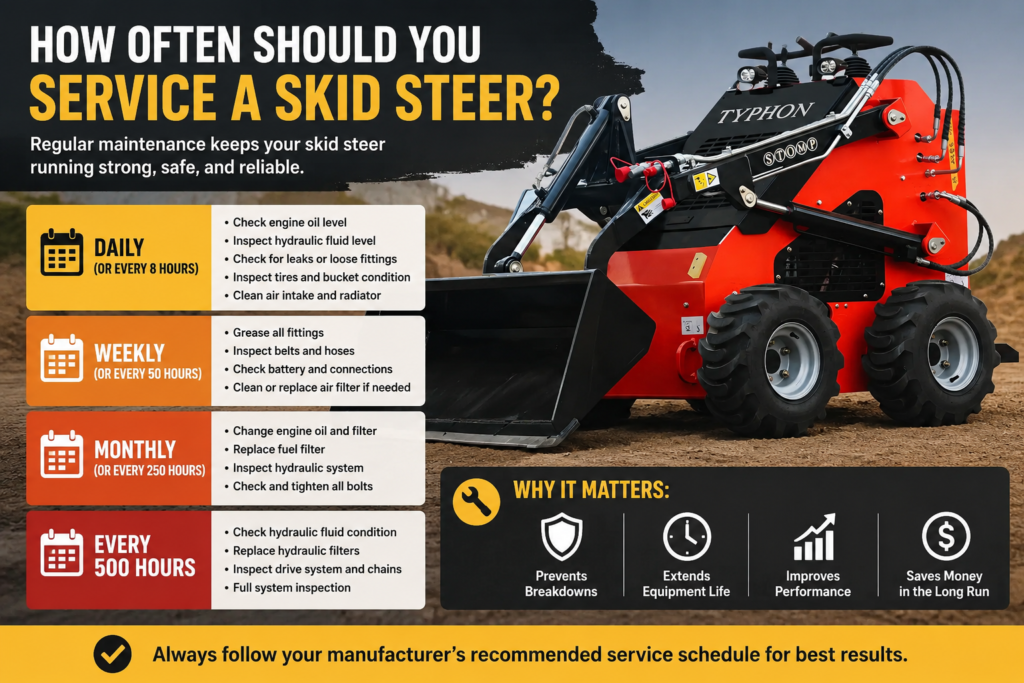
Good maintenance starts before you even turn the ignition key. We highly recommend a strict daily walkaround before every single shift begins. Think of this as the foundation of your skid steer maintenance schedule.
- Check Fluids: Verify the engine oil and hydraulic fluid levels sit at the correct marks. Low fluids are the fastest way to destroy internal components.
- Visual Inspection: Walk around the machine and look for fresh leaks under the chassis, cracked hydraulic hoses, or loose bolts.
- Grease Pivot Points: A loader arm handles massive mechanical stress. Pumping fresh grease pushes out abrasive dirt while protecting the metal pins and bushings from severe wear.
- Tires and Tracks: Inspect your pneumatic tires for deep cuts and proper inflation, or check your rubber tracks for proper tension and alignment.
- Clear Debris: Remove accumulated dirt and job site debris from the radiator and engine compartment to prevent dangerous overheating.
Follow Manufacturer Hourly Service Intervals
Every piece of heavy equipment features a specific service timeline built by the manufacturer’s engineers. You should always measure these intervals in engine hours, not calendar days. While you must always check your specific operator’s manual for exact numbers, most machines follow this standard skid steer maintenance schedule:
50 to 100-Hour Service
At this early stage, you need to dig a bit deeper into the mechanics:
- Check the tension on your drive chains or rubber tracks. A loose track will slip off the sprocket and halt your work instantly.
- Inspect the engine air filters and tap out any heavy dust.
- Check the battery terminals for acid corrosion and ensure the cables are tight.
- Ensure the cab safety features, like the seatbelt interlock and lap bar, operate perfectly according to OSHA heavy equipment safety standards.
250 to 500-Hour Service
This interval usually marks your first major fluid change.
- Drain the engine oil and replace the oil filter to keep the internal engine parts lubricated and clean.
- Change the main fuel filters and water separators to keep the engine running smoothly.
- Perform a close, hands-on inspection of your hydraulic lines. Look closely for swollen spots, chafing, or worn patches that might burst under high pressure.
1,000-Hour Service and Beyond
Hitting the 1,000-hour mark requires a comprehensive system overhaul.
- Drain and safely dispose of the old hydraulic fluid, then swap out the heavy hydraulic filters.
- Flush the engine coolant system and replace it with fresh antifreeze.
- Check the drive motors, torque specifications, and replace the engine drive belts.
This major service resets the core systems of your machine and prepares it for another long stretch of heavy commercial work.
How Job Site Conditions Change the Rules
Standard service schedules assume standard, moderate working conditions. If your job site pushes the machine to its absolute limits, you must adjust your skid steer maintenance schedule and service the equipment much more frequently.
- Heavy Dust and Debris: Working in demolition, forestry, or dry dirt chokes your air filters rapidly. You must check and replace filters much faster to prevent severe engine damage.
- Deep Mud and Water: Standing water degrades grease and attacks exposed metal joints. If you work in heavy mud, grease the pivot points twice a day to push the water out.
- Heavy Lifting: Constantly lifting materials with heavy skid steer attachments puts extreme stress on the hydraulic system and tires. Check hydraulic fluid quality and tire pressure constantly.
- Extreme Temperatures: Freezing winter weather thickens engine oil and strains the battery, while high summer heat stresses the cooling system. Adjust your fluid weights based on the season.
Protect Your Heavy Equipment Investment
Keeping a skid steer running strong requires daily discipline and attention to detail. When you follow a strict skid steer maintenance schedule, you eliminate nasty surprises and keep your projects moving forward profitably. Do not rely on your memory to track these important dates. Build a documented maintenance log and record every single oil change, grease job, and filter swap. Grab your operator’s manual today, check your current engine hours on the dashboard, and contact our equipment parts team to schedule your next service and protect your investment for years to come.