Table of Contents
ToggleHow to Choose the Right Mini Skid Steer Loader
Compare radial lift vs vertical lift, hydraulic flow, wheels vs tracks, and stability triangle basics before choosing a compact skid steer loader for landscaping, construction, farm work, trenching, grading, pallet handling, and attachment use.
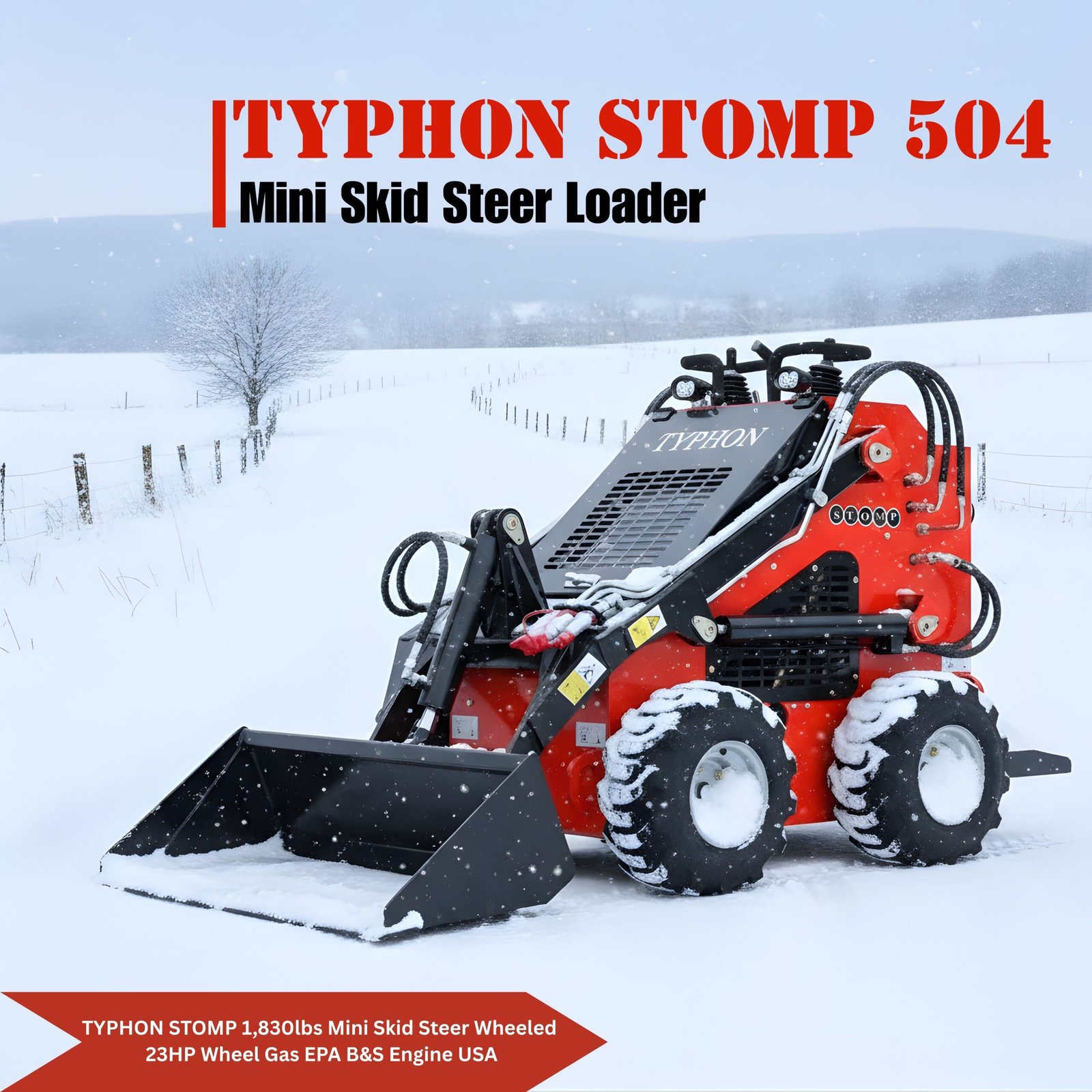
Radial vs Vertical Lift
The lift path affects digging force, reach, truck loading, and pallet handling. Choose the right loader arm style based on your daily jobsite work.
- Radial Lift: Best for high breakout force, digging, grading, landscaping, and ground-level attachment work.
- Vertical Lift: Better for truck loading, pallet stability, higher reach, and warehouse-style lifting tasks.
Hydraulic Flow
Hydraulic flow controls how well your mini skid steer powers attachments such as buckets, forks, augers, trenchers, grapples, and brush cutters.
- Standard Flow: Common for buckets, pallet forks, augers, light grapples, and everyday utility attachments.
- High Flow: Better for demanding attachments such as mulchers, cold planers, trenchers, and heavy-duty hydraulic tools.
Wheels vs Tracks
Your undercarriage choice affects traction, ground pressure, speed, surface protection, and performance on mud, sand, gravel, concrete, or turf.
- Wheels: Faster travel speed and strong performance on concrete, asphalt, compacted gravel, and hard surfaces.
- Tracks: Better flotation, traction, and stability on mud, sand, soft soil, slopes, landscaping areas, and uneven terrain.
Stability
Triangle
Mastering dynamic stability is critical when operating a mini skid steer loader. A properly balanced machine helps keep the center of gravity safe during high-reach lifting, pallet handling, attachment use, and uneven terrain work.
- Keep heavy loads low while traveling.
- Use the correct attachment size for the machine.
- Avoid sharp turns with raised loads.
- Match wheels or tracks to the jobsite surface.
TYPHON STOMP Series Engineering
The TYPHON STOMP Series mini skid steer loader is engineered for breakout force, maneuverability, hydraulic attachment power, and jobsite versatility. Built for landscaping, grading, trenching, digging, pallet handling, farm work, and compact construction tasks.
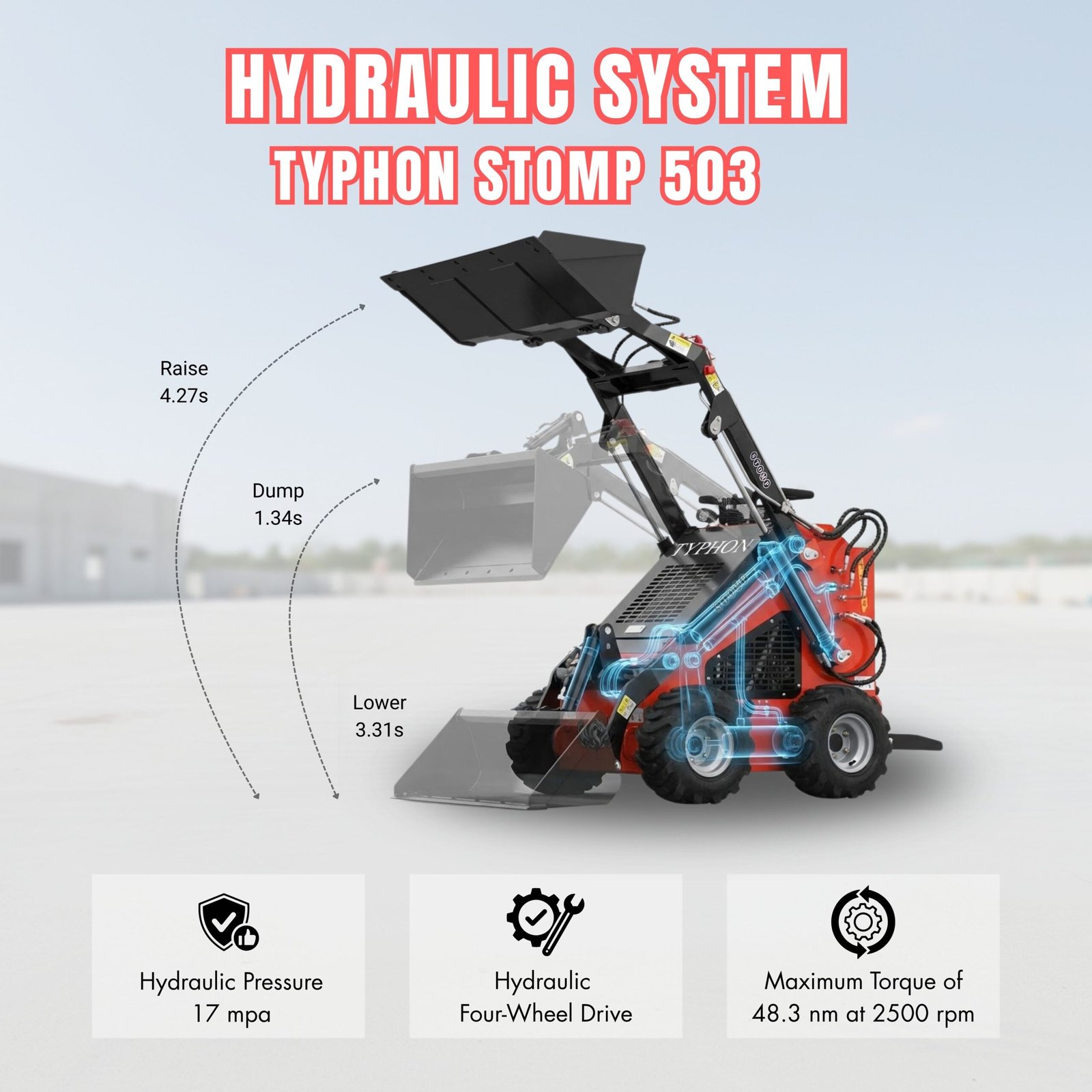
The STOMP Architecture
➤ Heavy-Duty Radial Lift
Engineered for superior digging, grading, and ground-level attachment work, the radial lift geometry provides strong breakout force and mid-range reach for landscaping, site preparation, material moving, and utility jobs.
➤ Briggs & Stratton Vanguard Power
Equipped with a high-torque 23 HP V-Twin gas engine, the STOMP Series delivers dependable cold-start performance and consistent power for demanding auxiliary attachments, daily jobsite use, and compact equipment applications.
➤ Dual-Pump Hydraulic System
The dedicated hydraulic flow system supports simultaneous drive and lift operation, helping maintain attachment performance when operating augers, trenchers, hydraulic breakers, grapples, buckets, and other skid steer tools.

Skid Steer Buying Guide
Skid Steer Buying Guide information from SkidSteers.org helps buyers compare skid steer loaders, mini skid steers, tracked skid steers, wheeled skid steers, skid steer attachments, engine options, hydraulic systems, operating capacity, machine size, and compact equipment features before choosing the right machine for construction, landscaping, agriculture, utility work, grading, digging, loading, and material handling.
Skid Steer Buying Guide for Compact Equipment Buyers
A skid steer loader is one of the most useful compact machines for jobsite work because it can lift, carry, dig, grade, clear, trench, drill, and power different attachments. Before buying a skid steer, the first step is to understand your main job type. A landscaping crew may need a compact machine for narrow gates, soil preparation, mulch moving, auger drilling, and backyard access. A construction crew may need stronger lifting power, reliable hydraulic flow, pallet handling, grading ability, and durable attachment compatibility.
Mini Skid Steer vs Standard Skid Steer
Mini skid steers are a strong choice for tight access jobs where a larger loader cannot fit. They are commonly used for residential landscaping, small farms, nurseries, utility work, property maintenance, and compact construction. Standard skid steers are usually better for heavier lifting, larger buckets, bigger jobsites, and higher material movement. If your work requires frequent transport, narrow access, lighter ground impact, and attachment flexibility, a mini skid steer may be the better choice.
Tracked Skid Steers vs Wheeled Skid Steers
Tracked skid steers are designed for traction, stability, and lower ground pressure. They work well on mud, soft soil, slopes, sand, uneven terrain, and delicate landscaping surfaces. Wheeled skid steers are better for hard surfaces such as concrete, asphalt, paved yards, warehouses, and loading areas. Wheeled machines usually travel faster and can be easier to maintain on flat surfaces, while tracked machines are often better for rough or soft ground.
Engine Power, Hydraulic Flow, and Attachments
Engine power and hydraulic flow are important when comparing skid steer loaders. Basic jobs like moving soil, carrying pallets, and using a bucket may not require high hydraulic flow. However, attachments such as trenchers, augers, breakers, grapples, brush cutters, and hydraulic tools need enough flow and pressure to work correctly. Buyers should check horsepower, hydraulic flow, system pressure, rated operating capacity, tipping load, machine width, lift height, and attachment compatibility before making a decision.
Skid Steer Buying Guide for Attachments
The best skid steer buying decision often depends on attachments. Popular skid steer attachments include buckets, pallet forks, augers, trenchers, grapples, breakers, rakes, brush cutters, grading blades, and snow tools. A machine with the right attachment system can replace several single-purpose tools and help reduce manual labor. For more attachment information, visit our skid steer attachments page .
Safety, Maintenance, and Support
Buyers should also consider maintenance and support before choosing a skid steer. Regular service includes checking engine oil, hydraulic oil, filters, grease points, tracks, tires, hoses, pins, and attachment couplers. Operators should follow safe loading practices, keep loads low while traveling, avoid sharp turns with raised loads, and use the correct attachment for the machine. For general workplace safety guidance, review resources from OSHA and equipment emissions guidance from the EPA .
Buy the Right Skid Steer for Your Work
This Skid Steer Buying Guide is designed to help customers choose equipment based on job type, terrain, machine size, lifting needs, attachment use, hydraulic performance, and long-term support. Whether you need a mini skid steer for narrow access, a tracked skid steer for rough terrain, a wheeled skid steer for hard surfaces, or attachments for daily jobsite work, SkidSteers.org helps make the buying process easier with practical equipment information and product guidance.
A good buying decision should consider more than price. Buyers should compare machine durability, operator comfort, parts availability, warranty support, shipping options, attachment compatibility, and the type of jobs the machine will perform most often. Choosing the correct skid steer loader can improve productivity, reduce manual labor, and help operators complete more work in less time.
Skid Steer Buying Guide
Skid Steer Buying Guide information from SkidSteers.org helps buyers compare skid steer loaders, mini skid steers, tracked skid steers, wheeled skid steers, skid steer attachments, engine options, hydraulic systems, operating capacity, machine size, and compact equipment features before choosing the right machine.
Skid Steer Buying Guide
Skid Steer Buying Guide information from SkidSteers.org helps buyers compare skid steer loaders, mini skid steers, tracked skid steers, wheeled skid steers, skid steer attachments, engine options, hydraulic systems, operating capacity, machine size, and compact equipment features before choosing the right machine.
